


Hamza Farooqui, CEO of the Millat Group, and Skift’s CEO, Rafat Ali, at the Africa Megatrends 2026 event.
Image: Supplied
On Tuesday morning, Table Mountain, one of the world’s most famous natural landmarks, was the site of the global launch of the Africa Megatrends 2026 report, hosted by South Africa.
Against the breathtaking backdrop of Cape Town’s sunrise, industry leaders, policymakers, and innovators gathered atop the mountain to unveil the future of African travel and tourism.
The event, a partnership between the Millat Group and Skift, marked the first time the prestigious Skift Megatrends report was launched on African soil.
This is more than a milestone; it’s a turning point. As the global travel industry navigates recovery from the pandemic, Africa is stepping into the spotlight, ready to rewrite not only the narrative of its destinations but also the trajectory of its economic future.
A new dawn for African tourism
The Africa Megatrends 2026 report comes at an important time, providing guidance for African destinations to reach their potential as global competition increases.
“Africa’s tourism future requires a sense of dignity, authenticity, and innovation,” Skift’s CEO, Rafat Ali, said in his keynote.
With real GDP growth across Africa outpacing global averages and inbound tourism doubling the global rate, the continent is poised to become a world leader in travel.
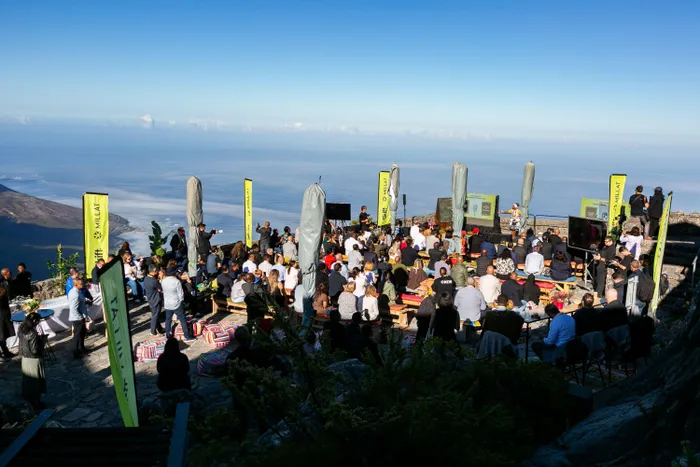
The media at the Africa Megatrends 2026 event on Table Mountain.
Image: Supplied
What’s driving this transformation?
1. Luxury redefined beyond safari
Africa’s travel identity usually centres on safari, but today’s discussion broadened the focus. Experiences range from gorilla trekking in Rwanda to diving in Mozambique, cultural immersion in Senegal, and wine tours in the Western Cape, highlighting the continent’s remarkable diversity.
The report highlights that modern luxury is evolving to include authentic cultural experiences, wellness rooted in nature, and eco-conscious tourism.
“Africa’s take on wellness feels lived rather than performed. It’s about breathing fresh air under an open sky, finding rhythm with nature, and embracing the restorative power of our landscapes,” stated Hamza Farooqui, CEO of the Millat Group.
This shift in luxury isn’t just aspirational, it’s economic. The global luxury travel market is projected to grow from $154 billion in 2024 to $369 billion by 2032. Africa’s unique blend of culture, nature, and modernity positions it perfectly to capture this growth.
2. The power of experiences
In today’s visually driven world, experiences often precede destinations. Travellers are no longer asking, “Where should I go?” but rather, “What do I want to feel?” From Instagram-worthy moments atop Table Mountain to intimate cultural exchanges in Ethiopia, Africa’s experiential offerings are its most powerful currency.
Studies show that cultural immersion is now the top travel style globally, particularly among key markets like Asia and the Middle East. This is where Africa shines: its diversity is unmatched, offering something for every type of traveller.
3. AI and digital innovation
The next phase of AI adoption is set to revolutionise African tourism. According to the African Travel and Tourism Association, 58% of African tourism businesses are already using AI tools, with a significant portion being small operators.
Generative AI is enabling local operators to create compelling content, optimise bookings, and reach global audiences. As Rafat Ali noted, “This democratisation of technology is empowering smaller African businesses to compete globally while preserving the authentic experiences that make African tourism unique.”
4. Breaking barriers to connectivity and accessibility
One of the most significant challenges facing African tourism is the lack of connectivity.
“Travelling within Africa often requires multiple flights, creating barriers for both tourists and investors,” Wilson Tauro, country manager for Southern Africa at Air France, pointed out.
Addressing these logistical hurdles is essential for unlocking the continent’s full potential.
Tauro also highlighted the need for simplified visa regimes, citing Europe’s Schengen visa as a model. “Young travellers today book within two weeks of travel. If we want to compete globally, we must make it easier for them to choose Africa.”
5. The role of the Middle East corridor
The partnership between Africa and the Middle East is emerging as a vital travel corridor. Middle Eastern carriers, such as Emirates and Qatar Airways, are bridging Africa’s connectivity gaps, while Middle Eastern investors are bringing much-needed capital to the continent.
Farooqui described this partnership as “mutually beneficial,” with African travellers fueling Middle Eastern economies and Middle Eastern airlines driving tourism to Africa. This corridor has the potential to unlock unprecedented growth for both regions.
The Africa Megatrends 2026 report isn’t just a guide for industry insiders; it’s a call to action. African tourism boards, private operators, and policymakers must work together to:
As Farooqui put it, “Tourism is not just an industry; it’s a lifeline. It has the power to reframe Africa’s future, create jobs, and uplift communities. But we need the will and the execution to make it happen.”