

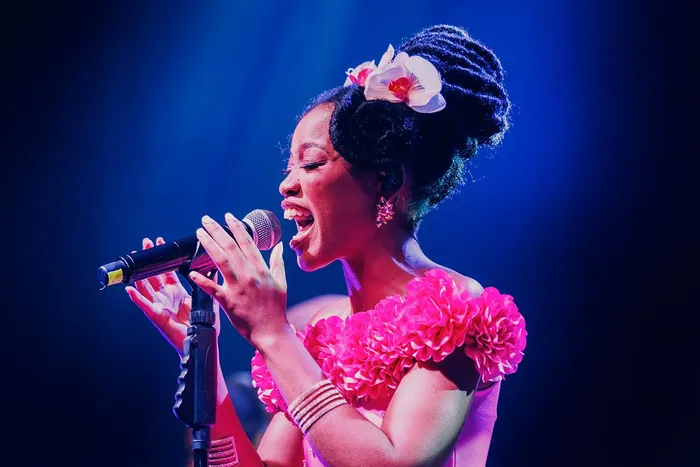
Rorisang Sechele performing at CTIJF 2026.
Image: Henk Kruger.
In the days after the Cape Town International Jazz Festival’s 23rd edition, what lingered most beyond the stage was the feeling of a community coming together.
Artists, audiences, students and the industry all gathered to move through rooms of music, conversations, and ideas.
Sometimes without even realising it, but always moving together. While the festival’s iconic main stages sit in the heart of Cape Town at the CTICC, this year, more than ever, the CTIJF wove itself into the ecosystem of the city.
The festival’s real work happened offstage.
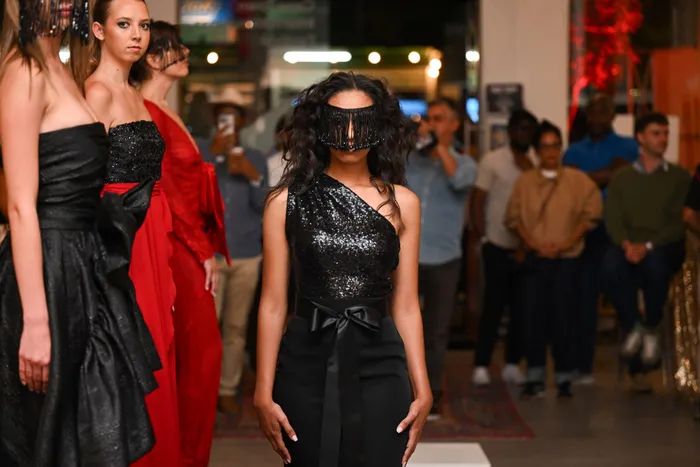
One of the striking looks from the CTIJF fashion show at Youngblood-Africa Gallery.
Image: Henk Kruger
In the months leading up to the festival, the Future Jazz Lab offered a different kind of entry point.
The workshop series saw learners from the Institute for Music and Indigenous Arts Development (IMAD), Mitchell’s Plain Music Academy, the Cameron Ward Foundation and Masi Violin Outreach come together at the Artscape Theatre Centre for a day of learning and connection.
The result was a space where not only skills, but also inspiration was shared.
For some, it was their first time playing in a big band setting with the CTIJF's own jazz orchestra. For others, it was the discovery that there is a place for them and their artistry to grow into.

This year's Cape Town International Jazz Festival was a celebration of community and culture.
Image: File
Ahead of the main event, the CTIJF set the tone with a bold fusion of fashion and music at Youngblood-Africa Gallery in the Mother City, transforming the space into a vibrant, culture‑led experience.
The welcome party showcased a dynamic line-up of South African designers curated by Jacques LeGrange, who presented expressive, statement‑driven collections that blurred the line between runway and art installation.
Set to deep house sounds and surrounded by an effortlessly stylish crowd, the evening was a celebration of the creative freedom that underscored the CTIJF’s approach to 2026.
For the month of March, the CTIJF also presented the CTIJF Jazz Photography Exhibition at the gallery, which featured works by acclaimed South African photographers Siphiwe Mhlambi and Arthur Dlamini.
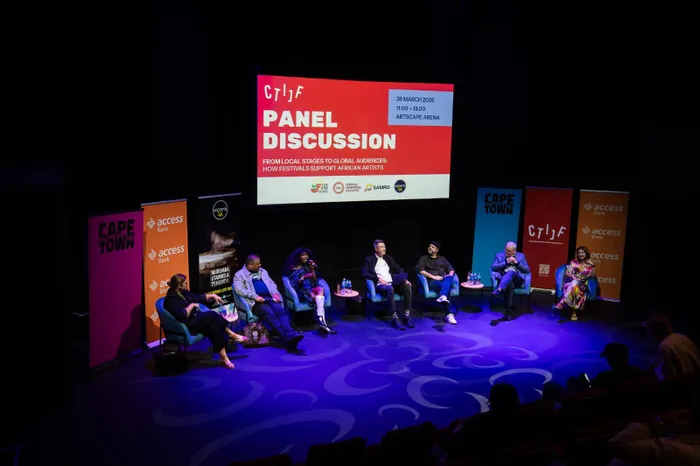
This year's CTIJF included expert-led panel discussions.
Image: Che February
Elsewhere, espAfrika’s Conversation Series brought artists, organisers, and thinkers together to sit with a simple but difficult question: What does jazz mean now, especially in a world where festivals are getting bigger and more commercial?
The discussions didn’t land on a single answer, but that wasn’t the point. What mattered was the room itself, filled with people speaking from different parts of the scene, trying to locate themselves within something that is constantly shifting.
That intention was visible in the programming around the main event, which extended into galleries, classrooms and community spaces, prioritising participation as much as performance.
From industry-facing masterclasses unpacking the realities of a changing music economy to artist-led sessions focused on improvisation and collaboration, the CTIJF positioned itself as a site of learning as much as spectacle.
A standout moment came in the form of intimate, free sessions that brought audiences into direct conversation with musicians, collapsing the distance that often exists between stage and listener.
That ethos carries into the city itself. Of course, none of this replaces the heartbeat of the festival - the performances from a jaw-dropping line-up of local and international talent. If anything, it reframes them as a part of something richer.
This year, the music still carried the weekend, but sat within a wider network of conversations, workshops, and shared experiences.
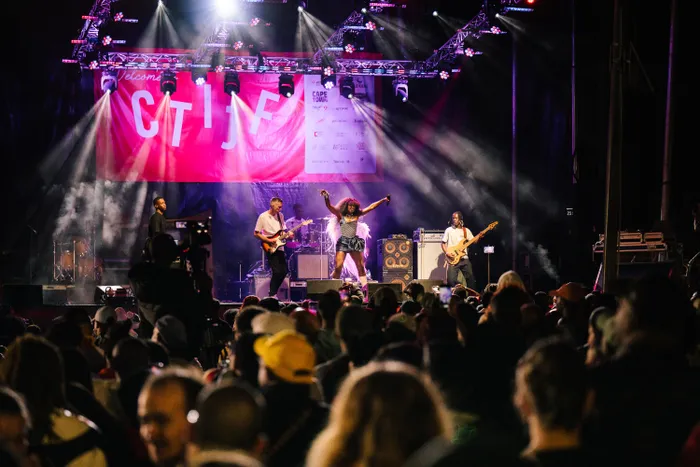
The CTIJF free concert at Greenmarket Square in Cape Town was a celebration of community and culture.
Image: Roy Potteril
Events like the free community concert at Greenmarket Square and the upcoming performance at the Guga S’thebe Cultural Centre in Langa on May 3 extend the festival’s footprint beyond the CTICC, embedding it more deliberately within the communities that have long sustained South African jazz.
It’s a reminder that the festival’s relationship to Cape Town is reciprocal rather than extractive, shaped as much by local audiences and histories as it is by international visibility.
As CTIJF co-director, Georgia Jones reflected, “We are not just celebrating a successful event; we are celebrating the rebirth of a cultural legacy that is bolder, more inclusive, and more energised.”
What emerges from this year’s CTIJF is a clearer picture of a festival thinking beyond its immediate moment. The headline performances remain central, but they are no longer the sole measure of value.
Instead, the festival’s focus lies in how it creates spaces of dialogue and discovery for its community to develop a broader understanding of what jazz can hold in a contemporary African context, together.