

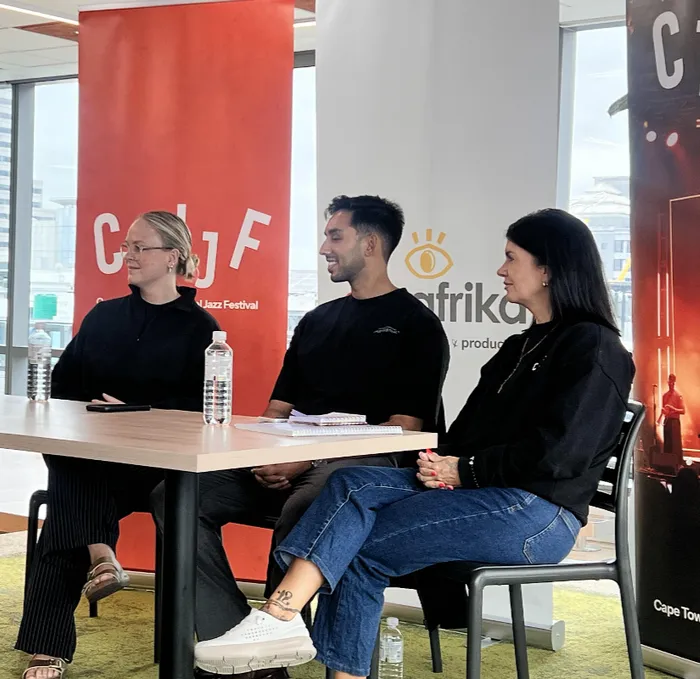
The Cape Town International Jazz Festival press Conference with Georgia Jones (festival director), Rayhaan Survé (Chairman of The Survé Family Office) and Carolyn Savage (festival director)
Image: Vuyile Madwantsi
Cape Town is famous for its skyline, but for one weekend, the city’s most impressive feature isn’t Table Mountain. Instead, it’s the hidden "cultural machine" behind the Cape Town International Jazz Festival (CTIJF).
Rayhaan Survé, chairman of The Survé Family Office, and festival co-directors Georgia Jones and Carolyn Savage describe Africa’s Grandest Gathering as a year-round logistical challenge.
Behind the smooth performances on stage, there’s a world of international deals and a R119 million economic engine that shows jazz is more than just music; it’s a key industry for the city.
CTIJF began in 2000 and was formerly associated with the North Sea Jazz Festival.
Since then, it has become a key part of Cape Town’s cultural scene.
Jones highlighted the need to keep the event’s legacy alive, saying, “It’s about honouring where we come from while breathing new life into the festival.”
The decision to keep the event rooted in the heart of the city, at the Cape Town International Convention Centre (CTICC), is intentional.
“This festival belongs to the people,” Jones explained. Despite rising costs and logistical challenges, the CTIJF remains committed to Cape Town’s city centre, ensuring accessibility and cultural resonance.
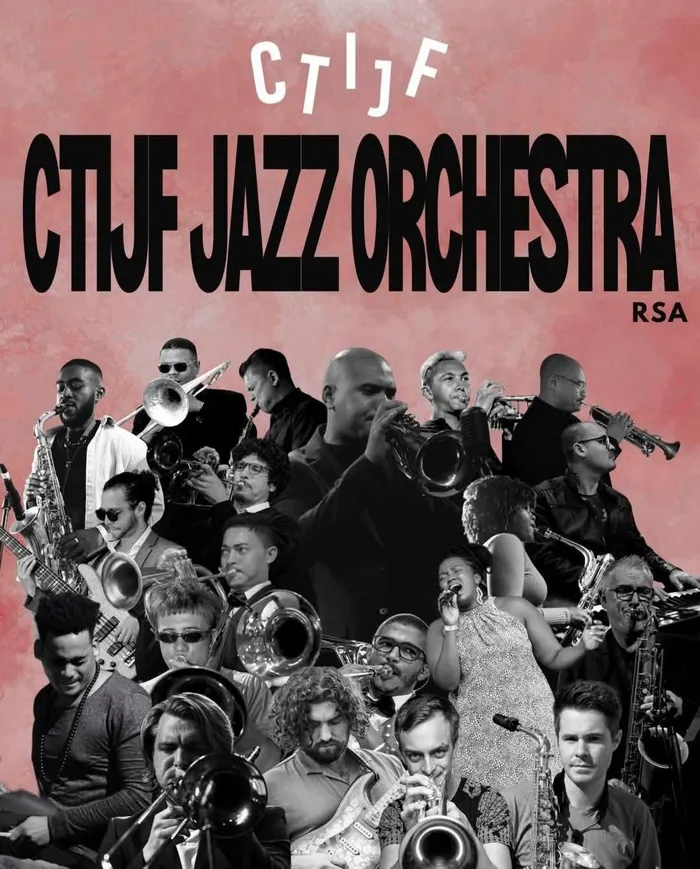
The CTIJF Jazz Orchestra will take the stage at the festival, bringing together some of South Africa’s finest jazz musicians for a dynamic, high-energy performance.
Image: Supplied
Curating the festival's diverse line-up is no small feat. Securing international acts like Jacob Collier took four months of negotiations, with time zones and legalities adding extra layers of complexity. But this year, the festival shifted its approach, prioritising local talent before booking international stars.
“We wanted to change the narrative. Local artists deserve the spotlight,” said Jones.
From Cape Jazz stalwarts to emerging talents like Rory Sanzocele, the festival balances honouring its roots with showcasing fresh perspectives.
The inclusion of acts from across Africa, such as Mali’s Fatoumata Diawara, further underscores the festival’s pan-African ethos.
This deliberate curation, according to Jones, ensures the festival appeals to both long-time jazz aficionados and younger audiences discovering the genre for the first time. “Jazz isn’t just for elitists. It’s for everyone,” Surve added.
We live in a world where a viral TikTok can make you a star overnight, but the CTIJF operates on a different frequency.
At the press conference, Independent Media Lifestyle posed the crucial question: How exactly does the festival discover standout talent, such as Kujenga, and do the renowned masterclass sessions serve as a vetting process for securing a spot on the main stages?
Jones was direct, giving a needed reality check for the digital age. “You can be great on Spotify, but not great on stage,” she explained.
It turns out the "oil and cogs" of the festival’s scouting machine aren't just looking at streaming numbers.
They are looking for the grit that a studio recording can’t capture.
For the CTIJF team, the internal process is about consistency and the "live" factor. The Masterclasses aren't just a "nice-to-have" educational perk; they are a critical part of the festival's DNA.
They serve as a bridge where raw talent meets professional polish.
As the panel pointed out, the work that goes into a live performance, the sweat, the timing, and the ability to hold a crowd, is what ultimately pays off. It’s this rigorous "stage-first' consistency philosophy that ensures when a local debutante finally steps into the spotlight at the CTICC, they aren't just a name on a playlist; they’re a powerhouse ready to command the room.
Partnerships with local music academies, such as Bridges for Music in Langa, further highlight the festival's commitment to community upliftment.
By providing platforms for young musicians to perform at associated events, like the festival’s fashion show and welcome party, the CTIJF ensures a pipeline of talent for future main stages.
It’s a win-win for the culture: the festival gets a fresh, authentic sound for its side events, and these young performers get the professional exposure they need to eventually headline the CTICC. This deliberate investment ensures that while the festival grows into a global giant, its soul remains firmly rooted in the local soil.
This year alone, over 3,200 jobs have been created, spanning a wide range of fields, from security to event planning. Despite receiving no government funding, the festival has tripled its sponsorship revenue, thanks to partners like Access Bank and Heineken.
“This festival isn’t just about music; it’s about creating livelihoods,” said Survé.
"The festival’s philanthropic arm has also introduced a subsidy programme, allowing fans from financially constrained backgrounds to attend. “Making the festival accessible is what defines our success,” Survé added.
With 20,000 attendees expected, safety remains a top priority. Three security companies, SAPS, and disaster management teams have collaborated to ensure a seamless experience.
Strict protocols, including a no-reentry policy, aim to protect both attendees and staff. “It’s about creating a space where everyone feels safe to enjoy the music,” said Savage, who oversees security for the event.
As the CTIJF continues to grow, its vision extends beyond Cape Town. Conversations are underway to expand the festival across the continent, celebrating African artists on a larger stage. “We’re not just a South African festival; we’re an African festival,” said Survé.
The CTIJF is a celebration of jazz, yes, but it’s also a celebration of Cape Town, its people, and its stories. Whether you’re a long-time attendee or a newcomer, the festival offers a glimpse into the soul of South Africa.
As Survé eloquently put it, “Ultimately, this festival belongs to the city and its people." Through music, we unify, we celebrate, and we move forward.”
Taking place on March 27 and 28 at the Cape Town International Convention Centre, the festival continues to hold its place as one of the continent’s most recognised music gatherings.
For more information about the festival, visit the official CTIJF website (www.capetownjazzfest.com). Tickets for the festival are available through Ticketmaster.