

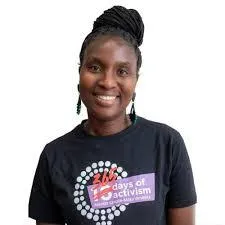
Tarisai Mchuchu-MacMillan is an African feminist leader, Advocate of the High Court of South Africa, and Executive Director of MOSAIC.
Image: Supplied.
Advocate Tarisai Mchuchu-MacMillan
Homes have always been the cartography of our freedom, yet for women, they have often been maps of our greatest contradictions. During the struggle against apartheid, the home was a sanctuary—a quiet site of defiance against a state that sought to police every movement. It was a space where people gathered and organised beyond the reach of the regime. But we must be careful not to romanticise these shadows. For many women, the home was a "sanctuary" from the state while remaining a site of domestic subjugation.
The revolution fought for the right to a home, but it did not always fight for the right to be free within it. When the Constitution was signed in 1996, it signaled a new dawn. It promised that the old hierarchies—both of the state and of the home—would be dismantled. It suggested that "Freedom" was finally reaching the threshold. But decades later, we must ask: What happens when the home remains the very place from which one needs refuge? What happens when the threshold meant to protect you from the world becomes the boundary that imprisons you? As South Africa marks 32 years of Freedom on 27 April, we celebrate a decisive break from systemic state oppression. Yet, if freedom is to be a lived reality rather than a legal abstraction, it cannot stop at the front door. It cannot be something we breathe in the streets and exercise at the ballot box, only to have it evaporate the moment we close the curtains.
For too many women, control did not disappear with the dawn of democracy; it simply shed its uniform. It lives now in the hallways where movement is monitored, in kitchens where access to money is a tool of submission, and in the digital glow of phones where every message is surveilled. In these intimate spaces, constitutional rights are not absent in the law—they are being strangled in practice. This is the unfinished work of our liberation: ensuring that the "private" home is not a lawless territory where the Constitution fears to tread. The Constitution of the Republic of South Africa guarantees dignity, equality, and the right to freedom and security of the person. These are not mere ink on parchment; they are meant to be the pulse of our daily lives. When a woman cannot leave her home without permission, her freedom of movement is not just hindered—it is revoked. When her private thoughts aremonitored, her right to privacy is violated. These rights do not, and must not, stop at the garden gate. The Domestic Violence Amendment Act represents a profound shift because it finally names the "invisible" chains. It recognises that violence is not always a bruised limb; it is the suffocating blanket of coercive control, economic sabotage, and psychological warfare.
This is more than a legal update; it is a feminist redefinition of liberty. Freedom is not merely the absence of a tyrannical state; it is the presence of individual autonomy—the power to decide, to move, and to be, without fear of the person sharing your bed. However, a right that exists only on paper is a ghost. South Africa possesses some of the world’s most progressive legal frameworks, yet the chasm between the courtroom and the living room remains vast. Survivors still navigate a fragmented, under-resourced labyrinth. When the police delay, when courts stumble over procedural barriers, and when social services are stretched to the breaking point, the law fails its most fundamental test. This is not a failure of our principles, but a failure of our implementation. We must also resist the urge to view women as passive recipients of "protection." Women are not waiting to be rescued; they are already the architects of their own survival. They negotiate safety at great personal cost—filing protection orders, rebuilding shattered finances, and shielding their families. They are not asking the state to grant them agency; they are demanding the state remove the structural barriers that make exercising that agency a life-threatening risk.
True freedom is collective. The Domestic Violence Amendment Act signals that safety is a shared societal obligation, moving violence out of the "private" sphere and into the light of constitutional accountability. Freedom Day should not merely be a commemoration of a vote cast in 1994. It must be a reckoning with the present. The true measure of our democracy is not found in the grandeur of our institutions, but in the safety of our most private spaces. Until every woman in this country can move, speak, and live within her own walls without fear, the journey to freedom in South Africa remains an unfinished road.
*Mchuchu-MacMillan is an African feminist leader, Advocate of the High Court of South Africa, and Executive Director of MOSAIC.