

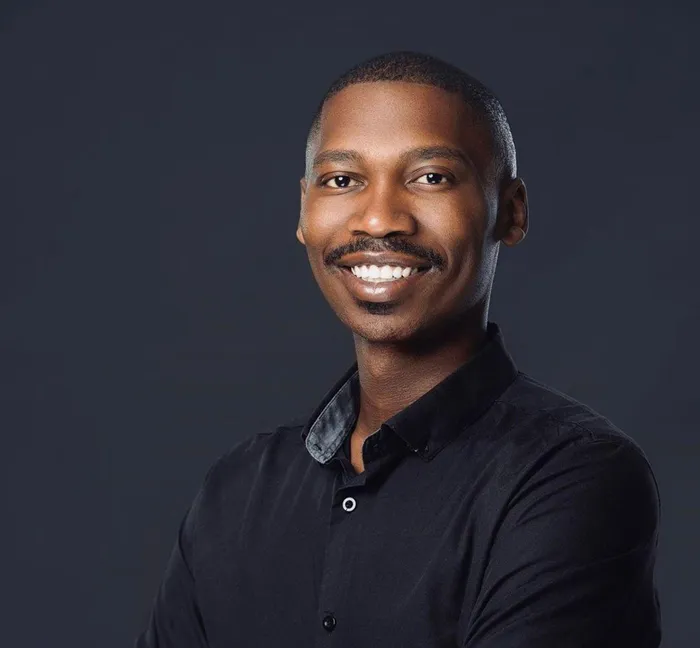
Zuko Tisani
Image: Supplied
In the biting, crystalline air of the Himalayas, where the wind shrieked across the jagged ridges of the South Col, Sibusiso Vilane made history in 2003 as the first Black South African to conquer Mount Everest. For twenty-three years, that footprints-in-the-snow legacy has stood as a solitary beacon. Now, a new challenger from the tip of the continent is preparing to break the silence of the summits.
Zuko Tisani, a 33-year-old entrepreneur and Forbes 30 Under 30 honouree, has announced his audacious bid to summit the world’s highest peak in April 2026. If successful, Tisani will become only the second Black South African to stand atop the 8,848.86-metre giant. But for this Johannesburg-based visionary, the climb is less about personal glory and more about a 38-day vertical classroom for a nation’s youth.
Dubbed "Summit with Zuko," the expedition is the flagship initiative of a broader campaign to raise vital funds for Education Africa. The registered non-profit organisation is dedicated to a singular, potent mission: equipping young South Africans with the tools, access, and opportunities they need to thrive in a global economy.
"This is about showing young South Africans that they belong on the world’s highest stages," Tisani remarked during his final preparations. "Whether that stage is a boardroom, a tech start-up, or the literal roof of the world, their dreams are valid. Representation isn't just a buzzword; it is a lifeline of hope."
The South Col route is a legendary path of ice and endurance. To reach the top, Tisani must navigate a labyrinth of shifting glaciers and the infamous 'Death Zone,' where oxygen is scarce, and the body begins to shut down. The statistics of the climb are harrowing: temperatures on the upper slopes frequently plummet below -87°C, and hurricane-force winds can turn a standard ascent into a fight for survival.
Tisani, however, is no stranger to uphill battles. As the founder of Khiosk, a video-based e-commerce platform, he has spent his career "democratising entrepreneurship." By allowing young South Africans to sell products through video content, he has turned the digital divide into a bridge for the unemployed. He views the mountain through the same lens as his business—as a test of resilience, discipline, and high-performance wellness.
Intriguingly, Mount Everest is not a static monument; it is a living entity that is incidentally growing by millimetres each year due to tectonic shifts. For Tisani, this mirrors the evolving potential of the South African spirit.
"The climb is a powerful symbol of limitless potential," he says. "We are tackling the mental, physical, and emotional limitations that society often places on our youth. I am balancing the vitality of my own journey with the responsibility of building a legacy for those coming after me."
Between April and May 2026, the eyes of South Africa will be fixed on the shifting snows of the Himalayas. As Tisani traverses the treacherous icefalls and oxygen-deprived ridges, he carries more than just his climbing gear; he carries the aspirations of a generation seeking to see themselves reflected in the extraordinary.
When the South African flag is finally planted on the summit, it will signal more than a successful trek. It will be a message sent from the highest point on Earth back to the streets of Soweto and the classrooms of Cape Town: The view from the top belongs to everyone brave enough to start the climb.