

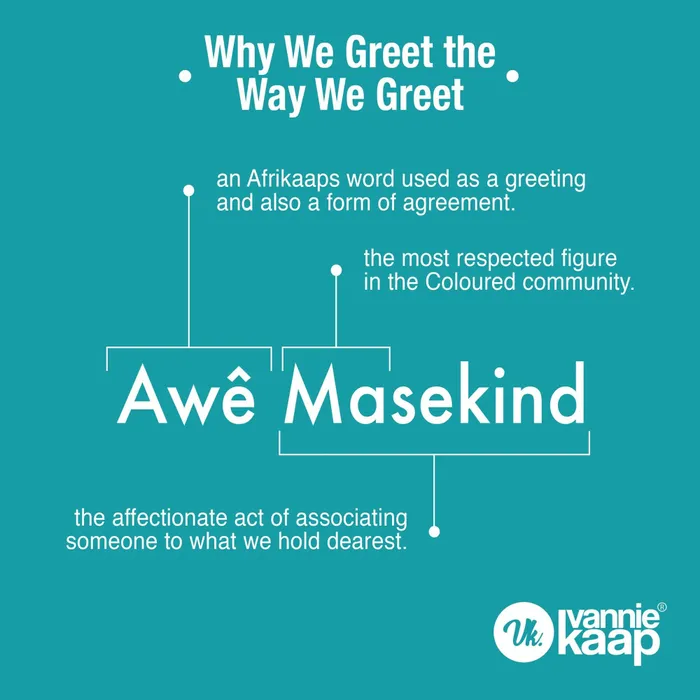
Vannie Kaap has contributed greatly to the virality of Afrikaaps online. Picture: Vannie Kaap
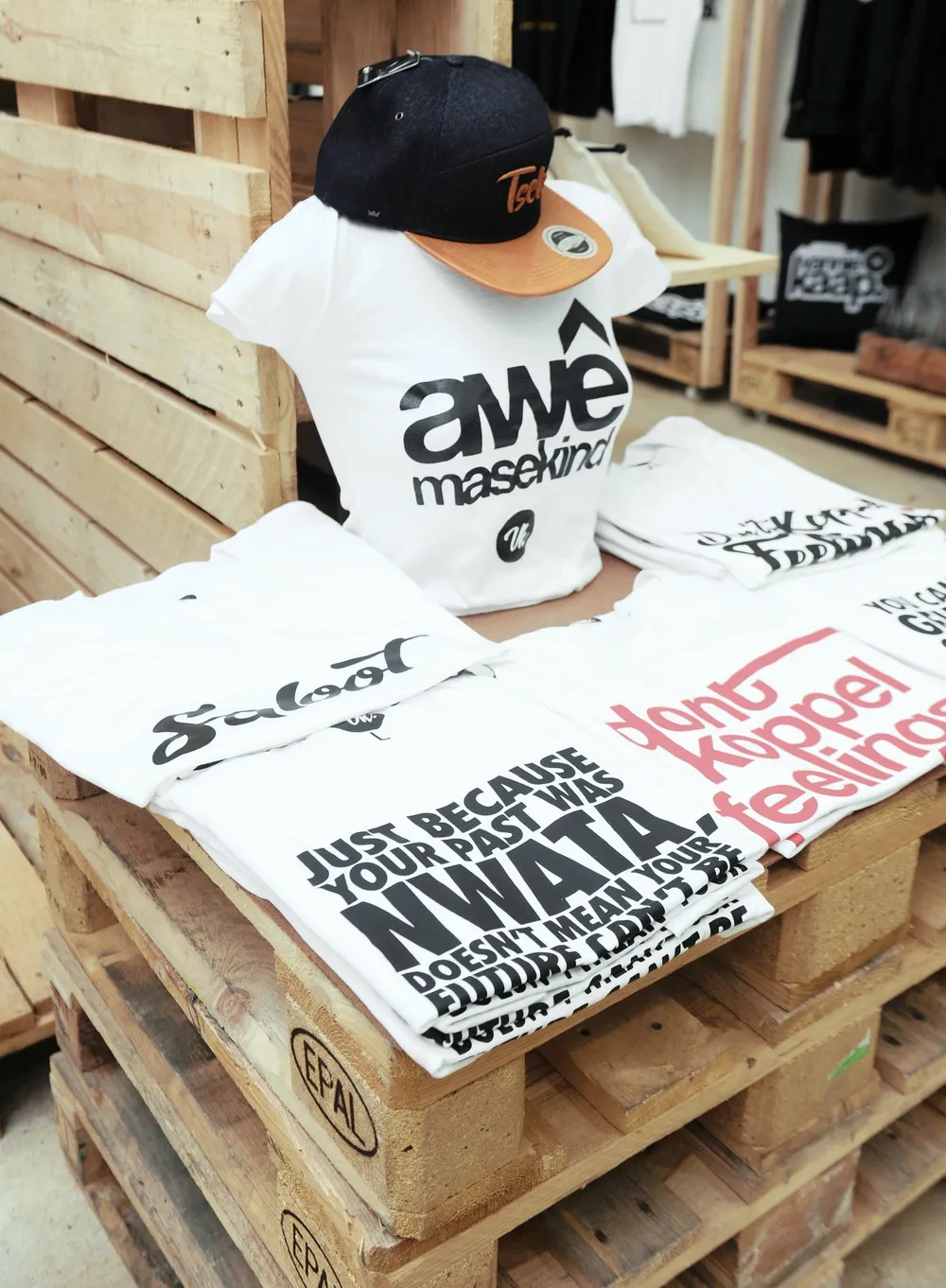
Afrikaaps or Kaaps has taken the spotlight in contemporary shows such as stand-up comedian Marc Lottering, TikTok content and used in podcasts. Business and brand Vannie Kaap has cleverly capitalised on the use of Kaaps se goedjies (expressions). Last year, UCT and UWC and other community stakeholders started a project to create the Trilingual Dictionary of Kaaps.
Professor Adam Haupt, the director at UCT’s Centre for Film and Media Studies, who is part of the project, said validating lived experiences through using translingual expression was what gave Afrikaaps its virality.
Haupt said that in the 1990s, hip hop artists would make use of Afrikaaps to validate the lived realities of coloured people on the Cape Flats, especially among the working class.
“They validated black modes of speech. Afrikaaps is one of the modes of black speech that were made legitimate by artists,” he said.
He added: “What hip hop did is to take the language from the streets and townships and prove that it counts.”
Today, people use Afrikaaps not only to trend and go viral on social media but also to build livelihoods.
Haupt said: “I think TikTok or Instagram content creators are an extension of the work 1890s artists did. Now everyone feels comfortable to express themselves how they speak and on their terms.
“The fact that you can blow up on this platform also attests to how media technology has changed. Seeing it take off shows that people feel validated by the way that form of expression has taken off.”
Haupt said the fact that people recognise social media as a tool that they can monetise was a testament to democracy.
“People are using their constitutional rights to work for them. Section 16 of the Constitution, which warrants freedom of expression and constitutional imperatives, is geared towards preserving cultural and linguistic diversity of our democracy.”
He added: “Afrikaaps is validating a language that was hijacked by Afrikaner nationalists.” It is a language that was often referred to as “a language of the streets.”
“Despite the damage they’ve done to people, Afrikaaps is still here. That is democracy in action.”
Over the years, criticism for social media privacy and corporate monopolisation has increased. Haupt said these platforms were now democratising access to media production.
“Technology is always changing and its ease of accessibility contributes to this,” he said.
“People are able to draw a following because they are funny and because the way they speak resonates with you.
“This is a continuation of hip hop artists saying who you are matters and the way you speak matters. TikTok is making it possible for that to amplify on a bigger scale.”
Director of the Centre for Multilingualism and Diversities Research Professor Quentin Williams led the Afrikaaps dictionary project.
Williams, the associate professor at UWC’s linguistics department, said the importance of this project could not be overstated.
“The publication of the Afrikaaps (also known as Kaaps) dictionary will allow us to cultivate a dictionary culture amongst speakers of Afrikaaps, in schools, universities and at home,” he said.
“Alongside the Bible and newspaper in the home, the Afrikaaps dictionary should also become a valued literacy artefact used to expand the Afrikaaps speaker’s range of her and his language use.”
Williams said the Afrikaaps dictionary would be important to develop Afrikaaps education material for the CAPS curriculum in schools.
“One day learners will be able to use the dictionary in the classroom to translate words from Afrikaaps to standard languages to learn, understand and communicate better concepts in science, mathematics, economics and culture in the CAPS curriculum,” he said.“But for this to be successful, we need to formalise the teaching of Afrikaaps as a language subject and train teachers to do so.”
Vannie Kaap founder Bernie Fabing said Afrikaaps contributed to the brand’s uniqueness.
“We have a way of saying and doing things. Our creativity in telling stories and the way we present information is unique,” he said.
“The language and culture is expressive and that adds to it. Our heritage makes us a mixed and culturally rich people.”Fabing said when he first heard students were doing dissertations on his brand, it meant that its impact on culture was seen by others, too.“When I see us being quoted or written about in research papers nd academic articles, it confirms the responsibility I have and the brand has,” he said.Relaying the message of coloured identity online through Afrikaaps is a way to own the narrative, Fabing said.“You’re not waiting for a book or publication to approve what you want to say or how you want to say it. You get to build and inform an audience that understands your message in a much faster way than doing it off-line,” he said.
Fabing said he was working on a Kaaps translation app.“Kaaps may not be recognised as an official language, but that should never deter anyone from using it. Laws catch up to cultural change. The more we do about it, the more official it becomes.”