

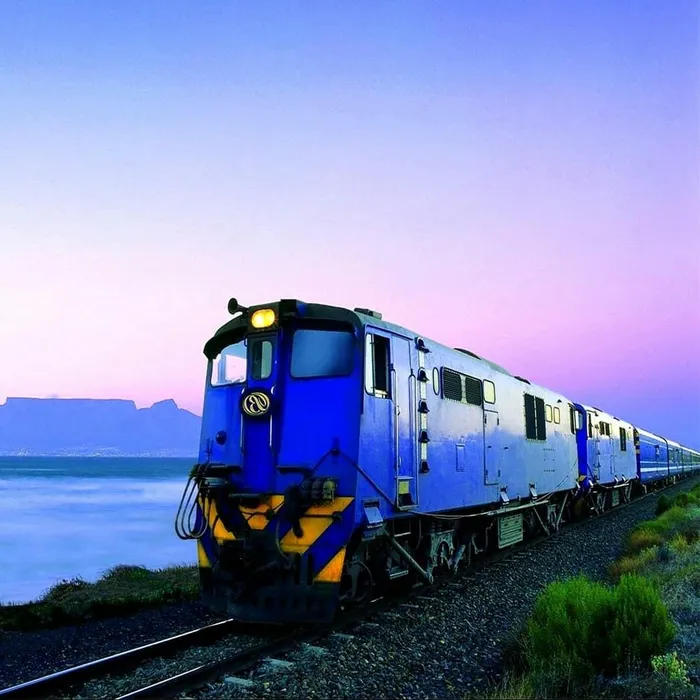
For those who embrace slow travel, South Africa's Blue Train has been recognised as one of the world's most beautiful train journeys.
Image: Instagram
Sustainable, scenic, comfortable and stress-free - train journeys are enjoying a global resurgence as travellers increasingly embrace the concept of slow travel.
In a fast-paced world dominated by tight itineraries and airport queues, rail travel offers something refreshingly different: the chance to savour the journey itself.
Slow travel is a mindful approach to tourism that prioritises quality over quantity. Rather than ticking off multiple destinations in a rush, travellers are choosing to immerse themselves more deeply in fewer places.
Rail journeys, with their gentle pace and ever-changing scenery, perfectly embody this philosophy.
Train journeys align seamlessly with modern travel priorities. Sustainability is a major driver, with rail producing significantly lower carbon emissions than air travel.
At the same time, comfort and convenience are key appeals - no long security queues, generous legroom, and the freedom to move around.
There’s also a strong emotional pull. Trains evoke a sense of nostalgia and romance, harking back to a golden age of travel.
Add to that panoramic windows, dining cars, and observation decks, and it’s easy to see why more travellers are swapping flights for rail.
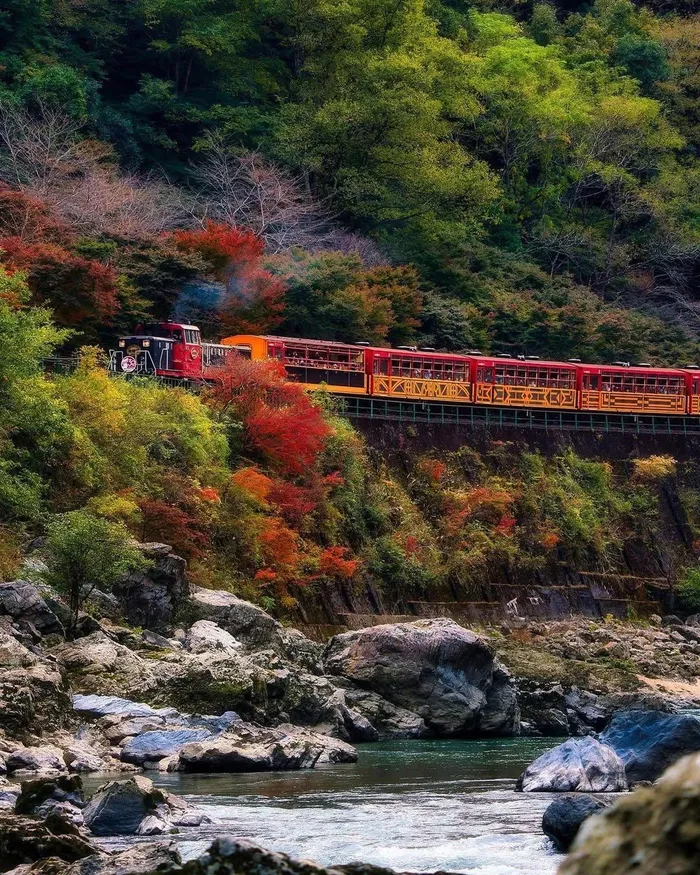
Riding the Sagano Romantic Train is one of the most scenic ways to experience the natural beauty of western Japan, as it winds slowly through the lush valleys of Kyoto Prefecture.
Image: Instagram
A recent study by InsureandGo used eye-tracking technology to determine the most visually captivating rail routes on earth.
From snow-capped mountains to lush forests and dramatic coastlines, these journeys showcase the very best of slow travel.
Winding through Kyoto’s Arashiyama region, this charming train offers seasonal beauty, from cherry blossoms in spring to fiery autumn leaves.
A UNESCO-listed route, the Bernina Express crosses the Alps with jaw-dropping views of glaciers, viaducts, and alpine lakes.
Often dubbed the “slowest express train in the world”, this iconic journey connects Zermatt and St Moritz through pristine alpine scenery.
Famous for crossing the Glenfinnan Viaduct, this route delivers rugged Highland landscapes and cinematic views.
A steep ascent through misty forests and mountain terrain makes this one of Asia’s most unique rail experiences.
This journey cuts through the Atlantic rainforest, revealing waterfalls, cliffs, and dense jungle.
Luxury meets wilderness on this glass-domed train through the Canadian Rockies.
One of Europe’s oldest mountain railways, featuring tunnels, viaducts, and sweeping alpine vistas.
Running along the Pacific coastline, this route offers ocean views, forests, and rolling hills.
A historic railway climbing steep mountain passes with dramatic scenery.
One of the highest railways in the world, traversing the Andes with breathtaking views.
A tropical journey through rainforests, waterfalls, and deep gorges.
Crossing the Southern Alps, this route showcases rivers, mountains, and lush plains.
South Africa’s most luxurious rail experience offers a blend of opulence and ever-changing landscapes between Pretoria and Cape Town.
A legendary journey through the heart of Australia, from Adelaide to Darwin, showcasing the outback’s raw beauty.
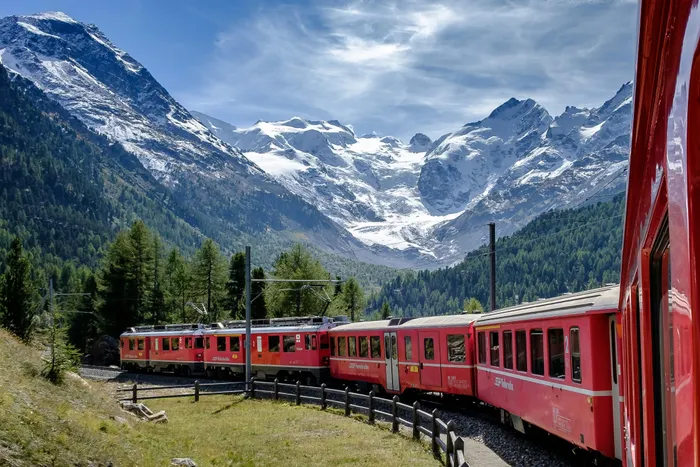
All aboard the Bernina Express, one of Europe’s most breathtaking rail journeys, offering travellers a dramatic scenic passage between Switzerland and Italy.
Image: Unsplash
Scenic train journeys offer unrivalled access to landscapes often unreachable by road.
Whether gliding through mountain passes or hugging dramatic coastlines, trains provide uninterrupted views through large panoramic windows.
Equally appealing is the pace. Travellers can read, work, socialise, or simply watch the world pass by.
The journey becomes a highlight rather than a means to an end.
Comfort is another major draw. With spacious seating, onboard dining, and the ability to move freely between carriages, rail travel offers a level of ease rarely found in air travel.
Stations are also typically located in city centres, making arrivals and departures far more convenient.
There’s also a social element. Shared spaces such as dining cars and lounges create opportunities to meet fellow travellers, adding a human connection often missing from modern travel experiences.
As sustainability becomes a priority for travellers, trains stand out as one of the most eco-friendly transport options.
Lower emissions, reduced environmental impact, and support for local economies all contribute to a more responsible way of exploring.
In an age where travel can feel rushed and transactional, scenic train journeys invite us to slow down, reconnect, and truly experience the world around us.
So, whether it’s the alpine majesty of Switzerland, the rugged beauty of Scotland, or the timeless luxury of South Africa’s Blue Train, one thing is clear - the future of travel might just be slower, and all the better for it.