

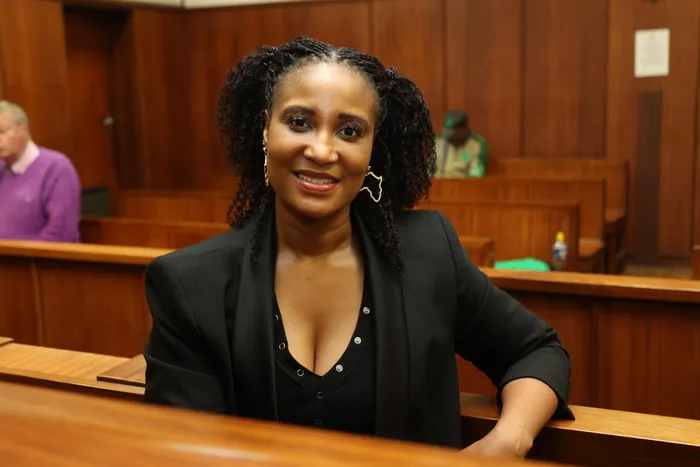
Duduzile Zuma-Sambudla.
Image: Tumi Pakkies / Indepedent Media
Duduzile Zuma-Sambudla, Member of Parliament and daughter of former president Jacob Zuma, has insisted she was deceived and is herself a victim in the unfolding controversy over South Africans who travelled to Russia and were later reported to be near a conflict zone. In a sworn affidavit submitted to the South African Police Service (SAPS), she states that she acted “in good faith” and never intended to recruit anyone for combat or mercenary activity.
Her affidavit follows allegations made by her sister, Nkosazana Zuma-Mncube, who publicly claimed that Zuma-Sambudla and two others “tricked 17 men into fighting for Russian mercenaries.” According to Zuma-Mncube’s statement, the men were told they were travelling to Russia to train as bodyguards for the Mkhonto weSizwe Party.
Police have confirmed that the matter is under investigation, and Zuma-Sambudla, 43, has not responded to BBC requests for comment. The South African government previously revealed it had received distress calls from 17 citizens who believed they had been lured under false pretences into mercenary activity in the Russia–Ukraine conflict, some promised “lucrative contracts.”
In her affidavit, however, Zuma-Sambudla strongly denies any wrongdoing. She begins by asserting: “I make this affidavit voluntarily… The contents of this affidavit are true and within my personal knowledge.” She says she submitted the statement to assist SAPS in its investigation and to clarify that she was also deceived.
Zuma-Sambudla claims the alleged deception began when she was contacted unexpectedly via WhatsApp by a man identifying himself as Blessing Rhulani Khoza. *“Prior to this unsolicited message, I had no relationship, acquaintance, or prior knowledge of this person whatsoever,”* she states.
According to her, Khoza described a “lawful, structured, non-combat paramilitary training programme in Russia”* and assured her repeatedly that it was safe and open to civilians. She says, “At no point did he state or imply that participants would be placed in a conflict zone, used in combat, or exposed to danger.”
Believing his representations, she travelled to Russia at her own expense for what she thought was legitimate training. “I completed approximately one month of training… I experienced only non-combat, controlled activities. I was never exposed to combat, never deployed,” she writes, adding that her experience gave her no reason to suspect the programme was illegitimate.
Her affidavit reveals that 22 South Africans, including her own relatives, travelled after she passed on what she believed to be genuine information. She stresses she never recruited, pressured, or advertised to anyone: “I shared information innocently. They chose to join on their voluntary interest.”
Zuma-Sambudla argues that her own family’s decision to join proves she had no knowledge of danger. “I would not, under any circumstances, knowingly expose my own family or any other person to harm,” she declares.
She says she later learned, to her shock, that the individuals had allegedly been taken toward a conflict zone. “This discovery caused me profound shock and distress. It was at this point that I realised that both I and the others had been scammed.”
After returning to South Africa, she says she immediately flew back to Russia for two weeks to try to locate and assist the affected individuals. She writes that she drafted appeals to Russian officials and contacted the South African embassy through a third party.
“My actions were taken urgently, at personal cost, and solely out of concern for the safety of the affected South Africans,” she states.
Zuma-Sambudla concludes: “I was not a recruiter, agent, operator, or facilitator of any unlawful activity. I am myself a victim of deception, misrepresentation, and manipulation.”
She has offered full cooperation to SAPS, including submitting her devices for forensic analysis as investigations continue.