

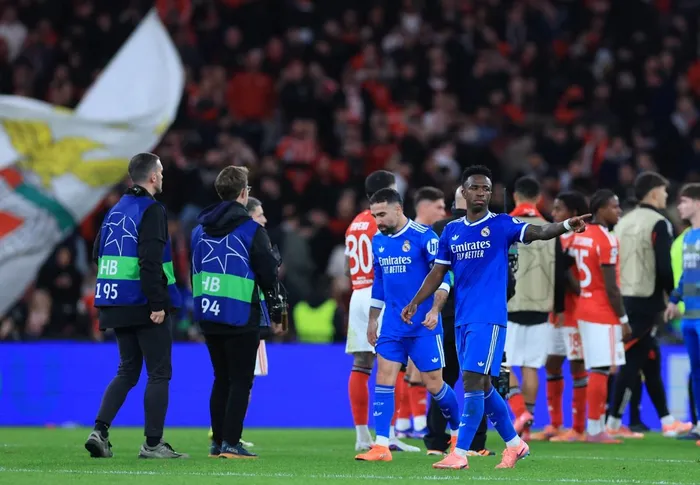
Real Madrid’s Vinicius Junior took a stand against alleged racial abuse during their Champions League clash with Benfica. From Madrid to Johannesburg, black athletes continue to face disproportionate scrutiny and hostility. Photo: AFP
Image: AFP
COMMENT
Real Madrid’s Uefa Champions League win over Benfica on Tuesday night was momentarily suspended when Vinicius Junior refused to continue playing after his decisive goal.
Five minutes into the second half, Vinicius had fired the visitors ahead, only for his corner-flag celebration to draw a yellow card from referee Francois Letexier. Moments later, he told the referee that Benfica’s Gianluca Prestianni had called him a “monkey,” and walked off the pitch.
The Champions League play-off first leg was paused for 10 minutes, in line with Uefa protocols. The 20-year-old Argentine midfielder, who covered his mouth with his shirt as he appeared to say something to Vinicius, denies racially abusing the 25-year-old Real Madrid star.
When play resumed, Vinicius returned looking visibly upset and continued to be booed by the home crowd. The fallout highlights a familiar pattern: instead of focusing on the alleged abuse, attention often shifts to the victim’s behaviour. Vinicius’ celebration became the focus in this case.
England football legend Wayne Rooney defended the Brazilian, insisting players have every right to celebrate freely. By contrast, coach Jose Mourinho framed Benfica supporters’ hostility as tribal football intensity rather than an ideological problem.
That tension – recognising systemic prejudice versus trivialising it as rivalry – mirrors a broader struggle in society.
For Vinicius at Real Madrid, this is far from an isolated episode. He has endured repeated racist incidents in Spain, prompting fines, partial stadium closures and official condemnations.
In January 2023, Atletico fans hung an effigy of Vinicius from a bridge near Real Madrid’s training ground. Four months later Vinicius squared off with fans abusing him at Valencia’s Mestalla stadium. The incident gained him worldwide support in his battle against racism. Yet, enforcement alone has failed to change the prevailing culture.
Football is not unique in this regard. During the recent Six Nations, Ireland forward Edwin Edogbo was subjected to racist abuse while on international duty.
It is proof that racism knows no sporting boundaries. Across codes, black athletes remain disproportionately targeted, especially when occupying visible or symbolic roles.
These incidents unfold against rising right-wing movements across Europe, where national identity, immigration and cultural “ownership” dominate public discourse. The confrontational populism associated with Donald Trump has reshaped political rhetoric globally, normalising defiance and aggression in public life.
Stadiums, as arenas of identity, inevitably absorb that atmosphere. Not every jeer is ideological, but when black athletes repeatedly become lightning rods for hostility, it is hard to dismiss each episode as spontaneous demonstrations of passion.
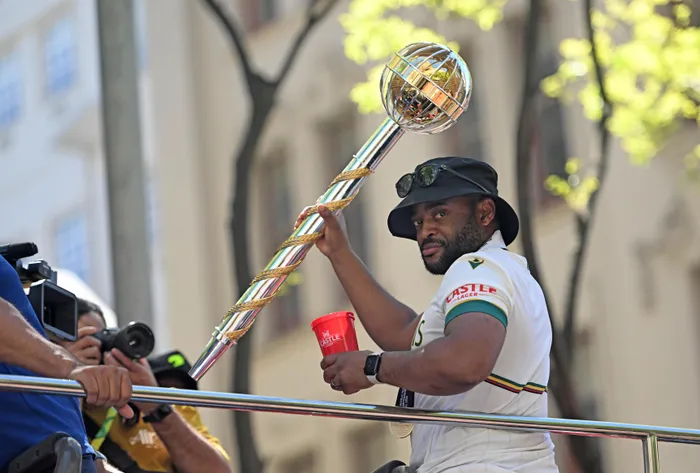
Proteas Test captain Temba Bavuma. Photo: Backpagepix
Image: Backpagepix
South Africans should resist seeing this as a distant problem. Anti-immigrant movements have grown locally, with rhetoric aimed at restricting foreign nationals’ rights and access to services.
Sport reflects this tension.
Even national icons such as Siya Kolisi and Temba Bavuma have not been insulated from abuse, despite leading their teams to historic achievements. Kolisi captained the Springboks to consecutive Rugby World Cup championships. Bavuma has guided the Proteas through defining series victories and to ICC World Test Championship glory.
Yet, both have faced criticism that strays into coded, sometimes explicit, racial hostility. Success has not shielded them. In some cases, it has heightened the scrutiny they are under.
The parallels with Vinicius are stark. Whether in Madrid, Dublin or Johannesburg, black athletes often carry a symbolic weight beyond their sport, representing transformation, multiculturalism and shifting power structures. For supporters, that symbolism inspires pride, yet for others, it fuels resentment.
Vinicius’ celebrations, rooted in Brazilian dance and culture, have become central to the debate. Critics see provocation, supporters see authentic expressions of joy. Rooney’s defence cuts to the core: celebration is not misconduct.
Yet, the conversation often drifts to whether athletes should temper their expression to avoid hostility. That same dynamic appears when Kolisi’s leadership is dissected more harshly than predecessors’, or when Bavuma’s place in the national cricket side is debated with disproportionate intensity.
The issue is not whether they should be immune from criticisim, because sport thrives on analysis and debate. The issue is proportionality and context.
Mourinho’s framing of the hostility from Benfica fans as rivalry reflects a long-standing instinct to protect the spectacle. Rooney’s stance points in a different direction: players should not have to dilute their identity to feel safe.
Vinicius’ goal was an expression of joy. The abuse he faced – mirrored in that meted out to the likes of Edogbo, Kolisi and Bavuma – is part of a wider, persistent climate.
Racism adapts to its environment but does not disappear on its own. Sport faces a choice: confront that reality or treat each episode as an isolated inconvenience in an otherwise beautiful spectacle.