

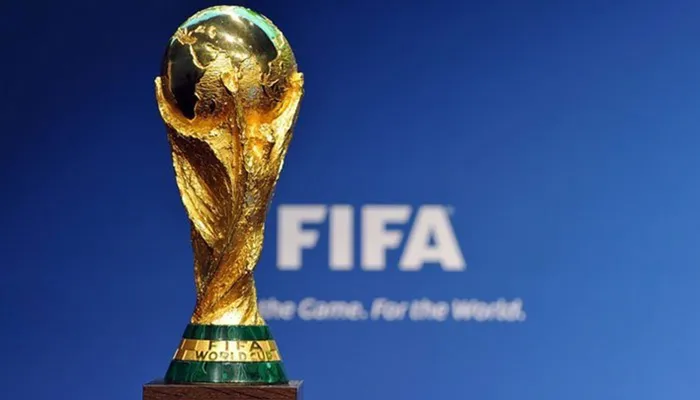
The FIFA World Cup trophy on display. The 2026 tournament will get underway on June 11 when co-host Mexico face 2010 hosts South Africa at the Estadio Azteca in Mexico City. The match will take place exactly 16 years after their historic encounter at Soccer City in Johannesburg.
Image: SAFA
Oke Göttlich, the vice-president of the German Football Association (DFB), has called for a serious discussion regarding the potential boycott of the upcoming 2026 FIFA World Cup.
Göttlich’s comments in a German daily follow rising tensions among European leaders over President Donald Trump’s contentious proposals regarding Greenland, which is under Danish control.
“For me, that time has definitely come,” said Göttlich. His call to action comes in the wake of Trump’s aggressive posturing, including the suggestion of annexing Greenland and imposing tariffs on eight European nations — Germany among them — who opposed his plans.
Despite Trump’s subsequent retreat from the tariff threats, concerns linger over his policies, including potential travel bans that could hinder fans visiting the tournament.
Göttlich drew parallels to the United States-led boycott of the 1980 Olympic Games. It was an act of protest against the Soviet Union’s invasion of Afghanistan. He believes the current geopolitical climate poses an even greater risk to shared international values.
“What were the justifications for the boycotts of the Olympic Games in the 1980s? By my reckoning, the potential threat is greater now than it was then. We need to have this discussion,” he remarked, advocating for a moment of introspection within the football community.
Considering that FIFA has planned 78 of the 104 matches of the 2026 World Cup to be played in the United States, a boycott could profoundly affect the tournament’s global image and demonstrate solidarity among European football associations.
Göttlich urged UEFA nations, including the DFB, to recognise their collective responsibility and engage in a constructive dialogue to shape the future of international football.
Meanwhile, former FIFA President Sepp Blatter has publicly supported boycotting matches in the United States this year, citing serious security concerns.
Blatter’s remarks, widely reported in the media, follow a series of events that have raised concerns about attending the tournament, which will take place from June 11 to July 19 across the United States, Canada, and Mexico.
Blatter’s support for boycotting matches in the US, citing serious safety concerns highlighted by recent events like the killing of protester Renee Good, aims to raise awareness about fan and player safety issues.
“I think Mark Pieth is right to question this World Cup,” Blatter wrote on social media, aligning himself with the sentiments.
Further complicating matters was the death of another US citizen, Alex Pretti, last weekend. The circumstances surrounding these events have prompted Pieth to urge supporters to reconsider attending the World Cup.
The upcoming World Cup, touted as a celebration of global football, now faces an uncertain backdrop amid intensifying discussions over player and fan safety.
Tensions in the US regarding immigration policies and instances of police violence have thrown a shadow over the festivities, sparking a debate about the responsibilities of FIFA and the host nations to ensure the well-being of all participants and spectators.
As the football community reflects on these developments, the question remains: will fans heed the call for a boycott, and what ramifications could this have on the tournament’s success?