

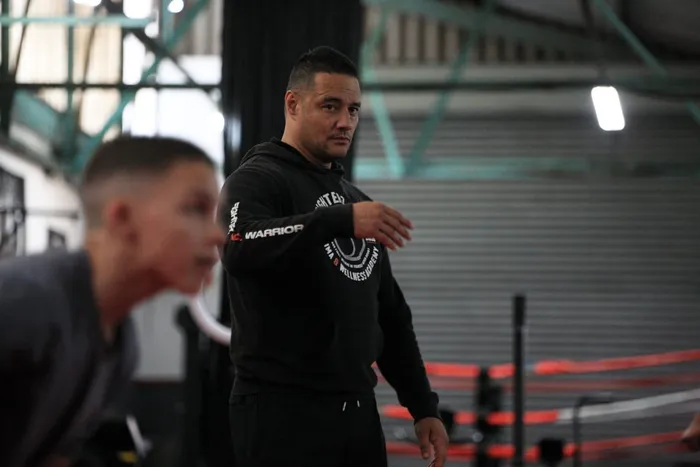
Fiaadh Edries, organiser of the Undisputed MMA Championship, shares his vision for UMC 2, marking a new era in Cape Town's MMA landscape.
Image: Supplied
Cape Town’s mixed martial arts (MMA) landscape is entering an exciting new phase characterised by structure, visibility, and ambition.
The Undisputed MMA Championship (UMC) is preparing to stage its second event, positioning itself not merely as a fight promotion but as a grassroots platform with long-term aspirations aimed at transforming the local combat sports scene.
Scheduled for April 25, 2026, at Oakland High School in the Southern Suburbs, UMC 2 follows their inaugural event held in November 2025.
Organisers assert that the first event laid a solid foundation for what they describe as a “new era” of locally driven MMA, one that is focused on community engagement and athlete development.
While established promotions continue to dominate the professional fight scene in South Africa, UMC is carving out a unique niche focused on community participation, youth development, and accessible entry points for emerging fighters.
"We are building something sustainable, not just events,” said organiser Fidaah Edries.
“The goal is to create a platform where local athletes can grow, be seen, and receive guidance in the right direction,” Edries emphasised the importance of providing amateur fighters with a professional experience from the outset.
“It’s about giving amateur athletes a professional experience, allowing them to feel the professionalism of an event of that nature from the start,” he explained.
This approach reflects a broader shift in Cape Town’s combat sports scene, where grassroots gyms and independent organisers are increasingly seeking structured pathways for fighters who often begin their journeys outside formal sporting systems.
The inaugural UMC event, hosted last November, attracted strong attendance and received positive feedback for its production quality and organisation, granting the promotion early credibility in a competitive landscape.
“The feedback we received was overwhelmingly positive, and it showed us that there is a real appetite for what we are trying to achieve,” Edries noted.
With UMC 2, the focus is now on consolidation and expansion, both in audience reach and sporting relevance.
“We want to ensure consistency and high standards across every part of the event,” he added, highlighting the meticulous planning that goes into creating a memorable experience for both fighters and spectators.
The event is expected to draw between 350 and 500 spectators, alongside a live-stream audience, signalling an effort to merge the traditional fight-night atmosphere with modern digital distribution.
This dual approach not only enhances the experience for those attending in person but also broadens the event's reach to fans who may not attend in person.
Beyond the cage, UMC is emphasising narrative building.
“We want to inspire the next generation of fighters and show them that there is a viable path in MMA,” Edries stated.
“This community-first approach is increasingly part of a wider conversation in Cape Town, where sport is often viewed as a competitive outlet and a tool for social intervention.”
UMC’s model embraces this duality, presenting fights not only as entertainment but as the culmination of training environments, mentorship, and local gym ecosystems that feed into the promotion.
“These gyms do a lot of good work,” Edries explained. By highlighting the contributions of local gyms, UMC aims to amplify their impact and provide them with a visible platform.
“They teach bully-proof classes for kids, self-defence classes for women, boxing, kickboxing, Muay Thai, MMA, and jiu-jitsu. A lot of people also come just for wellness, stress relief, and mental health reasons.”
The branding of a “new era” is intentional, signalling a departure from informal fight nights towards a more organised ecosystem where fighters, gyms, and audiences can engage consistently.
Although South Africa has long produced high-level MMA talent, visibility and continuity at the grassroots level have often been challenges.
Edries stated: “We are striving to bridge that gap by creating a repeatable platform that highlights local athletes while fostering audience loyalty around regional competition.”
For fighters, the opportunity lies in exposure and progression.
For audiences, it offers a closer connection to emerging talent who often hail from the same communities as their supporters.
“If we have events like this in the community, supporters or potential sponsors can come and watch and see their abilities, and then support them further in their careers later on,” Edries explained, underscoring the potential for local talent to gain recognition and support.
As Cape Town’s MMA scene continues to evolve, UMC 2 represents a crucial test of momentum: whether the early success of the debut event can be sustained as a promotion with cultural and sporting relevance.
“Our vision is clear, and we are committed to making a lasting impact on the MMA landscape in South Africa,” Edries concluded, reflecting the passion and determination driving UMC forward.
IOL