

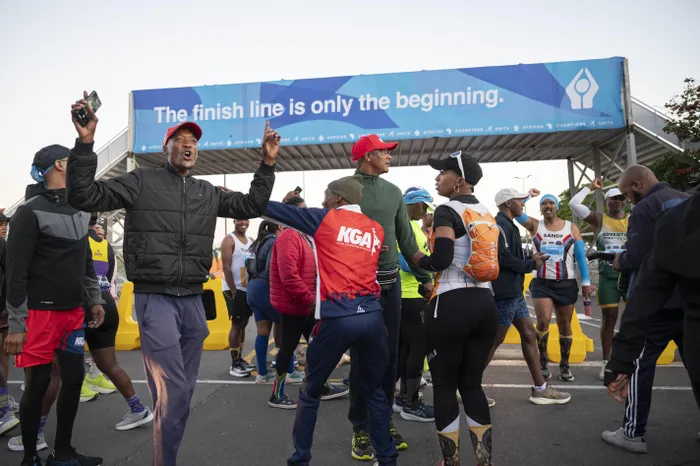
Over 24,000 runners from around the world were left stunned on Sunday morning when the 2025 Sanlam Cape Town Marathon was cancelled just hours before its start due to severe overnight winds.
Image: Armand Hough Independent Newspapers.
In the wake of the recent Cape Town Marathon cancellation, due to severe winds, thousands of runners, spectators and service providers were left with questions about refunds and recourse.
For many, the answers were not clear, especially as flights were booked, accommodation paid for and cars hired and yet,no race took place.
This moment offers a critical opportunity for ticket holders and event organisers alike to recognise the importance of understanding what their respective rights are and what responsibilities they carry when things unexpectedly go wrong.

Mamoeti Nosi, Product Head: Events at iTOO Special Risks.
Image: Supplied
"As a ticket holder, your first line of protection is the terms and conditions attached to your purchase. These provisions outline what you are entitled to and what you are not. If the event is cancelled due to circumstances beyond the organiser’s control, such as weather or safety concerns, many ticketing platforms and organisers are not legally obligated to refund the cost of your purchased ticket, or even the associated costs like travel or accommodation,” explains Mamoeti Nosi, product head: Events at iTOO Special Risks.
“It is a hard truth, but one that underscores the importance of reading the fine print. The law may offer limited consumer protection in these cases and unless the ticket includes cancellation cover or refund guarantees, your financial loss may be yours alone to bear.”
For organisers, she points out, the stakes are even higher, as a cancelled event does not just mean disappointed fans, it can mean reputational damage, financial loss and the erosion of trust built over years.
“You do not want to be the ‘Fyre Festival’ of sporting events: all hype, no delivery. Take the Cape Town Marathon; it is a flagship event with a loyal community and a history of excellence. But when the weather turned, there was no clear contingency plan communicated to runners,” she says.
“Compare that to last year’s DStv Delicious Festival, where organisers proactively replaced headliners and kept the show going. That is what mitigation looks like.”
Cape Town’s weather is notoriously unpredictable and the Cape Town Cycle Tour, for instance, has been cancelled before due to the weather. Hence, there is precedent and that should inform planning, argues Nosi.
“We often ask organisers to prepare for crowd flow, security, medical emergencies and more. But where was the gap this time? Climate change is shifting historical norms. If this kind of weather has not occurred in this month before, it is time to accept that the climate is changing and policies must evolve accordingly,” she says.
This underscores the importance of cancellation insurance, which is not a luxury but a necessity. It protects organisers’ financial investment, safeguards their reputation and ensures they can bounce back next year instead of shutting their doors forever.
“Essentially, if you have built a community around your event, cancellation insurance is how you protect it from financial loss, reputational damage and the risk of never running again,” Nosi points out.
“It is not just about covering costs. It is about demonstrating responsibility, foresight and care for your audience. Whether you are hosting 500 or 5 000 people, the risk is real and growing. Climate change, global uncertainty and shifting consumer expectations mean that no event is immune.”
There is a pertinent example of one organiser who paid for cancellation insurance every year for 24 years and it only triggered once, during the pandemic. But that one moment saved their business.
“That is the entire point; organisers should not buy insurance because they expect disaster. They should buy it because they understand that resilience requires planning,” says Nosi.
“And for organisers, the premium should be treated as non-negotiable. Just like hiring paramedics or securing crowd control, insurance is part of responsible event planning. You would not drive without car insurance, so why organise a marathon without cancellation cover?” adds Nosi.
More than just entertainment or sporting activities, major events are emotional investments. People train for months, travel across continents and build memories around these moments. When things go wrong,they deserve more than silence; they deserve a plan.
“Cancellation insurance is that plan. It is the difference between a setback and a shutdown. In today’s world, especially, it is the only way to ensure your event and your reputation go the distance,” Nosi concludes.
Mamoeti Nosi, product head: Events at iTOO Special Risks