

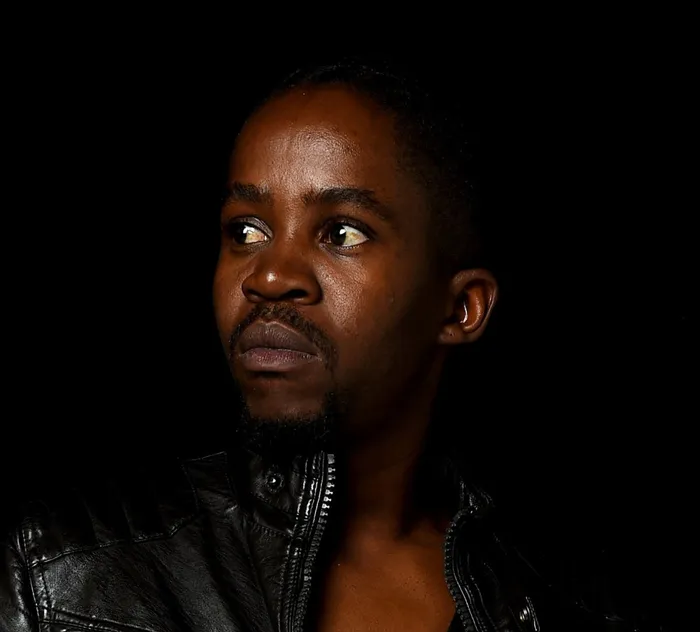
Rabbie Serumula, author, award-winning poet, journalist.
Image: File
There is a kind of diplomacy that does not arrive in a country; it rehearses itself into it.
When Leo Brent Bozell III sat before the United States Senate in October 2025, South Africa was not a place of affection. It was a problem. A country adrift. A government accused, implicitly and explicitly, of moral and political missteps. A nation whose choices, whether at the International Court of Justice or in its relations with Russia, China, and Iran, were framed as irritants to American order.
His words then were not careless. They were deliberate.
He spoke of fear, of white farmers, of property rights under threat, of a country where safety had eroded. He did not affirm the language of “genocide,” but he did not reject it. He circled it, careful not to disturb a narrative already alive in Washington.
Pressed to answer whether refugee policy should be based on race, whether claims of genocide were absurd, he dissolved clarity into anecdote. Fear replaced fact. Evasion replaced position.
Months later, standing on South African soil, credentialed and composed, Bozell found something else.
Love.
He may have been searching for it after apologising for dismissing South African court rulings that found the “Kill the Boer” chant was not hate speech.
By March 2026, the Department of International Relations and Cooperation had issued a démarche, a signal that his remarks had crossed from opinion into interference.
While presenting his credentials to Cyril Ramaphosa, he said he had “fallen in love with South Africa.” The same country now offered warmth and promise. The tone softened. The edges rounded.
But the dissonance remained.
Asked again about the “kill the Boer” chant and claims of white genocide, the ambassador reached for a familiar line: that such rhetoric is rejected not just by the United States, but by “the civilised world.”
It is a loaded phrase. One that draws a line even as it pretends to build a bridge.
This is not the language of a man transformed. It is the language of one who understands that diplomacy requires a change in tone, but not in position.
So what are we to make of this ambassador of two registers?
In Washington, he speaks to power. In Pretoria, he speaks to presence.
In the Senate, South Africa is a cautionary tale. On arrival, it becomes a country to admire. Yet the underlying script remains: pressure on the International Court of Justice case against Israel, concern over land reform, and the persistence of a narrative that refuses to loosen its grip.
Diplomacy is not about what is said. It is about what is carried forward when the tone changes.
There is a kind of drowning that does not happen in water, but in language, where words shift just enough to appear different, while pulling the same weight beneath the surface.
Bozell has not changed the current. He has only learned how to swim in it.
And South Africa knows the difference between a greeting and a position.