

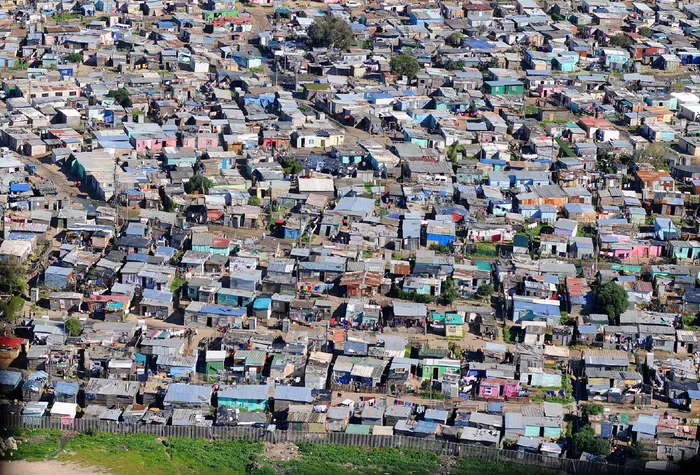
An aerial view of part of Khayelitsha.
Image: HENK KRUGER
The South African National Civic Organisation (SANCO) was launched in March 1992 as a unifying force for township-based civic associations. Its founding purpose was clear: to advocate for community rights, coordinate township development, and negotiate the transformation of local government.
At its inception, SANCO was a powerful flagship organisation, a multistakeholder body speaking with one voice to champion people-centred development. Under visionary leadership, particularly in the Western Cape, SANCO achieved significant successes. It mobilised communities, influenced policy, and became a credible partner in shaping post-apartheid local governance. However, even from its early days, SANCO developed a heavy reliance on the African National Congress (ANC). This dependence did more than provide relevance; it effectively ensured that the ANC enjoyed overwhelming majorities in many municipalities.
Meanwhile, SANCO leaders increasingly leveraged their positions for personal gain, benefiting from maladministration, cadre deployment, and “jobs for pals.” This dual dynamic tied SANCO’s identity to a single party while eroding its independence and credibility. The political landscape in South Africa has evolved. The emergence of multiple parties, coupled with the transition of the City of Cape Town and the Western Cape from ANC to DA control, presented new challenges. SANCO was not prepared for these shifts. In some instances, rather than embracing democratic growth, the organisation resisted change, perceiving it as a threat to its identity.
Over time, internal weaknesses surfaced. Some leaders continued to exploit their positions for personal enrichment, turning opportunities for community service into gateways for business gain. This erosion of integrity distanced leadership from the very communities they were meant to serve. Today, there are alarming reports of leaders extorting or obstructing projects to secure personal business contracts, leaving communities to grapple with poverty and high unemployment. Elective conferences, once a platform for selecting principled leaders committed to service, are now often dominated by factionalism, personal ambition, and manipulation.
Leadership contests prioritise access to power and resources over organisational capacity and genuine community development. The consequence is clear: SANCO has lost credibility. Trust from both communities and stakeholders has eroded. The organisation struggles to uphold its founding mandate, weakened by poor leadership, internal divisions, and a culture of self-interest. It is deeply concerning that a once powerful and inspiring civic movement has become a shadow of its former self. The erosion of ethical leadership and the rise of corrupt practices have undermined SANCO’s foundational principles, leaving the very communities it was created to serve to bear the consequences. SANCO’s story is a cautionary tale.
Civic organizations must remain rooted in their communities, accountable to the people they serve, and resilient in the face of political shifts. Without these commitments, even the most promising movements risk losing their way.
Thulani Dasa (Community Activist)
Khayelitsha