

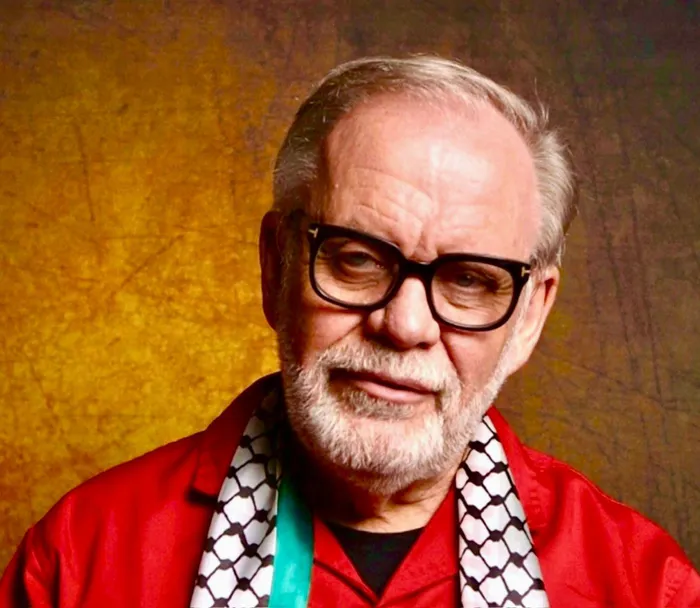
Carl Niehaus is a former South African Ambassador to the Netherlands and currently serves as an EFF Member of Parliament.
Image: Supplied
As I reflect on the vibrant pulse of the Cape Town International Jazz Festival (CTIJF), now firmly established as one of the world’s most iconic jazz gatherings, my heart swells with pride and gratitude.
What began as a bold vision to transplant the spirit of the legendary North Sea Jazz Festival from The Hague to the Mother City has blossomed into a cultural powerhouse that not only celebrates South Africa’s rich musical heritage but actively contributes to true nation building and the economic resurgence of Cape Town and our broader republic.
In an era where division can still cast long shadows, the CTIJF stands as a triumphant testament to the unifying power of jazz – a genre that has long been woven into the very fabric of our struggle history and national identity.
The sentiments expressed in recent tributes at Robben Island, where CTIJF musicians gathered to honour our liberation legacy ahead of the festival, resonate deeply with me. There, on those hallowed grounds where Nelson Mandela and so many other political prisoners endured incarceration for the dream of freedom, artists paid homage through music that transcends sorrow and ignites hope.
Dr Iqbal Survé captured it poignantly when he noted that jazz musicians like Abdullah Ibrahim, Miriam Makeba, Hugh Masekela, Jonas Gwangwa, Caiphus Semenya and Letta Mbulu “spoke to the Struggle and not just the struggle of Africa.” Jazz, he observed, has always been in the lifeblood of our struggle, connecting us to the profound humanity at its core.
Lance Witten echoed this, reminding us that “music, like the Struggle for liberation, has the power to unite, to heal, and to transcend even the deepest divides.” These words are not mere rhetoric; they encapsulate how jazz served as a weapon of resistance during the dark days of apartheid. Nowhere was this more evident than in the fierce cultural battles against the Group Areas Act and the brutal forced removals that tore communities apart.
In Sophiatown, that vibrant multiracial hub of Johannesburg, jazz became the soundtrack of defiance. As the apartheid regime implemented its policy of racial segregation and demolition in the 1950s, Sophiatown’s clubs pulsed with the improvisational fire of local jazz legends and the infectious rhythms of the emerging Motown sound filtering in from America. These jazz club nights – blending marabi, mbaqanga and American jazz and soul influences – provided both solace and subversion. Musicians and audiences alike used the music to assert dignity, cross racial barriers and mock the absurdity of the regime’s edicts.
The destruction of Sophiatown did not silence the jazz; it amplified its message of resistance, carrying the spirit of freedom into exile and underground networks. That rich resistance history, so integrally intertwined with the role of jazz in our liberation struggle, remains one of my great emotional attachments and motivations in my current political work.
As the EFF’s Elections Convener for the Johannesburg B Subregion – an area that proudly encompasses Sophiatown and its legacy – I draw daily inspiration from this heritage. Walking those streets, engaging with residents whose families remember the jazz club nights and the bulldozers, reinforces my commitment to the EFF’s vision of radical economic transformation and true liberation.
The jazz of Sophiatown teaches us that culture is not a luxury but a battleground for dignity and belonging. It motivates me to fight for the kind of South Africa where working-class communities are never again displaced, where artistic expression fuels justice, and where the improvisational genius of our people builds a better future.
The CTIJF revives and expands this tradition, transforming historical pain into collective celebration. It bridges generations, races and classes, fostering a shared South African identity rooted in resilience, creativity and ubuntu. In doing so, it advances nation building by creating spaces where South Africans from all walks of life converge – not in confrontation, but in harmonious improvisation, much like a jazz ensemble finding unity in diversity.
My personal connection to this festival runs deep, forged during my tenure as South Africa’s Ambassador to the Netherlands in the late 1990s and early 2000s – a pivotal time when our young democracy was reaching out to the world to rebuild bridges shattered by isolation. It was through close collaboration with my late dear friend and fellow liberation struggle fighter, the visionary photojournalist, activist and cultural entrepreneur Rashid Lombard, that the seeds of the CTIJF were sown.
Rashid approached the organisers of the renowned North Sea Jazz Festival in The Hague with a daring proposition: to bring the festival’s magic to Cape Town. As Ambassador, I had the profound privilege of facilitating this partnership through the South African Embassy. We worked hand in hand, leveraging diplomatic channels to connect Afrika – the events company Rashid founded – with Mojo Concerts BV, the Dutch organisers. This was more than logistics; it was an act of cultural diplomacy that symbolised the new South Africa’s re-entry onto the global stage.
I recall with vivid affection the many South African jazz greats who graced the North Sea Jazz Festival stages during those years, their performances electrifying audiences and showcasing the soul of our nation. Legends like Abdullah Ibrahim (then still often referred to as Dollar Brand), whose intricate piano explorations evoked the rhythms of the Cape; Hugh Masekela, whose trumpet wailed with the fire of exile and return; Miriam Makeba, the iconic “Mama Africa,” whose voice carried the weight of a continent’s aspirations; and Jimmy Dludlu, whose guitar wove Afro-jazz tapestries that blended tradition within novation.
Reports from those festivals highlighted how these artists, alongside emerging talents, drew packed crowds, proving that South African jazz was not peripheral but central to the world’s musical conversation. As Ambassador, I facilitated their engagements, ensuring embassy support smoothed visas, logistics and cultural exchanges. But it was the personal moments that truly cemented the bonds. Among my fondest memories are the wonderful parties I hosted at the Ambassadorial residence in The Hague.
These gatherings were alive with laughter, storytelling and, of course, music. South African artists fresh from North Sea performances would join diplomats, Dutch jazz enthusiasts and festival organisers for evenings of camaraderie that blurred official lines. One stands out in particular: a glorious Saturday afternoon when we partied and danced with such unrestrained joy at the Residence of the South African Ambassador in The Hague, alongside Rashid Lombard, Billy Domingo – Rashid’s long-time partner and a key figure in the festival’s operations – and the North Sea Jazz organisers.
The soundtrack was pure South African gold – tracks from Miriam Makeba and the greats we had just celebrated on stage. We danced until the lawn in the garden was trampled beyond repair, necessitating a full replanting afterwards! Those carefree hours embodied the spirit of the new South Africa: former exiles, activists and international partners united in celebration, proving that culture could heal what politics had torn asunder. I remain deeply grateful that I could play even a modest role in forging the initial relationship between the North Sea Jazz Festival and what would become the CTIJF.
That partnership, launched in 2000 as the Cape Town North Sea Jazz Festival at the Good Hope Centre before evolving into the expansive event at the Cape Town International Convention Centre, was one of the most fulfilling achievements of my ambassadorship. Among the many initiatives I undertook to strengthen bonds between the Netherlands and democratic South Africa – from trade missions to educational exchanges – this cultural bridge stands out as one of the very best. I am still immensely proud of it today, and I celebrate it every year when I attend the CTIJF, for it laid the foundation for an institution that has since soared to global prominence.
My admiration extends profoundly to Dr Iqbal Survé and the Sekunjalo Group for their visionary stewardship in building out and securing the future of the CTIJF. Under their guidance, the festival has grown exponentially from its early days into a world-class spectacle that draws tens of thousands of attendees annually, blending international headliners with homegrown brilliance.
Positive media reports consistently underscore its success: it has been hailed for delivering a R522 million boost to the Western Cape economy, with ripple effects pushing the national impact toward R900 million through tourism, hospitality, retail and creative sector spending. Studies from earlier years already quantified its power – generating around R158 million in direct and indirect economic activity while supporting over 1,000 jobs.
These figures are more than statistics; they represent real livelihoods for musicians, technicians, vendors, hoteliers and young entrepreneurs. The festival revitalises Cape Town’s cultural calendar, positioning the city as Africa’s jazz capital and enhancing South Africa’s soft power on the global stage. Yet the CTIJF’s true value lies beyond economics. It embodies nation building by empowering local artists, nurturing emerging talent and creating inclusive platforms that affirm our diverse heritage.
In a country still navigating the complexities of reconciliation, it offers a living classroom in unity – where audiences sway together to the improvisational genius that mirrors our democratic experiment. As Professor Saths Cooper noted at the Robben Island tribute, such events unleash the spirit of liberation, inviting reflection, dialogue and forward momentum while never forgetting the past.
The Cape Town International Jazz Festival is a resounding success story – one that honours our struggle history, enriches our culture and drives our economy. It reminds us that true nation building thrives not in grand declarations alone, but in the shared rhythms that bind us. As a proud South African who played a small part in its genesis, and who continues to draw strength from Sophiatown’s jazz-infused resistance in my political work today, I celebrate its incredible growth and look forward with optimism to the generations of harmony it will continue to inspire.
*Carl Niehaus is a former South African Ambassador to the Netherlands and currently serves as an EFF Member of Parliament.
The views expressed do not necessarily reflect the views of IOL or Independent Media.