

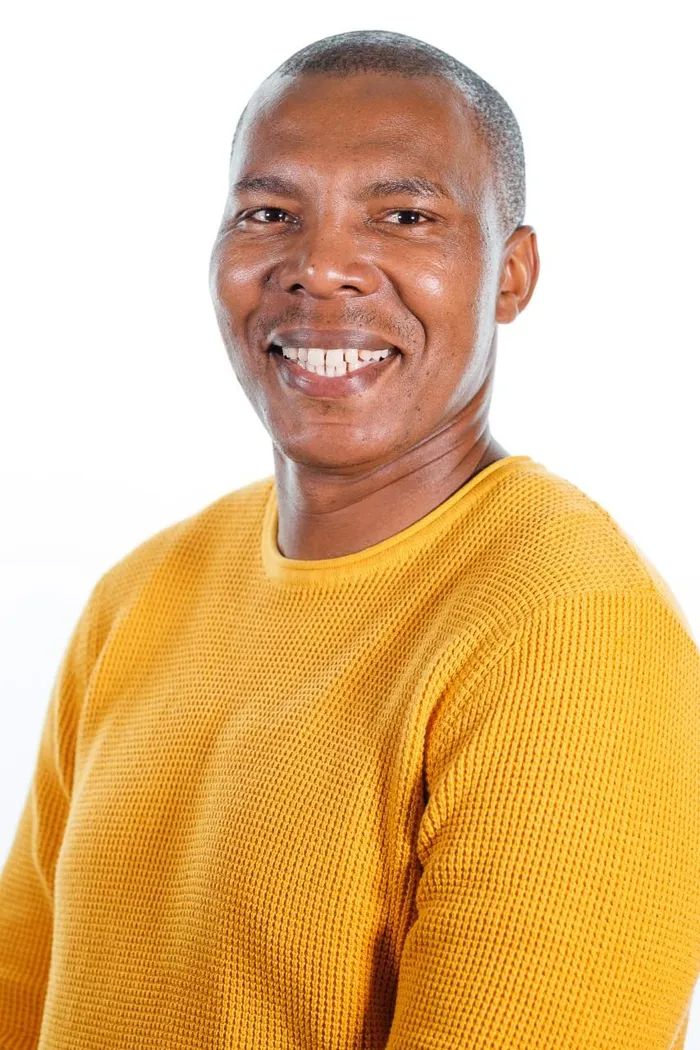
Stellenbosch University senior lecturer in the Department of African Languages Dr Simthembile Xeketwana is calling for the empowerment of young people to promote their mother languages in a multilingual society.
Image: supplied
CELEBRATED annually on 21 February, International Mother Language Day holds special significance in South Africa, as it underscores the vital importance of preserving, promoting, and nurturing all of the country’s diverse languages.
This observance occurs in the decade of the indigenous languages as per the proclamation of the United Nations General Assembly.
The proclamation by UNESCO recognises that indigenous languages are a vital part of indigenous peoples, their cultural heritage, identity and social cohesion. Thus, there must be a continuous and active protection and promotion of these languages.
Considering the South African context, this emphasis means that the rich diversity of indigenous languages across the country should be recognised and incorporated into different parts of public life.
These include the government, where communication and policy documents should replicate the linguistic diversity, and in education, where learning and teaching in the mother tongue should be supported and promoted to ensure equitable access to epistemologies and cultural diversity.
Ultimately, celebrating this day serves as a reminder that all languages carry distinctive knowledge, history and values; thus, advancing multilingualism should be seen as pivotal as it strengthens both national unity and individual cultural identity.
However, multilingual education might be disempowering African languages and using symbolic gestures to mask the dominance of English. Some argue that youth voices perpetuate the hegemony of English. I often wonder if multilingual education is indeed happening when even African languages, such as isiXhosa, are being taught in English.
A few days ago, I lectured in my second-year isiXhosa class and started listing the parts of speech in isiXhosa. A very distressed voice erupted from the students, “Doc, last year we were taught isiXhosa in English”.
I wondered then whether colonial ways of teaching African languages have ceased in academic spaces or whether they have persisted despite isiXhosa having been a written language for years.
The student’s remark also made me realise that the colonial and apartheid language policies and hierarchies continue to shape power dynamics in the classroom.
In a recent study in Language Matters, my colleague Christine Anthonissen and I indicated that at times some institutions can be diminishing multilingual spaces, where glossy policies profess multilingualism but the actual practice largely remains monolingual.
What the student's utterances proved is that we might be faced with a quandary as language researchers because we may think that we are producing multilingual citizens but, in fact, are producing people who use English to survive in different contexts.
This will happen if multilingual policies and their implementation remain vague in our educational institutions. While I recognise that there are notable strides made to enhance multilingualism in different universities, especially when it comes to signage, corporate communications and the like.
Additionally, the hyperbole in scholarship on multilingual education and how it should be a vehicle in decolonial movements raises the question of whether it can bring about real transformation or whether it remains a mere rhetoric.
The point is; we might need to relook at what it means to create young multilingual scholars in South Africa today. This comes as African languages are still struggling as subjects and as languages of learning and teaching in our higher education sector. In this, one sees whose language(s) get institutional recognition and when, and whose language continues to be marginalised.
As I have argued elsewhere, the only way to see a true multilingual education is to ensure that African languages are used more in writing, even in academia. If African language students cannot contribute to scholarly discourses in their mother tongues as they can in English, we may be wasting our time.
For African languages to be seen as languages for accessing knowledge and be implemented as such is a matter of equity and justice. In our classrooms, we still have young individuals who bring diverse linguistic repertoires but are ignored in the construction of knowledge.
It is about time we start encouraging young people to use and develop African languages in the digital world. Youth-led movements that will promote African languages on different platforms could move us beyond mere rhetoric. To do this, we can engage language professionals, those who use language and know how language works in different spheres of society.
These days, African languages such as isiXhosa are being spoken by different people and used to produce literary works. The existing body of work can be used to enhance African languages and multilingualism in education.
In conclusion, as we commemorate International Mother Language Day, we must pause and ponder the following questions: Is multilingual education in South Africa a betrayed promise?
Are we producing multilingual citizens or just people who use English as a survival mechanism?
Going forward, we must find solutions to the language issues that we face and empower young people to promote their mother languages in a multilingual society.
Dr Xeketwana is a senior lecturer in the Department of African Languages at Stellenbosch University.