
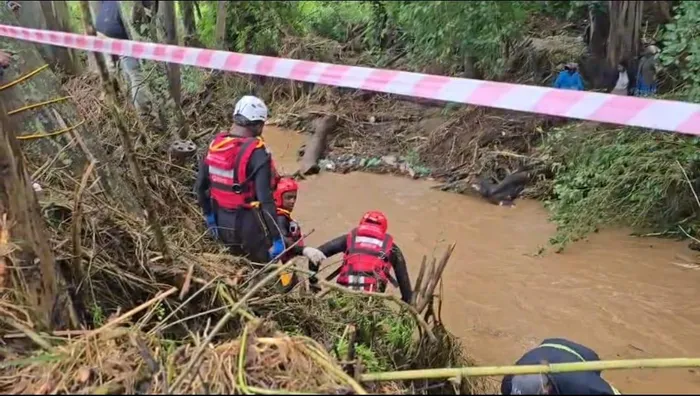
The bodies of two people were recovered in Umshwathi Local Municipality in the KZN Midlands following heavy rains that led to flooding. The effects of climate are accelerating as evidenced by the crippling droughts in the Eastern Cape to devastating floods in KwaZulu-Natal, says the author.
Image: File: KZN Cogta
SOUTH Africa is no stranger to climate extremes. From crippling droughts in the Eastern Cape to devastating floods in KwaZulu-Natal, the reality is clear: the effects of climate are accelerating.
The question is no longer whether we should initiate adaptation measures, but how fast we can use scientific knowledge to take practical action?
Science has mapped the risks – rising temperatures, erratic rainfall and biodiversity loss. But reports alone will not protect communities or infrastructure. What will? Practical, inclusive adaptation strategies implemented on the ground.
Take renewable energy projects as an example. Solar farms in the Free State are already facing erosion and stormwater challenges. The solution is not complicated: design sites with proper drainage, reinforce soil stability and integrate biodiversity buffers. These measures cost far less than repairing damaged infrastructure after a flood. Adaptation is not an abstract concept. It is about making smart choices today to avoid catastrophic costs tomorrow.
Communities must lead this transformation. Local ownership ensures sustainability, while targeted training creates green jobs. Imagine solar farms doubling as training hubs where young people learn about erosion control, vegetation management and biodiversity monitoring. Women can lead community nurseries supplying indigenous plants for site rehabilitation. These are not theoretical ideas; they are practical steps that strengthen resilience and livelihoods simultaneously.
Some argue adaptation is expensive or secondary to cutting emissions. But here is the truth: inaction costs more. Every delay in our response amplifies damage, disrupts livelihoods and drains public funds. Adaptation and mitigation are partners, not competitors. While we reduce emissions, we must prepare for the climate shocks already locked in.
So, what needs to happen now? We need to –
Turning science into action is not just a technical challenge, it is a moral and economic imperative. South Africa has the knowledge and talent to lead in climate resilience. What we need now is a sense of urgency and targeted collaboration.
The time for reports and recommendations has passed. Let us act – because the cost of waiting is a future we cannot afford.
Mashabela is an environmental specialist in the renewable green energy sector.
Turning science into action is not just a technical challenge, it is a moral and economic imperative. South Africa has the knowledge and talent to lead in climate resilience. What we need now is a sense of urgency and targeted collaboration.
The time for reports and recommendations has passed. Let us act – because the cost of waiting is a future we cannot afford.
Mashabela is an environmental specialist in the renewable green energy sector.
Turning science into action is not just a technical challenge, it is a moral and economic imperative. South Africa has the knowledge and talent to lead in climate resilience. What we need now is a sense of urgency and targeted collaboration.
The time for reports and recommendations has passed. Let us act – because the cost of waiting is a future we cannot afford.
Mashabela is an environmental specialist in the renewable green energy sector.
Turning science into action is not just a technical challenge, it is a moral and economic imperative. South Africa has the knowledge and talent to lead in climate resilience. What we need now is a sense of urgency and targeted collaboration.
The time for reports and recommendations has passed. Let us act – because the cost of waiting is a future we cannot afford.
Mashabela is an environmental specialist in the renewable green energy sector.