

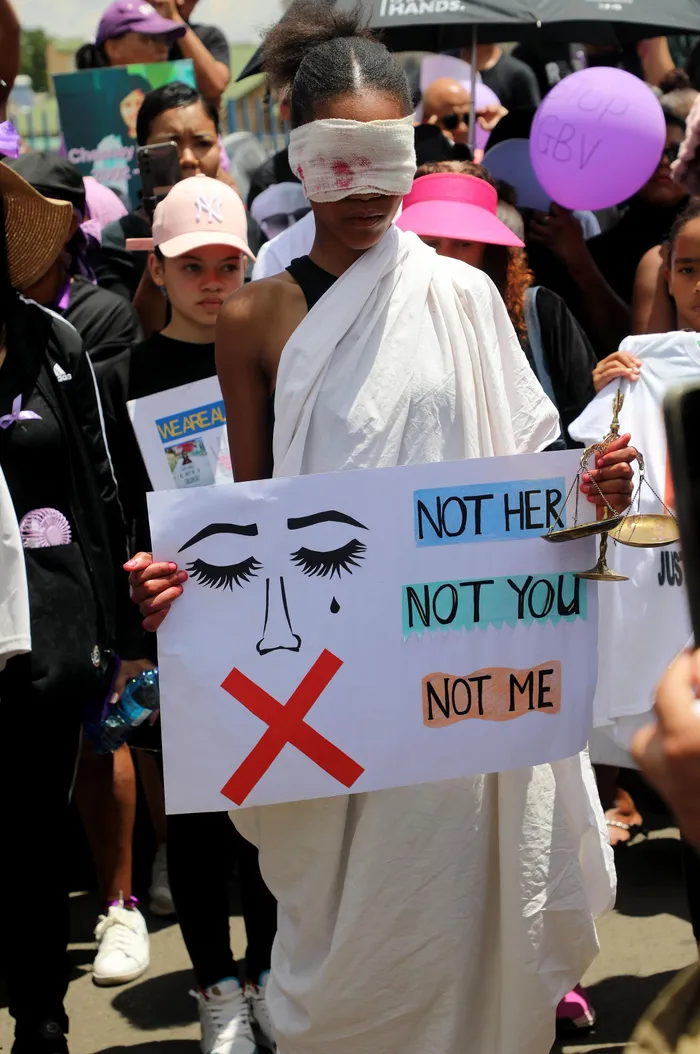
For years I watched my mother get beaten, not because she was weak, but because she dared to have a spine.
Image: File: Timothy Bernard / Independent Newspapers
I USED to think I’d gotten away clean. For years I watched my mother get beaten, not because she was weak, but because she dared to have a spine. She’d be slammed against walls, dragged by her hair, called every degrading name imaginable, all for the crime of wanting to protect her child and keep some shred of dignity but daring to go out and work whilst my father drank himself into oblivion.
And every time, she’d get back up, wipe the blood and tears, like nothing happened so I wouldn’t fall apart. I told myself that if I just stayed the “good” child (straight A’s, polite, talented, never talking back to either parent), the violence wouldn’t touch my soul. I convinced myself I was fine. I was lying. The truth didn’t hit me until I held my own baby for the first time. Suddenly I understood, bone-deep, what real strength looks like.
My mother wasn’t just surviving; she was a warrior absorbing blow after blow so they wouldn’t land on me. And in that same moment, all the buried terror, rage, and grief I’d stuffed down for decades came roaring up. I wasn’t fine. I’d been walking around with shrapnel in my chest, pretending it was jewelry. Here’s what I now know for certain: witnessing your mother being abused is abuse. Full stop.
It teaches you that love and terror can live in the same house. It teaches you to scan rooms for exits before you even know why. It teaches you to make yourself small and perfect so maybe, just maybe, the monster won’t turn on you next. And the worst part? You carry that programming into adulthood, into your own relationships and parenting, unless you deliberately drag it into the light.
So let me be blunt: if you grew up watching gender-based violence, you do not “get over it” by being successful, spiritual, or stoic. You get over it by admitting it happened, by feeling the rage and grief you weren’t allowed to feel as a child, and by talking, out loud, to someone who knows how to help you rewire the damage.
Silence is the abuser’s greatest ally. Every year you pretend you’re untouched, he still wins. My mother never got justice. She never got therapy. She never got to scream the truth in public because she was afraid of the stigma, the gossip in the community, how it would affect me and ultimately she thought she was loyal and that on some level the abuse felt like normal life to her. But I do. And if you’re reading this and your stomach is in knots because it sounds too familiar, I’m screaming it for both of us: speak.
Tell a friend, a therapist, a hotline, a support group, anyone who will listen without minimising. Break the chain. The little kid who hid under the table while Mommy was being hurt is still inside you, waiting for you to come back and say, “It’s over.
You’re safe now. We’re telling the truth.” Do it. Not because it’s easy (because it’s brutal), but because it’s the only way the abuser finally, truly loses.
This article forms part of a series written by GBV victims and survivors to be featured during this 16 Days of Activism for No Violence against Women and Children Campaign. Full names are being withheld to protect identities.
Cape Times