ANC's chances in the Western Cape hampered by lack of credible leadership rejuvenation
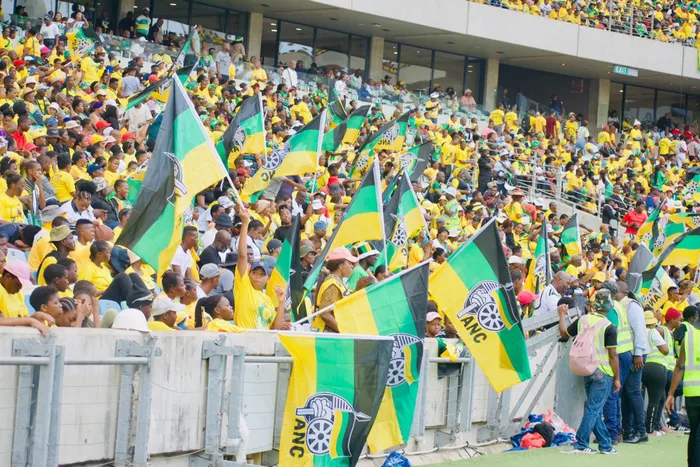
Trust between ANC members and constituents has been damaged by ongoing leadership instability, internal factionalism, and a failure to provide consistent service outcomes, argues the writer.
Image: File Picture
THERE seems to be clear party dynamics, and democratic accountability failures by the ANC in the Western Cape.
It seems to be on its usual downward trajectory of losing voters once more in the Western Cape as prophesied by revered cleric Allan Boesak. The fourth-largest province in South Africa continues to be an intriguing case study on political dynamics and governance.
The province, which was formerly thought to be politically unique, has turned into a bastion for the DA, while the ANC is having difficulty in being relevant again.
A major change in the political balance of the province is indicated by the recent high-profile defections of ANC members to the DA political stable, which highlight a rising crisis within the former ruling party as evidenced by the Electoral Commission of South Africa, 2024 results.
These defections show structural flaws in the ANC's National Provincial intervention strategy, making them more than just symbolic from the standpoint of public policy.
Trust between party members and constituents has been damaged by ongoing leadership instability, internal factionalism, and a failure to provide consistent service outcomes as was once more echoed by the well-distinguished political commentator Boesak.
On the other hand, the DA keeps positioning itself as a party of stability and administrative prowess by drawing on its governing experience, especially in metropolitan areas. However, this dynamic presents important issues regarding democratic accountability in the political scenario of the Western Cape.
Although the DA's dominance points to good governance, it also runs the risk of solidifying the province's one-party system, which might restrict inclusivity and innovative policies.
The ANC has an existential challenge and its chances in the Western Cape remain poor in the absence of a strong policy agenda and credible leadership rejuvenation.
And according to the sentiments raised by Adam Habib in 2021, short-term populist gestures and nostalgic references to the liberation past cannot replace real advancements in the provision of services.
Recent events have provoked heated discussion regarding accountability, governance, and the distribution of power inside the party, especially the choice to put elected regional leaders under administration.
These interventions have important political and policy ramifications, even though they are frequently explained as remedial actions to alleviate dysfunction.
From a governance standpoint, it is evident that the decentralisation principle which is essential for responsive and participatory governance is undermined by centralising authority through the marginalisation of democratically elected leaders.
These measures are seen as a vote of no confidence by regional leadership, which is already having difficulty establishing its importance in a province dominated by the DA. This view weakens the ANC's capacity to give voters a unified front by eroding internal cohesiveness and widening factional differences.
These interventions by Luthuli House have equally detrimental optics. Administrative takeovers are also seen by voters as a sign of instability. Such theatrics support perceptions of dysfunction and central meddling in provincial politics where the ANC is already perceived as disengaged from service delivery concerns.
In the meantime, the DA takes advantage of this unrest by presenting itself as a party that values stability and effective government, a message that appeals to urban voters.
These political developments present important issues about organisational design and accountability from the perspective of public voter perceptions.
Restoring regional political capacity may need involvement, but the procedure must be open and consultative. Overbearing tactics run the risk of alienating communities and party members, eroding the credibility of democracy.
Additionally, they divert attention from the pressing need for significant policy innovation to solve the province's economic development, housing crisis, and inequality.
In the totality of it all, the ANC's Western Cape approach is a reflection of a larger national issue which is that there should be balancing demands of local political autonomy and accountability with centralised political management by Luthuli House.
The party needs to stop using factional tactics and symbolic gestures if it wants to regain credibility and the province at large. It is crucial to have renewed leadership style and approach, clear policy directives, and sincere membership involvement.
Administrative interventions by the secretary general should continue to be a temporary solution that avoids worsening the long-term decline in the absence of fundamental reforms within the ANC.
In essence, the Western Cape Province is a reflection of South Africa's democratic crossroads rather than just a provincial battlefield. Whether political players would eschew theatrics and adopt governance models that put an emphasis on equity, transparency, and citizen participation is the question.
However, even though the DA seems to be doing well in terms of administration and governance, it cannot be seen as the Western Cape's people's last hope.
The story of competence frequently obscures the harsh realities that marginalised people endure, especially in Cape Town's old black townships where inequality and poor service delivery are still pervasive.
Systemic issues like housing shortages, unemployment, and inadequate infrastructure are still problems in many places especially in the former black townships.
The structural disparities left over from apartheid have not been adequately addressed by the DA's programs, despite its reputation for sound budgetary management and governance. In these communities, service delivery is frequently sluggish, disjointed, and unable to address the pressing needs of locals who feel left out of the province's advancements.
It would be very much risky to assume that social fairness and administrative proficiency are synonymous. Beyond preserving stability in wealthy suburbs, governance must actively remove obstacles that sustain inequality and poverty.
The DA risks of perpetuating a two-tier society, one that prospers in well-served metropolitan areas while ignoring historically underprivileged communities if it does not intentionally prioritise inclusive development.
For any citizen, it’s clear that a true dedication to fairness, participatory governance, and revolutionary policies that give priority to the most disadvantaged are necessary for true developmental and courageous leadership in the Western Cape.
For those who most need it, the promise of salvation will remain elusive until provincial governance is guided by these values, not the selfish overtures for political dominance and control.
I contend that these occurrences underscore the pressing need for systemic change in South African politics, both as a voter and as a public policy scholar.
To rebuild public trust, all sides must place a high priority on equity, openness, and participatory governance. The Western Cape is a microcosm of the national struggle to balance historical legacies with modern aspirations for accountability and growth, not just a regional battlefield.
Whether political actors can abandon short-term election strategies in favour of long-term policy solutions that benefit all citizens will determine the future of democratic governance.
Dr Ngumbela is with the Department of Government Management at the Central University of Technology, Free State.