

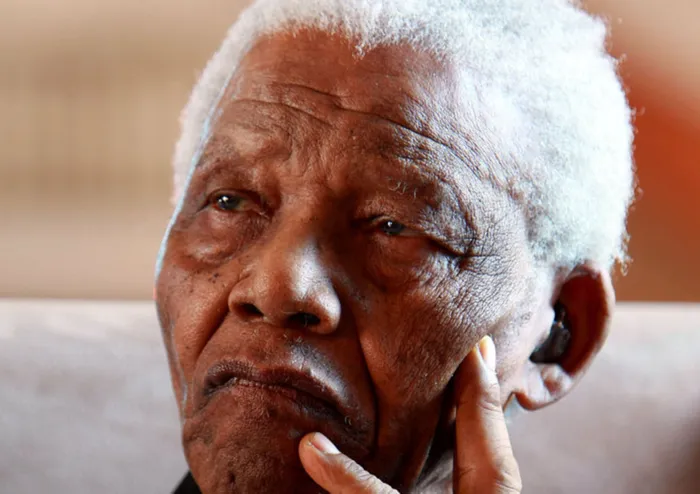
609 Nelson Rolihlahla Mandela 081208. Picture: Bongiwe Mchunu 609 Nelson Rolihlahla Mandela 081208. Picture: Bongiwe Mchunu
It is so beautiful to witness how Mandela Day has captured the imagination – not only of South Africans who share his blood, but the whole wide world.
Before his release and on becoming our founding president on a peace and reconciliation ticket, there was hardly a nook or cranny in our global village where no one knew his name.
Indeed, it warmed the hearts and put steel into the bones of many an Umkhonto we Sizwe guerrilla-in-training in Angola, way back, to witness how peasants, even in the most remote rural areas, would flock to rallies and how, unable to write, they would nonetheless make simple crosses on petitions demanding the release of Mandela. For, if little other information ever reached them, they all knew about Mandela. And loved him to bits, like the rest of us.
The UN General Assembly adopted resolution A/RES/64/13 in November 2009, declaring July 18 Nelson Mandela International Day. Millions of the world’s poor, vulnerable, hungry, neglected and unloved have since felt the love of ordinary people. Mandela is continuing to change the world, even from the grave.
This year’s theme is “Take action; inspire change”. Or as Madiba himself put it when he finally retired from retirement: “It is now in your hands, so don’t call me, I’ll call you.”
From among the millions of activities, it is those littlest of hands of our tiny tots drawing a card for their Tata Madiba or helping to make sandwiches for the poor on this day that is so gratifying .
Another comes from the foundation of FW de Klerk, the only president we know of to release a prisoner to become his president after he had to step aside.
De Klerk said the foundation’s staff “will be making Visual Communication Kits, which Autism Western Cape will then donate to families who have little or no access to resources. Among others, these kits are designed to help give children who are non-verbal (or lack the language skills to verbalise their needs) a voice, through the use of communication cards”.
That’s how far former bitter enemies have come. Which brings to mind our favourite saying of Madiba’s, for obvious reasons, not least the trials and tribulations this paper has had to endure with a change of ownership and direction in becoming a voice for all: “It always seems impossible until it is done.”
Long live the loving spirit of Nelson Mandela, long live the spirit of no surrender.