

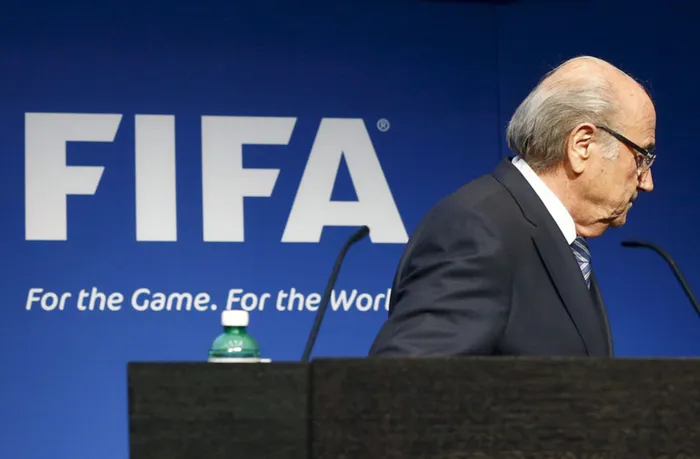
Now that Sepp Blatter has fallen on his sword, football must act decisively to heal the deep wounds.
Last week, we called on Blatter to step down, but felt it unlikely he would.
Indeed, he was belligerent at a post-election press conference where he defiantly declared that even though the vote was far from unanimous, he was head of the whole world of football.
Blatter was in full-on defiant mode for a few days, until his sudden resignation yesterday after a hastily arranged press conference. There has already been intense speculation that Blatter decided to quit because the FBI was close to uncovering the “smoking gun” that would have forced him out.
Whatever the reason for Blatter’s decision, football now has a golden chance to appoint someone of integrity in his place, who can drive the reform process and ruthlessly rid the game of the cobwebs of corruption. Who will that be?
That is not an easy question to answer.
High-profile figures like Jérôme Valcke and Issa Hayatou have not escaped the tentacles of scandal. And, as we report on the sports pages today, Jordanian Prince Ali bin al-Hussein, who stood against Blatter last week, apparently did not make a very good impression at the Fifa congress in Zurich.
It is a great pity that our own Danny Jordaan has been embroiled in the murky allegations that the South African government paid a $10 million bribe for the staging of the 2010 World Cup – allegations that Sports Minister Fikile Mbalula once again strenuously denied yesterday. An African president of Fifa would be a magnificent achievement and a great boost to the continent’s standing in world sport. Two years ago, former Burundi soccer boss Lydia Nsekera became the first woman to be elected to Fifa’s executive committee. Would she be an inspiring choice?
Former players such as Michel Platini, Luis Figo and Zico have also shown interest in the job. In the end, whoever takes over from Blatter faces a daunting task. But at least the beautiful game has a chance to be beautiful again.