

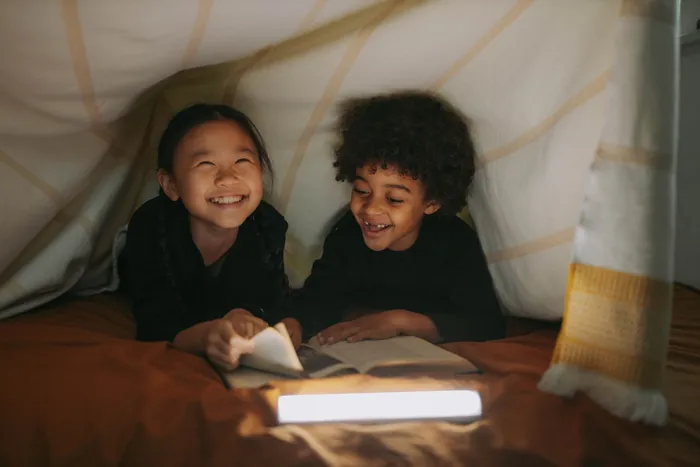
File picture: Pexels
Cape Town - Bedroom sharing among siblings occur for a variety of reasons. It may be an economic decision or one based on space (or the lack thereof), or preference on the part of the parent.
A lot of individuals feel the need to move their children into one room as a way to have them form a better bond.
In special cases, it is for the sake of assistance and/or care. For example, this would work for a younger sibling who suffers from night terrors or has anxiety and fears being alone.
In cases where extended family members are a part of the household, bedroom sharing is very common.
Multi-generation living dominates in South Africa, especially among the lower middle class and poverty stricken families.
As more relatives move in, adjustments need to be made. Usually that includes compromising on the kids’ space. In such circumstances, one child (in some cases more) needs to sacrifice his or her room and move into another already occupied by a sibling(s).
This requires adaptation of the new setting and becoming accustomed to bedroom sharing.
According to Statistics South Africa, 39.9% of households in South Africa are nuclear, while extended families account for 34.2% of households.
The average nuclear home has one or two children whereas extended families have a greater number.
Households with children who exceed that number accounted for 84.5% of all extended households. In both these living arrangements, private rooms for every individual is not possible.
A nuclear family with two children may most likely only be able to afford a house or an apartment containing one room. Extended households need to take additional adult family members into account as well.
This makes the idea of separate individual rooms an impossible reality in the event that living in such a household is due to economic reasons, i.e. destitution and impoverishment.
Pros
This arrangement may possibly lead to a greater bond. Children who share, or have been sharing, a room from a very young age tend to have a tighter bond than those who have or had, private rooms at a young age.
They learn the value of respect, especially respect of material possessions. They adapt the trait of control by refraining from overstepping. With this trait, they build good character by respecting one another’s boundaries.
Another great outcome is the development of interactive abilities, therefore becoming proficient in solving problems via techniques that may be beneficial to all. They learn to take matters into their own hands and find solutions to problems at hand … Together, as a team.
In this way, they acquire the knack for collaboration; this will largely benefit them, both for impending school years, then later in the workplace.
Group work is an inevitable activity in primary and secondary educational institutions. Harnessing the skill to collaborate will allow the child to effectively express him/herself, especially when he or she is upset so as to avoid self-loathing or negative spirits such as self-loathing and frustration.
Overall, communication becomes one of their greatest strengths.
Cons
Registered counselling psychologist and certified psychometrist, Philencia Jacobs, experienced in adolescent counselling and child assessment, offers some insight on the negative aspects of this sleeping arrangement.
What are the major issues in the case of an older sibling sharing with a younger one?
“It becomes a problem in their different developmental stages,” she says, in reference to siblings sharing with a big age gap.
“It can be that there is either a sleep disruption,” Jacobs says since there may be a difference in agreement with regards to sleeping schedules.
Another common issue Jacobs mentions is the lack of privacy.
“Especially when you are the older sibling,” she says, “then it [bedroom sharing] becomes an issue.”
Routines differ. “[They] have two different routines from one another.” She also makes mention of relaxation time that occurs in the evening.
Routine, privacy, winding down time … “Those are things that can cause issues, and the fact that both are in developmental stages.”
Boys and girls sharing … What are the issues here, keeping age in mind?
“Boys and girls sharing works out best when children are still young – from toddler age to young child.
“Once they go into the next level of development – preteen or teen – it becomes difficult because your body changes.
“You don’t necessarily want to share a physical space with someone from a different sex just because you are so different.
“You want your own privacy to discover who you are and to get comfortable with yourself.”
To close off, Jacobs gives her professional opinion: “If possible, once a child becomes a pre-teen, I suggest they move to a different room.”
So, what about those who cannot afford housing where each child has their own private room?
The reality is that many are not in a financial position to buy or rent a bigger house that has more rooms. In this situation, a great item exists for partition:
– A Room Divider
– Free-standing walls
– Partition frames
– Bookcase system
– Pallet divider
Alternatively, soft furnishings such as a bed canopy is another great option.
IOL