

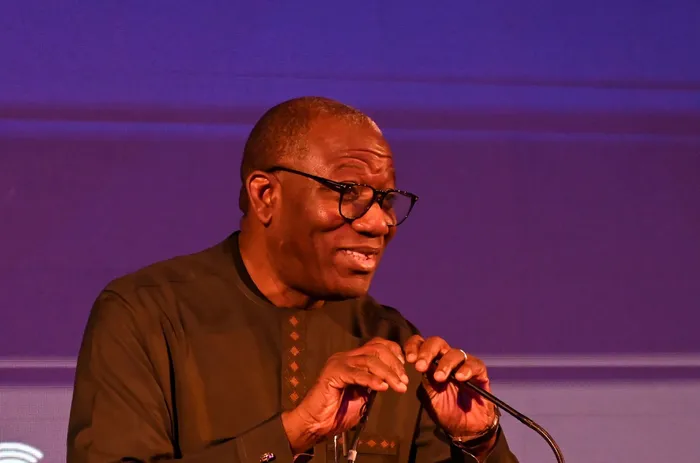
Dr Kayode Fayemi addressing delegates during the 16th Thabo Mbeki Africa Day Lecture at the Century City Conference Centre in Cape Town.
Image: Bheki Radebe
African leaders, academics, and policymakers used the 16th Thabo Mbeki Africa Day Lecture in Cape Town on Saturday to warn that rising Afrophobia and xenophobia threaten the continent’s vision of unity, while calling for stronger institutions, accountable leadership, and renewed solidarity across Africa.
Held at the Century City Conference Centre ahead of Africa Day on May 25, the lecture was hosted under the theme "Rebuilding African Unity in an Age of Fragmentation: Sovereignty, Solidarity and the Renewal of Institutions".
Opening the event, Unisa Principal and Vice-Chancellor Professor Puleng LenkaBula said the lecture remained an important platform for critical engagement on issues affecting Africa and the Global South.
"We know what it means to millions of Africans who look to Pan-African institutions to facilitate dialogues, engagements, and critical discussions to reimagine the future," she said.
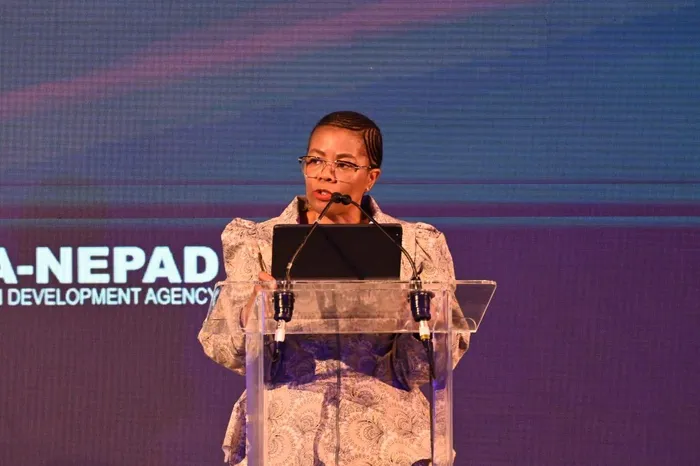
Prof Puleng LenkaBula, Principal and Vice-Chancellor of University of South Africa, speaking during the 16th Thabo Mbeki Africa Day Lecture in Century City Conference in Cape Town.
Image: Bheki Radebe / Independent Media
LenkaBula urged Africans to confront difficult questions about war, inequality, failing institutions, and the role of knowledge in transforming society.
"What must be done about the conditions of our country, our continent, and the world? What must be done about the wars and the violence that derail and decimate humanity?" she asked.
She warned that the world was entering a period of heightened geopolitical competition and uncertainty, arguing that Africa must position itself as an active participant rather than a bystander in the emerging multipolar order.
A message delivered on behalf of the African Union Commission paid tribute to former president Thabo Mbeki’s contribution to the struggle for African unity and the advancement of the African Renaissance.
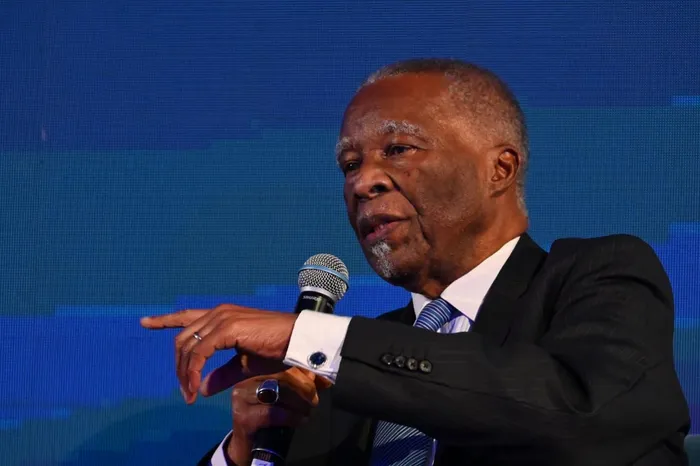
Former president Thabo Mbeki speaking during the 16th Thabo Mbeki Africa Day Lecture.
Image: Bheki Radebe / Independent Media
The commission described Mbeki as a leader who helped transform the vision of continental unity into practical action and said his call for Africa to build capable institutions, invest in its people, and engage the world with confidence remained relevant today.
The message noted that Africa’s population was expected to exceed 1.5 billion people and that by 2050, one in every four people globally would be African, making unity and collective action increasingly important.
Delivering the keynote address, Nigerian politician and former Ekiti State governor Kayode Fayemi said Africa could no longer afford to approach global affairs from a position of dependency.
"Africa must increasingly move from aid diplomacy to interest-based diplomacy," he said. "We must engage globally not merely as recipients of external assistance, but as strategic actors capable of shaping outcomes."
Fayemi argued that sovereignty depended on capable institutions and effective leadership, warning that many African states remained vulnerable because critical sectors of governance and development were heavily dependent on external actors.
"Sovereignty outsourced is sovereignty diminished."
He said democratic systems across the continent were also under strain as citizens became increasingly frustrated by poverty, unemployment, corruption, exclusion, and poor service delivery.
"The real danger confronting many African democracies today is the erosion of public trust."
One of the strongest themes of the lecture was the rise of Afrophobia and xenophobia in parts of Africa, including South Africa.
Speaking candidly as a Nigerian, Fayemi reminded delegates that South Africa’s liberation Struggle was supported by countries across the continent.
"South Africa’s liberation was not won by South Africans alone. The entire apartheid Struggle became a continental responsibility across Africa."
He recalled how African governments, workers, intellectuals, and ordinary citizens provided support, resources, and sanctuary to South African liberation movements during apartheid.
Fayemi said hostility and violence directed at fellow Africans represented a betrayal of the principles of Pan-Africanism and undermined efforts towards greater continental integration.
"Afrophobia is not merely a law enforcement issue or a question of migration policy, it represents a crisis of continental consciousness," he said.
While acknowledging that xenophobia often emerged from unemployment, inequality, poor governance, and economic hardship, he said those realities could never justify violence or exclusion.
"If Africans cannot coexist peacefully with one another, then the dream of continental integration will remain fundamentally weakened," Fayemi said.
The keynote speaker also called for stronger institutions, ethical leadership, and greater investment in African-led solutions to African challenges, arguing that the continent’s future would depend on leaders willing to build systems that outlast their own political careers.
"Africa needs leaders who understand that power is temporary, but institutions are enduring," he said.
lilita.gcwabe@inl.co.za