

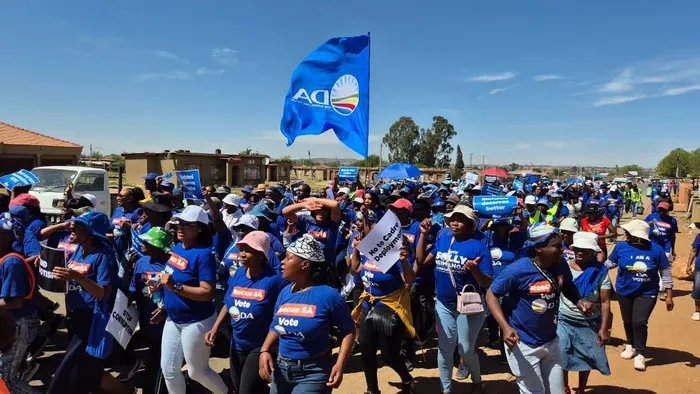
The DA's internal party allowances, meant to fill income gaps, have sparked controversy and ethical complaints from the African Transformation Movement (ATM) regarding transparency.
Image: Supplied
The African Transformation Movement (ATM) has requested Public Protector, Kholeka Gcaleka, to institute an urgent investigation into alleged additional remuneration received by senior DA public representatives - including Minister of Agriculture John Steenhuisen and Deputy Minister of Finance Ashor Sarupen.
This move follows reports that some DA leaders serving in the executive, may be receiving “top-up” salary payments from the party in addition to their state-funded salaries.
This also follows a complaint filed by ActionSA with the Public Protector and Parliament’s Ethics Committee on Monday, calling for an investigation into alleged “top-up” payments received by senior DA members.
A leaked December 2025 report reveals the party pays over R300,000 monthly (R3.6 million annually) to supplement the salaries of senior leaders and public representatives.
These internal party allowances, meant to fill income gaps, have sparked controversy and ethical complaints regarding transparency, potential Constitutional violations by cabinet members, and whether these amounts were properly declared.
Steenhuisen receives R39,560 per month from the DA for a “leader stipend”, which reportedly brings his total package on par with the country's Deputy President. Sarupen receives R50,000.
Tshwane mayor Cilliers Brink gets R62,386, while uMngeni Mayor Christopher Pappa received R44,609.
MP and policy head Mathew Cuthbert also received R50,000.
In the letter written to Gcaleka on Tuesday, ATM leader Vuyo Zungula stated that the seriousness of these allegations requires urgent and decisive intervention.
Zungula said this matter presents a critical opportunity to affirm the principle that no public office bearer is above the law, and that ethical standards will be enforced without exception.
Gcaleka’s spokesperson, Ndili Msoki, confirmed the receipt of the complaint, adding that it is at the assessment phase.
“Should the assessment reveal that there is sufficient information to proceed with an investigation, and it is determined that the Public Protector has jurisdiction to investigate the matter, the complaint will be allocated to a PPSA investigator who then commences the investigation process,” Msoki said.
The DA's spokesperson Jan de Villiers said the party will not comment at this stage.
Zungula added that these allegations, if proven true, raise profound concerns about the integrity of public office, the separation between state responsibilities and party-political roles, as well as compliance with the legal framework governing Members of the Executive.
He said the investigation must determine whether the receipt of such remuneration constitutes a direct breach of the prohibition on undertaking paid work as set out in the Executive Members’ Ethics Act and the Executive Ethics Code, as well as a violation of Sections 96(1) and 96(2) of the Constitution.
Zungula added that consideration must also be given to whether these arrangements create conflicts of interest or fall within the ambit of improper or corrupt conduct as contemplated in applicable legislation.
“Public office is a position of trust that demands undivided loyalty to the Republic and its people. Members of the Executive are not at liberty to operate in dual capacities where financial benefit is derived from parallel roles, particularly where those roles are inherently political and may intersect with state power,” said Zungula.
He said that the acceptance of additional remuneration for party-political functions while holding executive office, fundamentally undermines the principle of clean governance and erodes public confidence in the integrity of the state.
“The Constitution of the Republic of South Africa is unequivocal in its expectations of Members of the Executive. Sections 96(1) and 96(2) impose a strict and non-negotiable standard of ethical conduct, prohibiting Members from undertaking any other paid work, from exposing themselves to situations involving a risk of conflict between their official responsibilities and private interests, and from using their positions to enrich themselves or improperly benefit any other person.
“These provisions are designed to ensure that those entrusted with executive authority serve the public interest exclusively, without distraction or undue influence,” he said.
Zungula said this constitutional position is given concrete legal effect through the Executive Members’ Ethics Act, which, together with the Executive Ethics Code, establishes a binding and enforceable framework regulating the conduct of Members of the Executive.
Zungula said the Executive Ethics Code, issued in terms of the Executive Members’ Ethics Act, explicitly provides that a member of the executive may not undertake any other paid work or receive any form of remuneration for services rendered outside the scope of their official functions, unless such activity is expressly permitted in terms of the law and fully disclosed in the prescribed manner.
He said this is intended to ensure that Members of the Executive do not divide their professional obligations or place themselves in positions where financial interests may compromise, or be perceived to compromise, their constitutional duties.
ActionSA alleged that these payments were not declared in the Register of Members' Interests, which is a requirement for all public representatives.
The party stated that taxpayers are already funding significant “luxury perks” for these officials, making additional party payments a “systemic disregard for accountability”.
manyane.manyane@inl.co.za