

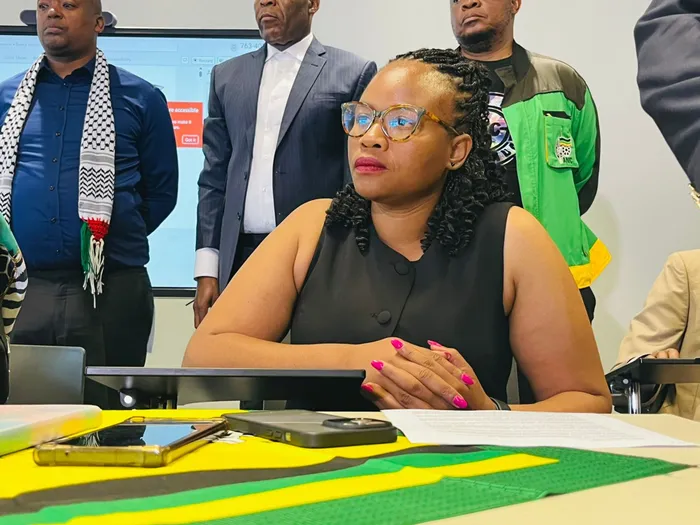
City of Tshwane Mayor Nasiphi Moya has defended the municipality’s water tanker expenditure, saying the figures cited by critics misrepresent actual spending and that the costs were driven by an increase in water outages.
Image: Kamogelo Moichela/IOL
The Soil of Africa Civic Movement (SOA) has called for the City of Tshwane to be placed under administration, accusing the municipality of financial mismanagement, corruption, and “systemic governance failure” over its ballooning water tanker expenditure, which has risen from R140 million to a disputed R777 million.
In a strongly worded statement, SOA chairperson King Bongani Ramontja said the organisation was “deeply concerned” by the City’s attempt to justify what it called “reckless and ballooning” spending on tanker services while many communities continued to face erratic water supply.
“This represents not just poor planning but a systemic failure of governance and accountability within the City’s leadership,” Ramontja said.
“Ordinary citizens continue to queue for hours for water, while connected individuals profit from emergency contracts.”
The group alleged that R336 million of the City’s reported R777 million expenditure remained “unexplained”, with no clear record of procurement processes, supplier names, or cost-per-litre data. It claimed that some tanker contractors were linked to councillors and senior municipal officials — raising what it called “serious conflict-of-interest concerns”.
SOA has demanded a forensic investigation into all tanker-related contracts since 2022, publication of supplier names and ownership details, and a Section 139 intervention by the Gauteng provincial government to place Tshwane under administration. It also plans to refer the matter to the National Treasury, Department of Cooperative Governance and Traditional Affairs (COGTA), and the National Prosecuting Authority (NPA).
Earlier, IOL reported that the City of Tshwane has rejected suggestions of corruption or inflated figures, insisting that the R777 million figure cited by critics misrepresents its actual spending.
In its response, Mayor Nasiphi Moya said the figure was based on purchase orders, some of which were cancelled, duplicated, or not processed, and therefore did not represent real expenditure.
According to Moya, the City’s verified payments amounted to R441.1 million in the 2024/25 financial year, linked to maintenance shutdowns and emergency operations. The remainder, she said, reflected accruals or pending payments from previous years, including R179 million in unpaid invoices from 2023/24 that were settled this year.
The mayor attributed the sharp rise in tanker spending to a dramatic increase in water outages, which jumped from 7,288 incidents in 2022/23 to 23,746 in 2024/25. She said the outages were caused by Rand Water supply disruptions, contamination events, ageing infrastructure, and vandalism.
“The City’s expenditure on water tankers is a response to the growing need to supply water to affected communities during emergencies,” Moya said. “It would be irresponsible not to provide water when bulk systems fail.”
Moya added that the City had commissioned an independent forensic investigation into the tanker programme to ensure accountability and improve oversight. Other measures include hydrant metering to monitor water extraction, expansion of City-owned tankers to reduce outsourcing costs, and collaboration with the State Security Agency to safeguard critical infrastructure.
SOA maintains that these measures came only after “public pressure and exposure” and do not absolve the City of responsibility for what it terms “maladministration and fiscal recklessness”.
The movement says it will mobilise communities and civil society groups to demand the release of detailed tanker expenditure data, including delivery volumes and regional allocations.
“If there is no transparency, there can be no trust. If there is no accountability, there will be no stability,” Ramontja said.
The City has not yet responded to the specific allegations of conflict of interest raised by SOA.
Gauteng COGTA and the National Treasury were also approached for comment on whether a Section 139 intervention is under consideration.
The tanker controversy erupted after opposition parties claimed Tshwane’s water tanker costs had surged to R777 million in less than a year, prompting accusations of mismanagement. The City insists that its books are in order and that a forensic audit will clarify the discrepancy between purchase orders and actual payments.
The outcome of that audit, once released, is expected to determine whether the controversy points to genuine corruption or simply administrative confusion amid worsening water supply challenges.
jonisayi.maromo@iol.co.za
IOL News