

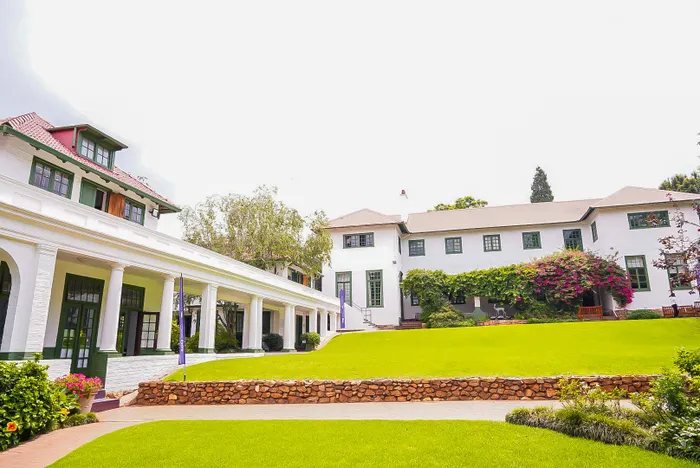
Roedean School, which has been in the news lately following the cancellation of a tennis match with King David School and the resignation of its principal.
Image: Facebook
Nearly four months after her abrupt resignation from Johannesburg's prestigious Roedean School (SA), former Head of Senior School Phuti Mogale has broken her silence, offering a deeply personal account of the controversy that ended her tenure and raising uncomfortable questions about race, leadership and institutional support in South Africa's elite education sector.
In a lengthy LinkedIn post published on Monday and titled The Final Response, Mogale reflected on the events that led to her departure following the widely publicised tennis fixture controversy involving Roedean and King David Linksfield. Her statement paints a picture of a leader caught between competing political, racial and institutional pressures, while grappling with the personal toll of becoming the public face of a national controversy.
The post marks the first time Mogale has publicly addressed the scandal that dominated headlines earlier this year and ultimately led to her resignation and, she says, a significant part of her professional identity.
Mogale's appointment in July 2025 was widely regarded as a milestone for one of South Africa's most prestigious girls' schools.
A lawyer by training and educator by profession, she joined Roedean after serving as deputy headmistress and head of boarding at St Mary's School, Waverley.
At the time, she described herself as "incredibly privileged" to lead an institution with Roedean's history and reputation, emphasising her commitment to advancing the education of young women and building strong, inclusive school communities.
Her tenure, however, lasted just seven months.
The controversy erupted on February 3 when a scheduled tennis fixture between Roedean and King David Linksfield failed to take place.
King David players arrived expecting to compete, only to discover there was no opposing team waiting for them.
What initially appeared to be a scheduling dispute quickly escalated after a recorded telephone conversation between Mogale and King David principal Lorraine Srage entered the public domain.
In the recording, Mogale acknowledged that some Roedean parents had expressed concerns about participating in a sporting fixture against a school associated with the Jewish community during a period of heightened tensions surrounding the Israel-Gaza conflict.
South Africa's highly publicised case against Israel at the International Court of Justice had intensified domestic debates, with some parents reportedly arguing that schools should align themselves with the government's position.
Mogale, however, appeared to reject that argument.
"I keep having to remind them that schools are apolitical first and foremost, particularly in SA," she said during the conversation. "We don't take a stance like that."
Despite that position, the match was ultimately cancelled.
Roedean initially cited a compulsory academic workshop as the reason, a version of events that was challenged by King David and later complicated by the contents of the recorded call.
The fallout was swift and severe. The South African Jewish Board of Deputies accused the school of antisemitism, arguing that the cancellation was motivated by concerns about King David's Jewish identity rather than scheduling conflicts.
An independent investigation commissioned by Roedean's board later concluded that established protocols had not been followed and that leadership failures had exacerbated the situation.
The board subsequently acknowledged that its initial understanding of events had been incomplete and issued a formal apology to King David.
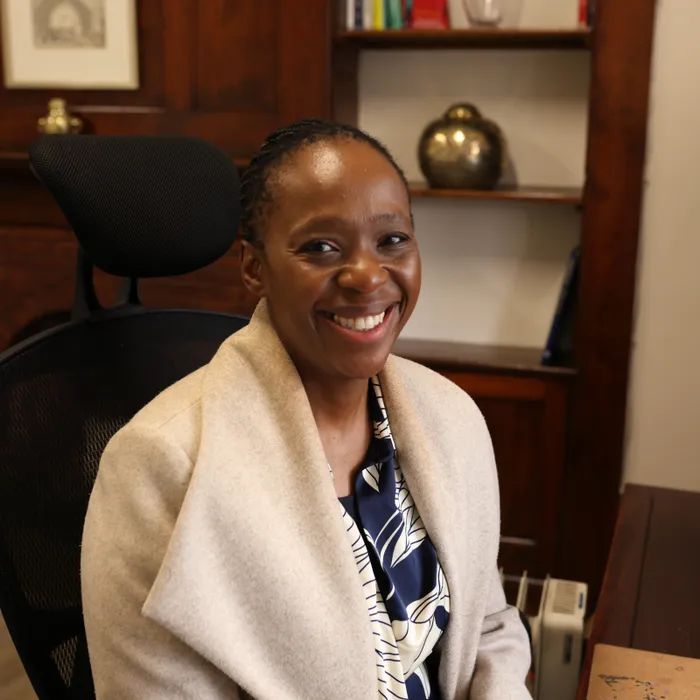
Roedean School (SA), former Head of Senior School Phuti Mogale, has broken her silence.
Image: LinkedIn
Days later, Mogale resigned with immediate effect.
Former board chairperson Dale Quaker also stepped down.
For months, Mogale declined interview requests and made no public comment on the controversy.
Her LinkedIn statement reveals a woman struggling with what she describes as profound powerlessness in the face of a public narrative she felt unable to challenge.
She writes of "finding myself embroiled in a conversation that is not only tainted but misrepresented to the point where any answer or defence is pointless."
The former school head says the controversy unfolded during one of the most vulnerable periods of her life, while she was pregnant and balancing professional responsibilities with concerns for her health and family.
"What became truly humbling for me, as a high achiever," she wrote, "was the reality of having to give up on an aspect of my career when I had worked hard to achieve that height of success and appreciated that I needed to do so, not only for my own welfare but the welfare of my unborn child at that time."
A central theme running through Mogale's reflection is the pressure faced by pioneers, particularly Black women occupying leadership positions in historically white institutions.
Drawing inspiration from comments made by Michelle Obama, Mogale describes what she sees as the burden of being "the first."
She argues that trailblazers are often expected not only to succeed but to do so flawlessly, because any mistake risks being interpreted as a failure of an entire group rather than an individual.
"Through your leadership, you cannot mess up," she writes. "This becomes the point where the separation takes place between the humanity of leadership versus the practice."
Mogale further reveals that a leadership coach had observed that she was attempting to lead according to a model defined by others rather than one aligned with her own values and convictions.
The observation, she suggests, forced her to confront the tension between institutional expectations and authentic leadership.
Perhaps the most striking aspect of Mogale's statement is her discussion of race and the hostility she says emerged during the controversy.
She describes being subjected to attacks rooted in what she characterises as hatred and societal tendencies to diminish achievement through racial categorisation.
According to Mogale, she felt some criticism reflected an attitude that viewed her as little more than "a diversity face who needed to understand one's place."
The former educator also disclosed that her maternal grandparents were Jewish members of the Lemba community, an ethnic group whose traditions include longstanding claims of Jewish ancestry.
The revelation adds a further layer of complexity to allegations that she presided over conduct described by critics as antisemitic.
Despite the personal and professional consequences she endured, Mogale says her greatest regret concerns the impact of the controversy on Roedean's pupils.
She writes admiringly of students who displayed courage and conviction during the crisis, but says she remains haunted by the belief that adults failed them.
"I, as an adult, was one of the adults who failed children," she wrote.
"That I was an active participant in failing the girl child. By hearing their voices and not fully asserting the power in that voice."
The admission is particularly poignant given that Mogale built much of her career around empowering young women and advocating for girls' education.
Mogale's statement does not attempt to absolve herself of responsibility, nor does it directly challenge the findings of the independent investigation.
Instead, it raises broader questions about the pressures faced by leaders operating at the intersection of race, politics and institutional accountability.
Her account suggests she found herself navigating a perfect storm of parental activism, national political tensions, allegations of antisemitism and intense public scrutiny, all while attempting to maintain a school's neutrality in a deeply polarised environment.
Whether her resignation represented appropriate accountability or whether she bore a disproportionate share of the blame remains a matter of debate.
What is clear is that the controversy continues to resonate well beyond a single cancelled tennis match.
For Roedean, the episode exposed deep fault lines around governance, communication and community relations.
For Mogale, it became a defining chapter in a career she spent decades building.
karabo.ngoepe@iol.co.za
IOL News