

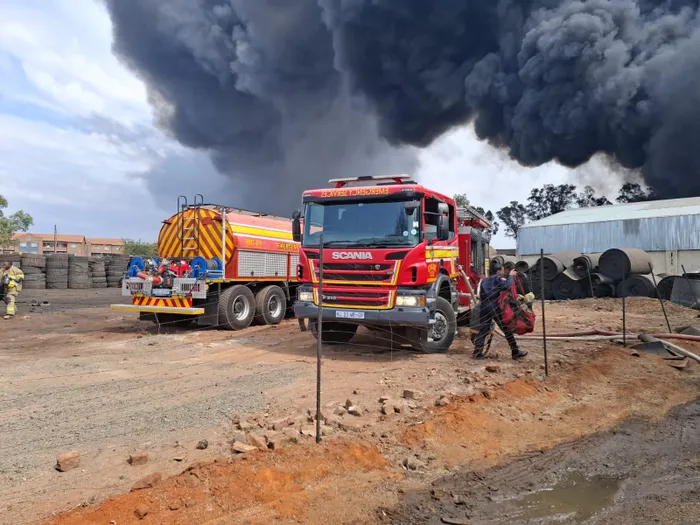
The Tshwane metro and private firefighters' associations were embroiled in legal proceedings as the city wants to put an end to private firefighting.
Image: File
Pretoria residents will soon know whether private firefighters will be allowed to continue to attend to fires in and around the city after judgment on the legality of private firefighting services in the Tshwane Metropolitan Municipality was reserved in the Gauteng High Court, Pretoria, this week.
AfriForum’s legal team is assisting the Sinoville Firefighting Association (SFA) in a legal battle that the metro initiated in September last year to have private firefighting services operating in the metro declared illegal.
The Tshwane metro’s legal team maintains that private firefighting services are illegal, but AfriForum argues that no law prohibits the existence or operation of private firefighting services.
Judge Norman Davis stressed during the court hearing that the case is of the utmost importance; therefore, judgment is reserved.
“It is irresponsible to have private firefighting services declared illegal, especially because these services provide much-needed assistance in times of crisis. Instead of fighting the legality of these services in a lengthy court case, the Tshwane metro should rather welcome this additional capacity in the interest of residents,” said Tarien Cooks, Disaster Management specialist at AfriForum.
JP Botha, founding member of SFA, meanwhile, said that the association was formed specifically because the Tshwane metro’s fire brigade could not reliably meet the expected service standards.
“SFA has successfully dealt with numerous incidents and fills a critical gap in the northern parts of Pretoria. What makes SFA special is that it is made up entirely of volunteers – men and women who are trained as firefighters and who volunteer their time and expertise to protect their community,” Botha said.
Earlier this year, Judge Davis granted a cost order in favour of AfriForum, in an interlocutory decision against the city, which will now be used to strengthen private and civil firefighting capabilities in the metro.
“When the state fails to meet its basic responsibility, communities rise up to help themselves. Private and civil firefighting services save lives. This is not a threat to the Tshwane metro, but a necessity,” Cooks said.
The SFA, as well as one other private firefighting service, is embroiled in a legal battle with the metro after the latter brought an application to have private firefighting services operating in the metro declared illegal.
The city alleges that the private firefighters are contravening the statutory prescripts regarding the rendering of firefighting services in the metro’s jurisdiction.
The city wants an order immediately stopping all private firefighting services. It alleges that these private services are operating without proper authorisation and that they are contravening national and local legislation governing emergency services.
“Contrary to the metro’s unfounded allegations that private fire services are illegal, AfriForum’s legal team is convinced that there is no law that prohibits the establishment and operation of private fire services,” Cooks said.
She added that the metro is struggling to stay afloat financially, and its fire services are failing and unable to provide an effective service to their residents.
“It is in the interest of every Pretoria resident to have access to fire services – whether from the municipality or a private service provider,” she said.
zelda.venter@inl.co.za