

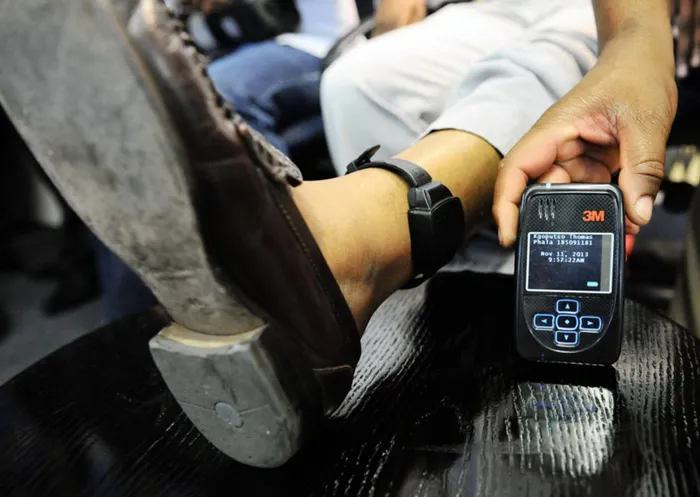
Correctional services officials demonstrate the use of the new electronic monitoring system on a parolee.
Image: file
SERIOUS concerns have been raised that the Department of Correctional Services (DCS) has lost track of 28 000 parolees, including serious violent and violent offenders such as murderers and rapists, who are untraceable.
However, (DCS) has strongly refuted the alarming claims.
DCS Minister Pieter Groenewald’s spokesperson, Singabakho Nxumalo, dismissed the suggestions as "incorrect," stating that the department has an accurate tracing system with 1,764 officials dedicated to Community Corrections supervision. “DCS maintains active tracking and tracing capabilities in all regions and no longer uses 'archived absconders' as an inactive category,” Nxumalo said. The department confirmed that 52,772 parolees and probationers are currently under Community Corrections supervision, which includes office reporting, home visits, and employment verification.
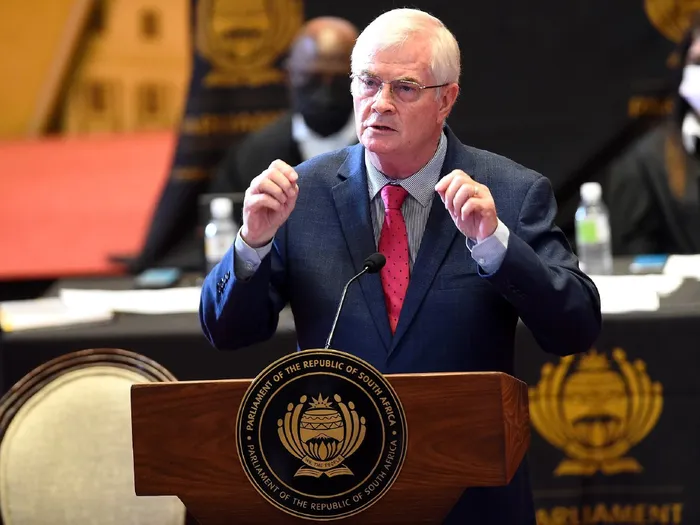
Minister of Correctional Services Pieter Groenewald.
Image: Independent Media Archives
The claims were amplified by Cape Town Mayor Geordin Hill-Lewis, who publicly challenged the figures, stating that the missing parolees are “violent criminals, now walking free, putting the public at risk,” and demanding that the Minister “act today to find these parolees”.
Hill-Lewis said “Groenewald must not hide behind excuses. He must act today to find these parolees, bring them back before the law, and hold every official accountable who allowed them to disappear."
Golden Miles Bhudu, spokesperson for the South African Organisation for Human Rights (SAPOHR), had warned about the absconders being "serious and violent offenders". Bhudu further argued that the issue stems from financial and operational support challenges, noting that the national commissioner withdrew state vehicles used for monitoring, evaluation, supervision, and enforcement of parole rules, replacing them with private fleets.
Providing context on the system's strain, Nxumalo confirmed that the inmate population currently stands at 168,795 against an approved bed space of 107,067, resulting in 58% overcrowding. The population comprises 106,280 sentenced inmates, 62,092 remand detainees, and 423 state patients.