

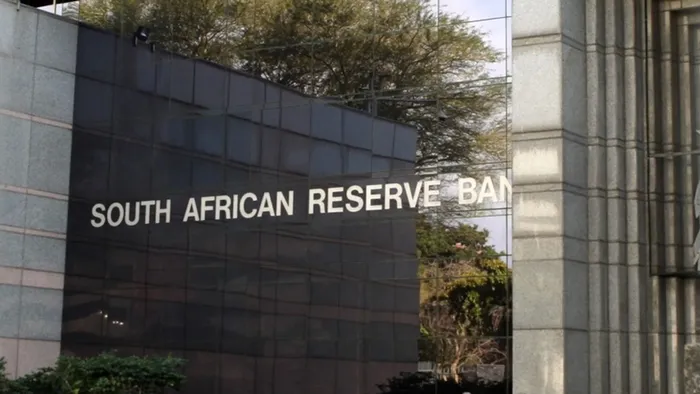
The Monetary Policy Committee announce its repo rate decision.
Image: File
South African consumers will have to tighten their belts even further as the SA Reserve Bank's Monetary Policy Committee has hiked the repo rate by 25 basis points to 7%.
The prime lending rate will be 10.50%.
Delivering the statement of the Monetary Policy Committee on Thursday, Lesetja Kganyago, Governor of the South African Reserve Bank (SARB) said four members preferred this action, while two favoured no change.
“The committee agreed that inflation risks had intensified and that the challenge of large and overlapping shocks would likely trigger second round effects, requiring a monetary policy response. Our decision was aimed at managing risks and ensuring that inflation returns to target.”
The MPC said in its statement that hopes for a quick end to the Middle East crisis have faded.
“The Strait of Hormuz is still largely closed. Oil prices have fluctuated around 100 dollars per barrel. In this context, global growth forecasts have been marked down, while inflation forecasts have been revised higher.
“Moving to inflation, consumer prices rose 4% in April, up from 3.1% previously. This was mostly due to higher energy costs. After falling by 8.7% in March, fuel prices increased by 11.4%. This is one of the largest jumps in fuel inflation on record. Services inflation also accelerated to 4.6%, well above our 3% target. Looking forward, we have raised our oil price assumptions. In addition, we see renewed pressure on food prices, with the agricultural sector facing higher costs for both diesel and fertiliser.”
It said given the situation, it was crucial that central banks maintain their credibility, and prevent higher inflation from becoming entrenched.
Jurgen Eckmann, Wealth Manager at Consult by Momentum, said the decision reflects a Reserve Bank determined to defend the country’s new 3% inflation target framework.
“Today’s hike reflects a Reserve Bank that is serious about defending its new 3% inflation target. April’s CPI print of 4% – the highest in 19 months – pushed inflation to the upper edge of the Bank’s tolerance band, driven largely by fuel-price pressures linked to global supply disruption. The Monetary Policy Committee’s role is not necessarily to react to the shock itself, but to prevent second-round effects from becoming embedded into wages, rents and wider pricing behaviour,” he says.
He said for consumers, the most severe financial strain is often not found in vehicle or mortgage debt, but in unsecured lending.
“If you are carrying credit card debt at the typical 18% interest rate, the hike itself only adds around R6 a month per R30,000 of balance. But that is not really the story – the real issue is that consumers are already paying approximately R5,400 a year in interest on that R30,000 simply to stand still. Compare that to a home loan, where the same R30,000 of debt costs around R3,150 a year. Credit card debt is roughly 74% more expensive than your bond, every single month you carry it."
Eckmann's advice to consumers is to view higher interest rates as a stress test, not an emergency, and use it as an incentive to tackle that stubborn debt.
“Credit cards and store cards before the bond, before the car, before anything else. And whatever you do, don't fall into the minimum-payment trap – at 18% interest, paying only the 5% minimum on a R30,000 card balance keeps you in debt for around a decade and can cost approximately R12,600 in interest. Double that monthly payment to 10% and you're out in under 5 years, having paid R5,250.”
For more stories from The Mercury, click the link THE MERCURY