

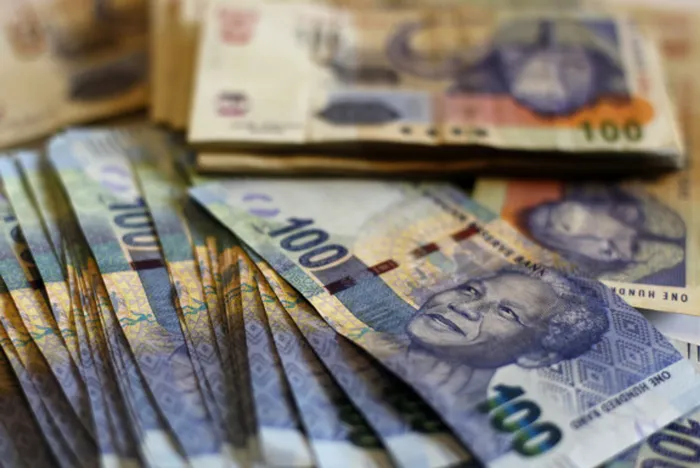
As South Africa grapples with an affordability reset, the stark choice before households is not merely about spending less but about the very essence of what it means to survive in a landscape that is relentless in its demands.
Image: Independent Newspapers
While diesel users catch a break, petrol motorists are heading into record territory as Treasury begins unwinding its fuel levy relief, and the pain does not stop there.
Bloomberg reported that disruptions from the US-Iran war and higher fuel costs may also push the SA Reserve Bank to raise interest rates by 25 basis points to 7%. An increase would be the first since May 2023. South Africa’s inflation rate accelerated sharply in April as record fuel price increases filtered through the economy, pushing annual consumer inflation to its highest level since August 2024.
According to Statistics South Africa, annual consumer inflation rose to 4.0% in April from 3.1% in March, sooner than most economists had expected. The monthly increase in the consumer price index was 1.1%, causing fears that interest rates may increase.
Fuel was the main driver, with petrol prices up 15.2% and diesel prices up 35.4%. Statistics South Africa said the fuel index increased by 18.2% between March and April, the steepest monthly increase since the current consumer price index series began in 2008. The price of inland 93-octane petrol increased from R20.19 per litre in March to R23.25 in April. According to Statistics South Africa, this was the fifth-largest increase for that fuel grade in 50 years and the biggest this century.
Diesel users were hit even harder.
The average diesel price jumped from R21.28 per litre in March to R28.80 in April.Elna Moolman, head of South Africa's macroeconomic research at Standard Bank Group, said the South African Reserve Bank would be closely watching whether higher fuel prices start feeding into broader inflation across the economy.
“The Reserve Bank is really concerned that this sharp rise in fuel prices will mean that many more prices in the economy will start to rise,” Moolman said.
Investec chief economist Annabel Bishop said the outcome of yesterday’s elevated inflation rate increases the chance of an interest rate hike from the SARB at the end of the month.
She predicts a 0.25-percentage-point hike next Thursday.
“From a market perspective, the Forward Rate Agreement curve now shows over a 100 basis point hike in the repo rate for this year on the elevated consumer price index outcome,” Bishop said.
Lerato Ntuli, economist at Anchor Capital, said, "Inflation risks remain tilted to the upside. Global oil prices are expected to remain elevated should the Iran conflict persist, sustaining pressure on fuel costs. "
Ntuli also noted that the removal of the temporary R3/litre between June and July 2026 is expected to add to inflationary pressures in the coming months.
South Africans already stretched by record petrol prices face a compounding squeeze after Finance Minister Enoch Godongwana confirmed the general fuel levy will increase by 9 cents per litre for petrol and 8 cents per litre for diesel, pushing the petrol levy to R4.10 per litre and diesel to R3.93 per litre. The levy, framed as a road maintenance tax, is not ring-fenced and flows directly into the National Revenue Fund. Eight metropolitan municipalities will share nearly R16 billion from the fund, with Johannesburg receiving R4.7bn, eThekwini R4.1bn, and Cape Town just over R3bn. Tshwane gets R1.87bn and Ekurhuleni R1.79bn.
The Economic Freedom Fighters are expected to return to the Western Cape High Court to challenge Godongwana's authority to set and amend the levy, arguing that the power belongs solely to Parliament. The party lost the same argument in court last June.
A temporary R3-per-litre relief concession, introduced after the US-Israel war against Iran destabilised global energy markets, begins phasing out from June 3, when motorists will receive only R1.50 per litre relief on petrol and R1.96 per litre on diesel until June 30.
The increase comes as Putco, the country's largest public bus operator, announced a 10% fare increase effective June 1, a move widely seen as a bellwether for public transport more broadly. Taxi associations and other commuter bus operators are likely to follow as fuel costs continue to erode operating margins.
The EFF have argued that the increase would place an unfair burden on the working class and poor, deepen inequality and violate constitutional rights.
On a more positive note, diesel has seen a significant recovery, with data pointing to decreases of between R3.84 (50ppm) and R4.27 (500ppm). Another promising development, Minister of Mineral and Petroleum Resources Gwede Mantashe is pushing to establish a new state-owned company to tackle rising fuel prices.
During his budget vote speech yesterday, Mantashe said that South Africa would need a long-term solution to fuel price shocks, as well as a deeper look at its over-reliance on imports.
Meanwhile, the record petrol price is adding fresh pressure to already strained small businesses, raising concerns about operating costs, cash flow and employment
.According to Simply Financial Services chief executive Anthony Miller, the increases were forcing businesses to reassess costs and financial risks, and one solution was to consider group risk cover. However, the broader issue is the vulnerability of South Africa’s small, medium, and micro-enterprise sector to a shortage of staff capable of contributing to business growth “For employers taking stock of their costs and commitments, ensuring staff cover is in place is one of the most effective ways to manage risk in the current climate.”