

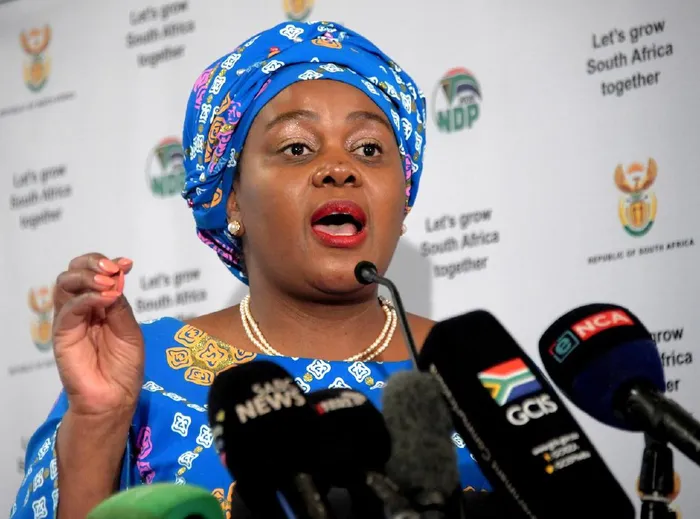
Justice Minister Mmamoloko Kubayi.
Image: FILE
A report claiming the State Attorney is meeting transformation targets in the allocation of briefs has been met with sharp scepticism, with black legal practitioners instead launching a scathing critique of the Department of Justice, accusing it of entrenching barriers rather than dismantling them.
In Tshwane on Monday, Solicitor-General Mlungiseleli Mbeki said that between April 2025 and March 2026, the country’s 13 State Attorney offices recorded a combined 96% success rate in meeting transformation targets for briefing allocations.
The department has set a benchmark of allocating 83% of briefs to black legal practitioners.
It also prioritises female practitioners and the fostering skills transfer through collaboration between emerging and experienced counsel.
During the period under review, the Durban State Attorney’s office allocated 1165 briefs, representing 100% of outsourced work, to black-owned legal firms. In Johannesburg, 559 cases, or 77%, were allocated to such firms, while in Cape Town the figure stood at 59%, with 27 files assigned.
The presentation formed part of a stakeholder engagement hosted in Tshwane by Justice Minister Mmamoloko Kubayi.
However, the presentation drew sharp criticism from legal practitioners, where several speakers questioned the credibility of the figures and raised concerns about continued exclusion from state work.
National Bar Council of South Africa executive member Advocate Sethusha Shongwe said she had not received any instructions from the State Attorney since registering in 2017.
“I am thankful for the information you gave us but I am one of the very disappointed legal practitioners,” she said.
“If you look at the attendance here, the facts speak for themselves. People in attendance here, for lack of a better expression, are the hungry ones. Those whose stomachs, pockets and bank accounts are full are not here listening to fake figures.”
“The status quo is not what the figures presented before you suggest. We are starving, frustrated, and miserable, and we are legal citizens of this country,” she added.
President of the Black Conveyancers Association Phumla Mcwango said members had previously received government work until the function was centralised under the Office of the State Attorney.
“We are aware there is a big firm in Cape Town that was appointed to dish out instructions, so we are at the mercy of that firm. I am a black firm and you can guess what the chances of getting work are,” she said.
“Our members are tired of sending quotations to the Office of the State Attorney; we are wasting time and not getting instructions.”
Advocate Steve Dlwathi directed his comments at Deputy Minister Andries Nel, questioning transformation in the legal profession.
“What are you saying when you see these black faces here, not at the Constitutional Court, but you see white counsel there all the time?” he asked.
“I have been at this bar for 26 years. I have been to the Constitutional Court once and the Supreme Court of Appeal once. And I see my white colleagues — they are always there and they get briefs from the State Attorney. Aren’t you ashamed, minister?” he said.
The issue of perceived gatekeeping in municipalities was also raised, with practitioners pointing to requirements such as minimum years of experience that they say limit access for emerging firms.
Mbeki, meanwhile, highlighted persistent administrative challenges within the system, including poor responsiveness to requests for quotations, issues with supplier registration and tax compliance, overcharging, and instances of improper billing.
“There is also failure to adhere to the terms of instructions. We need reports when we outsource work because we also need to report to clients,” he said.
Kubayi acknowledged resistance to transformation in the legal sector, saying some client departments still pressure officials to brief preferred practitioners instead of following transformation protocols.
“There are challenges we have identified and we need to work together to overcome,” she said, adding that she has raised concerns about such “concentrated preference” in Cabinet.
She also criticised what she described as poor-quality work in some instances when state briefs are allocated.
“You cannot send me an affidavit I cannot make heads or tails of and expect I will call you back as a client,” Kubayi said, suggesting training may be needed to improve drafting standards.
Cape Times