

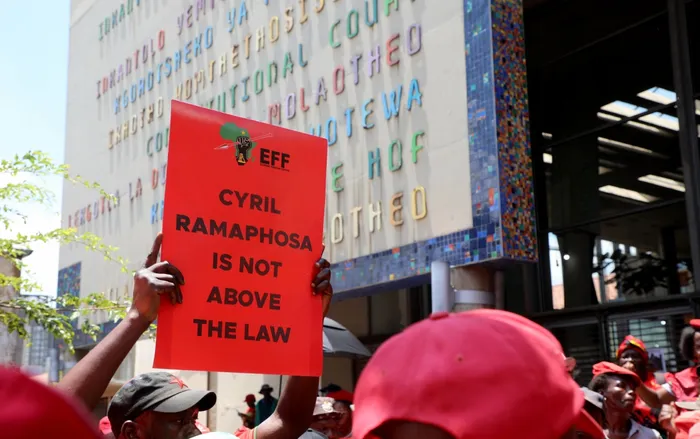
The promise made by EFF to put pressure on the Constitutional Court to release the findings of the investigation into President Cyril Ramaphosa’s Phala Phala farm is growing with the EFF ground forces picketing outside the Constitutional Court.
Image: Timothy Bernard / Independent Newspapers.
Simon Majadibodu and Ntsikelelo Qoyo
The Constitutional Court is in the final stages of preparing its highly anticipated judgment on the Phala Phala scandal, a case that has captivated public attention since it emerged in the wake of a burglary at President Cyril Ramaphosa's Limpopo farm.
According to Chief Registrar Simoné-Lanique Tjamela, the court's judgment is expected to be delivered within a month, marking a pivotal moment in an ongoing saga that has raised numerous questions about the integrity of public office and the nation's judicial processes.
The Phala Phala incident, which occurred in February 2020, involved the alleged theft of millions in foreign currency from the president's private property.
The EFF has criticised the delay, noting that more than 480 days have passed since the hearing - far exceeding the judiciary’s guideline that judgments should generally be delivered within three months, unless exceptional circumstances apply.
The case, heard on November 26, 2024, centres on the EFF’s bid to revive the Phala Phala saga.
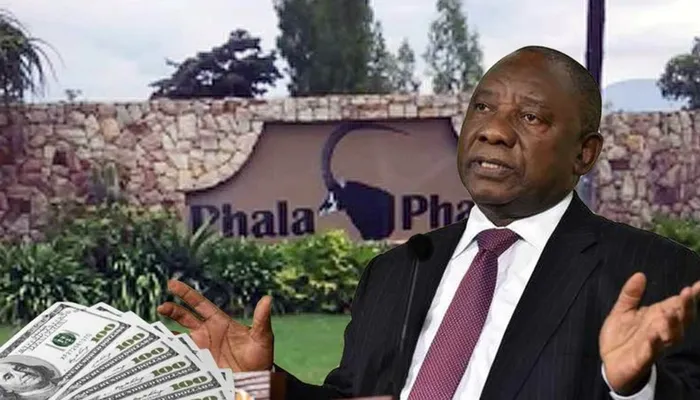
The Constitutional Court is expected to hand down its long-awaited Phala Phala judgment within weeks, as the Economic Freedom Fighters intensifies pressure over delays exceeding 480 days since the case was heard.
Image: IOL graphics
The party approached the apex court in 2024 to challenge Parliament’s December 2022 decision not to adopt the Section 89 panel report, which found that Ramaphosa may have a case to answer.
In a further escalation, the party’s Gauteng leadership was protesting outside the Constitutional Court at Constitutional Hill in Braamfontein on Wednesday.
Gauteng provincial chairperson Nkululeko Dunga said the delay raises serious concerns about accountability within the judiciary.
“The EFF remains unwavering in its commitment to transparency, accountability and the defence of the rule of law,” Dunga said, calling for the immediate release of the ruling.
The protest follows a letter from EFF leader Julius Malema to Chief Justice Mandisa Maya, in which he demanded clarity on what the party described as an “unacceptable delay”.
Malema warned that the prolonged wait risks eroding public confidence in the judiciary and weakening constitutional accountability.
At the centre of the dispute is the case Economic Freedom Fighters v Speaker of the National Assembly and Others, which examines how Parliament handled the Phala Phala matter.
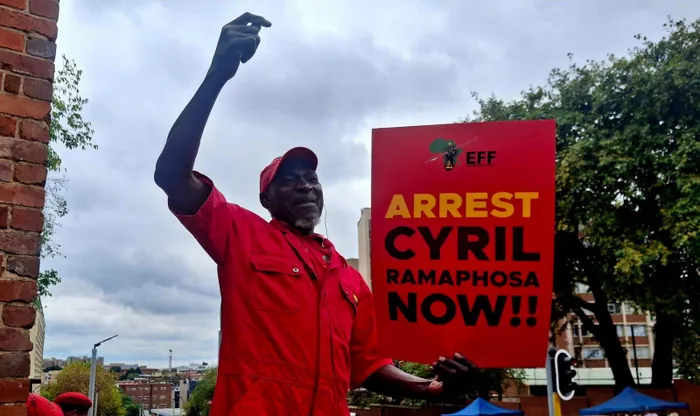
EFF supporters gather at the Constitutional Court to call for the release of the Phala Phala Report.
Image: Picture: Timothy Bernard / Independent Newspaper
Meanwhile, ActionSA has accused the Independent Police Investigative Directorate (IPID) of deliberately delaying the release of its investigation report into the scandal after acting Minister Feroz Cachalia told MPs in February it was no longer classified.
ActionSA said IPID had requested an extension after the party filed a Promotion of Access to Information Act (PAIA) application to obtain the report.
In response to questions on Wednesday, Lizzy Suping said the IPID investigation report was declassified in February 2026.
"All those who were interested in accessing the report had to submit a PAIA request to our Information Officer.
"Following the declassification IPID received a number of applications and our Information Officer had to assess the request. Those whose requests have complied with the PAIA requirements will be provided with the report.
"The report that will be shared will have redactions of personal information and all annexures to the report will not be included."
Cachalia’s spokesperson, Kamogelo Mogotsi, insisted the minister could not compel IPID to release the report, citing the body’s independence.
She referred to a media statement published by the department last month.
“The Minister does not direct or interfere with IPID investigations or findings.
“The Minister’s role is strictly defined and limited by legislation to safeguard the Directorate’s independence.”
Cape Times