

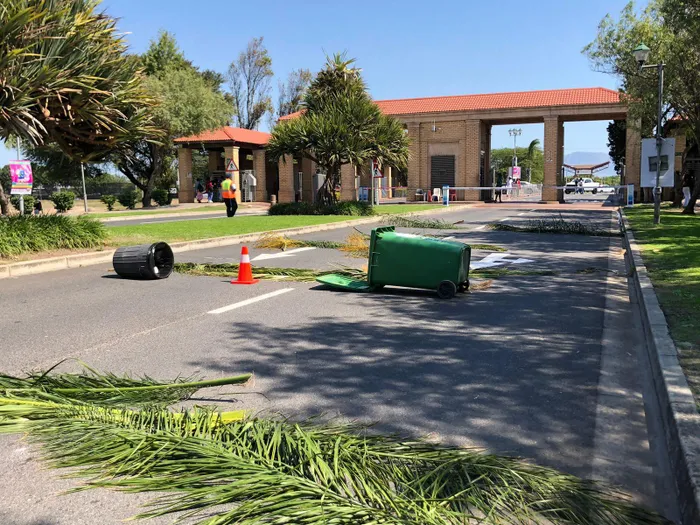
Students blocked the entrance of the campus recently during ongoing protests.
Image: Lilita Gcwabe
Cape Peninsula University of Technology (CPUT) students are demanding answers on the status of the accreditation of the institution’s dental programme after the South African Dental Technicians Council (SADTC) said it was currently suspended, citing historical failures and infrastructure issues.
The SADTC revealed that previously approved laboratories were shut down last year, while interim facilities used by the university were not authorised. It said these spaces "did not conform to regulations and were, in fact, a health and safety hazard", forcing it to instruct the university to cease operations in those labs.
While CPUT insists its dental programmes remain in place and that engagements are ongoing, the SADTC stated that "the CPUT dental technology programme is currently suspended".
Student leaders at the Bellville campus said a mass meeting was planned as frustration grows over what they describe as conflicting information from authorities.
Protests have escalated in recent weeks, with dental technology students continuing their shutdown amid confusion over the status of their programme. The latest unrest builds on earlier demonstrations, where students warned that prolonged class cancellations had effectively placed their academic futures on hold.
In a detailed explanation, the SADTC pointed to historical failures in the programme, noting that "in 2019 and 2020, CPUT graduated students, knowing that they had not reached the required standard for registration with the SADTC".
It added that registration is a legal requirement to practice, but those graduates could not be registered unless they completed a practical re-examination, which they refused.
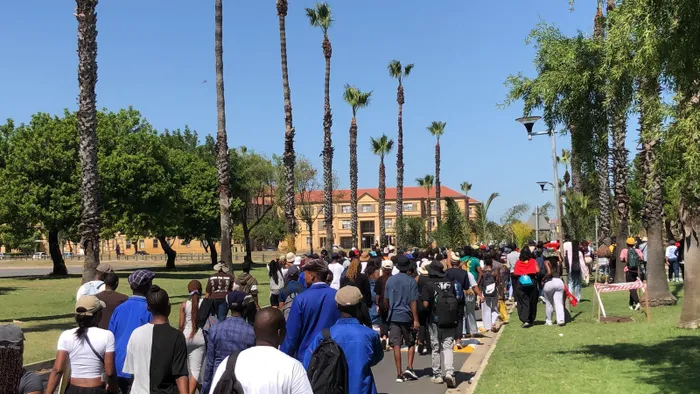
Accreditation of dental programmes at CPUT has been suspended by the SADTC, while confusion deepens for students and protests continue.
Image: Lilita Gcwabe
The council further stressed that intervention from health authorities has tightened requirements, stating that it has been instructed to ensure "there will be no further students graduated without simultaneous registration with the council".
A key sticking point remains CPUT’s position on academic autonomy. The SADTC said the university has maintained that it can graduate students regardless of whether they meet registration requirements, adding that it was left with no choice but to impose stricter conditions.
These include a requirement for "a joint assessment of the final practical exit-level examination by a panel comprising the university and the council examiners".
Infrastructure concerns have also been central to the suspension.
It also noted that newly developed laboratories could not yet be used, stating that they "have still not been given a certificate of compliance from Cape Town City Council and so cannot be used". While provisional registration had been granted, this remains subject to final inspection.
CPUT has rejected claims that the programme has lost accreditation, arguing that it remains accredited through the Council on Higher Education, while the SADTC’s role is to endorse graduates for professional registration.
On Tuesday, university spokesperson Lauren Kansley said engagements are ongoing to resolve the impasse and that new laboratories have recently received certification for occupation.
She added that the crisis affects a limited number of students, stating that "this affects 100 students and CPUT has 40 000 across all ranges of studies".
The university did not directly address the specific non-compliance issues raised by SADTC.
A student leader said: “Our mass meeting was actually planned for today but we couldn’t go through with it because we did not have shuttles to get to campus.”
“The shuttles have not been operating since the shut down started. We received a message from the university that the shuttles won’t operate the same way and with different time frames.”
Meanwhile, the Department of Higher Education and Training has yet to provide clarity. The department has acknowledged the situation, but indicated that it remains complex and under consideration.
Cape Times