

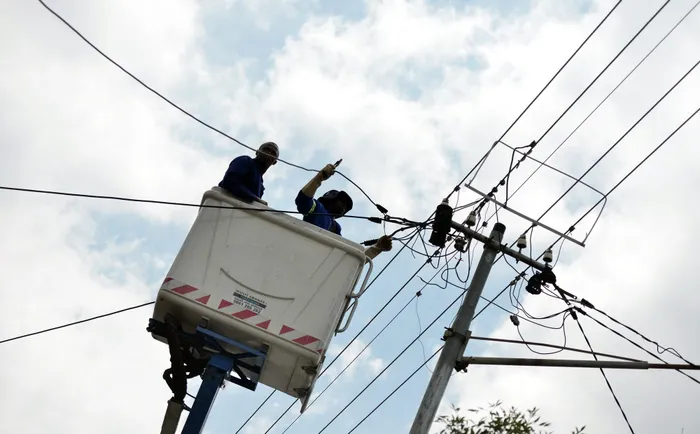
City Power disconnected the electricity supply of businesses that owe millions in unpaid electricity bills.
Image: Picture: Oupa Mokoena / Independent Newspapers
The City of Johannesburg has escalated its battle against mounting debt by cutting electricity to government departments that have failed to pay municipal bills as arrears climbed past R1.3 billion.
The disconnections, led by Mayor Dada Morero, mark a shift in enforcement, with the city insisting that government entities will now be treated no differently from ordinary residents and businesses when it comes to non-payment.
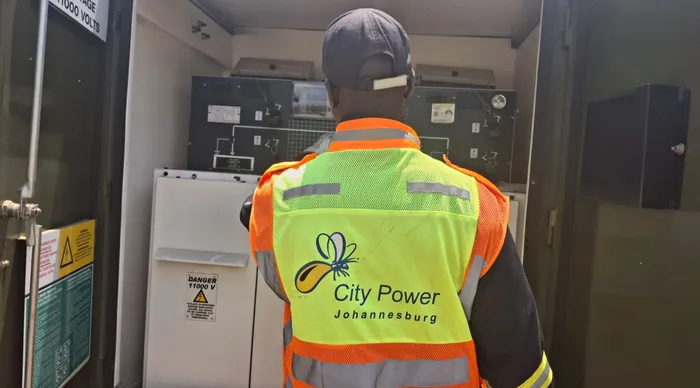
City Power has cut electricity to buildings and government departments owing money.
Image: Photo: Supplied/City Power
Data tabled before the council shows that City Power is owed nearly R754 million by government departments, while Johannesburg Water is owed more than R600 million.
Together, this pushes outstanding government debt beyond R1.3 billion.
But the problem runs far deeper. Johannesburg’s total debtors’ book, covering households, businesses and institutions, has surged to roughly R71 billion, underscoring a widespread culture of non-payment that is straining the metro’s finances.
Morero said the city had little choice but to act.
“All customers, including government institutions, have a responsibility to honour their municipal obligations in full and on time,” he said during a site visit to one of the disconnection points.
Electricity has already been cut at facilities linked to the Department of Cooperative Governance and Traditional Affairs, as well as several health department buildings.
However, attempts to extend the crackdown have not been uniform. City officials were unable to disconnect power at the Johannesburg High Court after being denied access.
The targeted departments were identified in the second-quarter financial reports (October to December 2025) from City Power and Johannesburg Water.
Complicating matters further is the city’s financial relationship with Eskom, which is listed in the same reports as City Power’s largest debtor, owing about R702 million.
The debt stems from a long-standing arrangement at the Lunar Intake Substation, where Eskom supplies bulk electricity while City Power distributes it to end users in certain areas, effectively providing a service to the utility.
“This constitutes a service for which City Power is entitled to be compensated,” spokesperson Isaac Mangena said, noting that the amount has accumulated over time.
The relationship between the two entities has historically been strained. In 2025, a breakthrough agreement was reached following a prolonged billing and debt dispute.
Under the deal, City Power committed to paying R3.2 billion to Eskom over four years, while Eskom agreed to write off approximately R830 million in penalties and related costs.
Announcing the agreement, Electricity and Energy Minister Kgosientsho Ramokgopa said the resolution acknowledged the financial pressures facing municipalities, particularly during high-demand winter periods when tariffs surge.
“We have accepted that there are major challenges with regard to tariffs during winter,” Ramokgopa said, adding that the agreement included relief measures and the removal of interest and penalty charges.
He described the deal as a potential template for other municipalities grappling with similar debt burdens.
The latest enforcement drive comes as Johannesburg’s municipal entities face worsening financial conditions.
City Power’s deficit widened by R869 million year-on-year in the October–December period, leaving the utility with a shortfall of around R19 billion. The figures point to structural challenges in both revenue collection and cost control.
Johannesburg Water, despite generating about R11.9 billion annually, is also contending with significant unpaid accounts, particularly from institutional clients.
The move by the City of Johannesburg follows a similar position taken by the City of Tshwane, which has disconnected power and water to businesses, residential complexes, and government departments owing over R30 billion in municipal debt.
The #TshwaneYaTima campaign targets non-paying customers, including state-owned entities and businesses that defaulted on agreements, with officials demanding immediate payment or payment arrangements.
Recent actions in Tshwane have targeted high-profile properties, such as the Sheraton Hotel (owing over R1.4 million), properties managed by KNG Properties and the Department of Public Works. The city is facing a mounting debt crisis, with the total unpaid bill increasing from over R17 billion to over R30 billion.
Cape Times