

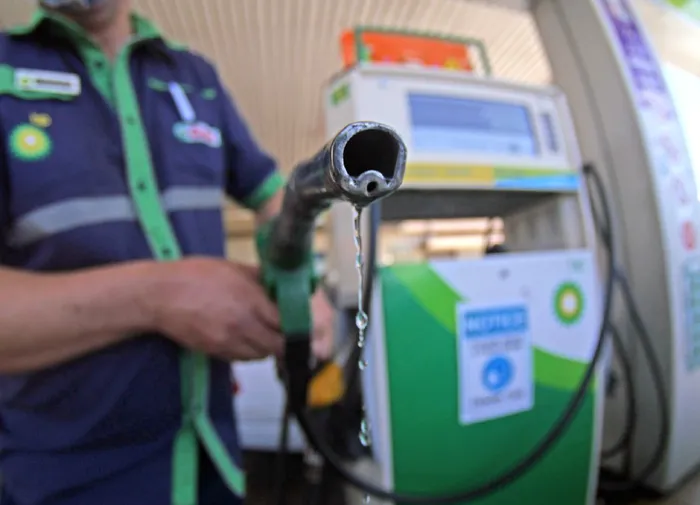
Farmers are reporting alarming fuel shortages and rationing, jeopardising critical agricultural operations at a pivotal time in the production cycle.
Image: Supplied
FARMERS across multiple regions have reported constrained fuel supply and increasing instances of rationing, with retailers limiting volumes due to uncertainty around replenishment.
These constraints are beginning to affect normal farming and agribusiness operations at a critical time in the production cycle, AgriSA and Agbiz said.
The organisations called on the Department of Mineral Resources and Energy to urgently consider a temporary adjustment to the current fuel pricing mechanism in response to emerging supply constraints in rural areas.
This followed the completion of a joint survey conducted among farmers and fuel retailers servicing the agricultural sector.
“Across multiple regions, respondents reported constrained supply and increasing instances of rationing.”
AgriSA and Agbiz proposed an immediate, out-of-cycle fuel price adjustment to better reflect current market conditions and the introduction of temporary more regular reviews, instead of the standard monthly adjustment, for the duration of the current energy price volatility.
“These measures are not intended to increase costs to the sector, but rather to ensure that pricing reflects underlying conditions more accurately, thereby reducing incentives for panic buying or supply withholding,” the organisations said.
Fuel represents a significant input cost in agriculture, typically accounting for between 12% and 18% of production costs. Any disruption in availability, particularly during peak planting, harvesting, or transport periods, poses a direct risk to food production, supply chains, and ultimately food security, AgriSA and Agbiz said.
Premier Alan Winde has also written to the Presidency and office of the Minister of Mineral and Petroleum Resources to raise his concerns over what appears to be the increased hoarding of fuel stock by some suppliers.
“This is unethical. I implore suppliers to continue providing fuel for their clients. Withholding supply places the economy and livelihoods, especially in the province’s agriculture sector, which accounts for over 50% of the entire country’s exports, at great risk,” Winde said.
The provincial government said it is also aware of isolated incidents where filling stations in parts of the province are running short of fuel supply or have depleted their stocks and are unable to source certain fuel.
Diesel supply appears to be the worst affected due to high demand, particularly in the agriculture sector.
Winde said the Provincial Disaster Management Centre (PDMC) is monitoring the situation, along with the Fuel Industry Association of South Africa (FIASA) and other key stakeholders.
“This week FIASA reassured the provincial government that there is currently sufficient fuel available nationally to meet demand. Therefore, any end user fuel shortages are very likely the result of market manipulation.”
Cape Times