

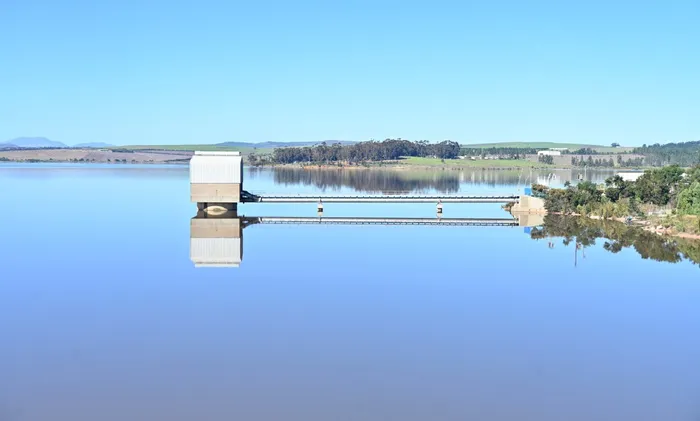
A view of Theewaterskloof Dam near Villiersdorp, the largest reservoir in the Western Cape Water Supply System.
Image: FILE/ Ayanda Ndamane /African News Agency (ANA)
THE Department of Water and Sanitation (DWS) expressed concern over the South African Weather Services' predictions of lower-than-normal rainfall in some parts of the Western Cape in the next two months, leading to insignificant inflows to dam storages.
This as lower-than-normal rainfall has led to a decline in dam storage levels across the province.
The department called on the public to continue using water sparingly by driving down water demand, reducing heavy reliance on surface water, exploring alternative water sources, fixing water leaks, and refraining from vandalising water infrastructure.
The most recent hydrological report shows the Western Cape Water Supply System (WCWSS), comprising the six largest dams, is currently at 48.85%, a notable decline compared to 65.64% recorded during the same period last year.
The Gouritz River Catchment, which covers the Little Karoo, Central Karoo, and the coastal belt, is sitting at 51.45% compared to 72.02% same time last year, with Knysna Local Municipality being the hardest hit as its water supply system presently facing critical water challenges due to a severe localised drought affecting the Garden Route belt.
The Olifants Doorn Catchment River System in the West Coast of the Western Cape is hovering below 30% comparing to 40.77% same time last year.
On Individual dams, the Theewaterskloof Dam which accounts for 51% water supply in the Western Cape Province has seen a notable 18% decline seating at 47.44% compared to 66.37% same time last year
“Several factors have contributed to declining dam levels in the catchments including below-average rainfall. The region has experienced prolonged periods of below normal rainfall limiting inflows into dams and rivers,” DWS said.
They also noted municipalities consumption remains high, placing pressure on already limited supplies.
DWS said national, provincial and local government were implementing short-medium term measures including the exploration and development of ground water in particular Central and Little Karoo.
Municipalities were also implementing water restrictions to reduce consumption, monitoring high water users and enforcing compliance with consumption limits.
Cape Times