

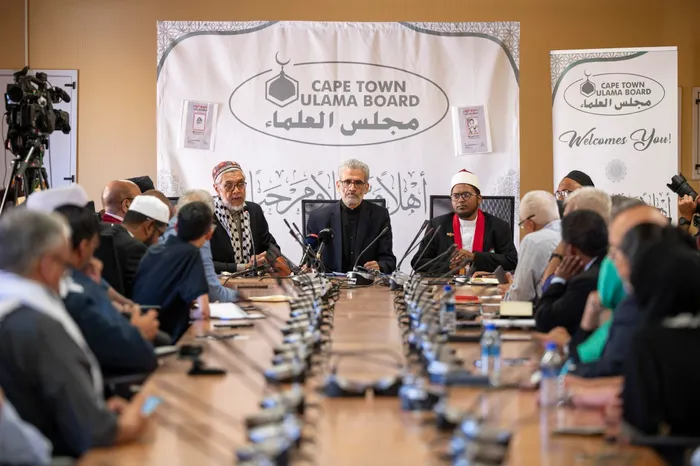
A diplomatic briefing led by His Excellency Ambassador Mansoor Shakibmehr, Iran’s envoy to South Africa, brought together religious leaders, community activists, and members of the media for a first-hand update on the rapidly unfolding situation in Iran and the broader region.
Image: Armand Hough / Independent Newspapers
The Islamic Republic of Iran has vowed to continue its military response against the United States, framing its actions as a legitimate act of self-defence under international law, as the number of civilian casualties continues to mount.
This emerged during a media briefing held at the Cape Heritage Museum at the Good Hope Centre, attended by leaders of civil society formations, organisations and activists, particularly within the Palestine solidarity movement.
The briefing was hosted by the Cape Town Ulama Board and addressed by Iran’s ambassador to South Africa, Mansour Shakib Mehr.
Opening his address with verses from the Qur’an, Mehr reflected on the significance of the holy month of Ramadan, describing it as a time for patience, compassion and unity among Muslims.
Mehr condemned what he described as the assassination of Iran’s supreme leader, Ayatollah Ali Khamenei, saying this was an unprecedented violation of international law.
"Targeting a head of state weakens the foundations of sovereign equality and sets a dangerous precedent," he said, adding that Khamenei was both a respected religious scholar and a political leader committed to Iran’s people.
He said the attack took place while Iran was engaged in diplomatic efforts aimed at strengthening regional peace.
"Iran followed the diplomatic path and did everything necessary to prevent war," he said. "The consequences of this aggression go beyond politics."
Mehr highlighted the civilian toll of the conflict, stating that more than 1400 people have been killed in Iran, including over 200 school-going children. He also pointed to attacks on civilian infrastructure.
"In one instance, a girls’ elementary school was destroyed, placing more than 100 young girls at risk," he said.
"Killing civilians, especially children, is not just illegal. It is a breach of human ethics," he said.
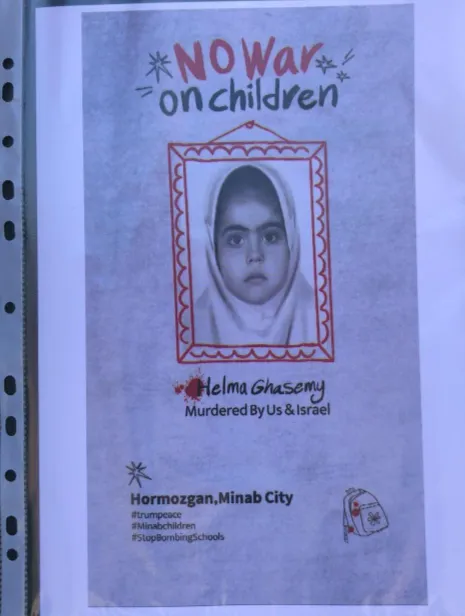
An image of a child killed as a result of the military war between Iran and the US together with Israel.
Image: Lilita Gcwabe
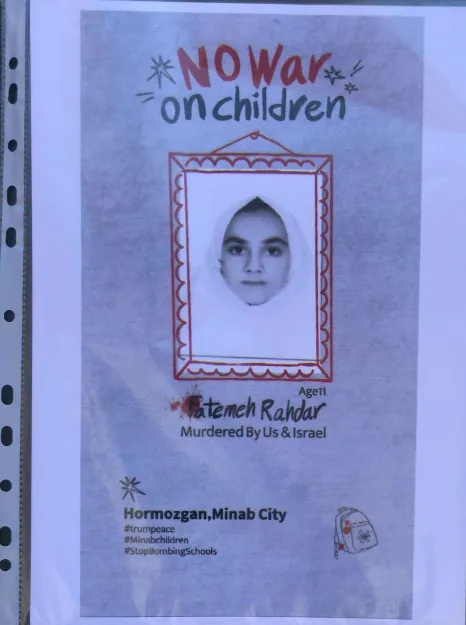
An image of one of the children who have died as a result of the attacks on Iran.
Image: Lilita Gcwabe
Citing Article 51 of the United Nations Charter, Mehr said Iran’s response is lawful.
"Our actions are not for revenge, but within the framework of international law to protect our national security and sovereignty," he said.
He stressed that Iran’s military actions are targeted at US military bases and assets, and not neighbouring countries.
"We have not targeted the land of our neighbours. Our response is directed at those who are attacking us," he said.
Mehr said the country has never initiated war and that its policies are rooted in regional stability.
He also accused the US of escalating tensions through misinformation and covert actions aimed at blaming Iran for attacks.
"It is not fair to ask Iran, while under attack, to refrain from defending itself,” he said. “Pressure should instead be placed on the aggressor."
Mehr warned that the conflict could have far-reaching global consequences, including economic instability.
"This is not just an attack on Iran, but on humanity," he said. "Silence in the face of such violations will lead to greater disorder."
Reaffirming Iran’s position, Mehr said the country would continue its response as long as it remains under threat.
"We will continue until the danger against Iran is removed," he said.
He concluded with a call for international solidarity, urging civil society and global communities to take action.
"We need practical solidarity to defend truth, justice and human dignity, and to ensure that the voice of justice is not silenced."
Cape Times