


Health Minister Dr Aaron Motsoaledi addresses the media, reassuring the public about the safety of menstrual products.
Image: GCIS
HEALTH authorities have moved to reassure the public regarding the safety of menstrual products, particularly sanitary pads and pantyliners, amid rising fears triggered by a University of Free State (UFS) study.
In a press briefing on Sunday, Health Minister Dr Aaron Motsoaledi, alongside a panel of specialists, sought to clarify the findings of the study, which had suggested the presence of harmful endocrine-disrupting chemicals (EDCs) in these products.
Published in February, the UFS study found small amounts of EDCs in 16 sanitary pads and seven pantyliners purchased online, including some marketed as chemical-free.
The research linked the EDC exposure from these menstrual products to serious health issues such as hormonal imbalances, fertility problems, endometriosis, and certain types of reproductive cancer.
The health department and Department of Women, Youth, and Persons with Disabilities consulted experts from the South African Medical Research Council (SAMRC), the South African Society of Obstetricians and Gynaecologists (SASOG), the South African Society of Reproductive Medicine and Gynaecological Endoscopy (SASREG), the National Health Laboratory Service (NHLS), the South African Health Products Regulatory Authority (SAHPRA), and the World Health Organisation (WHO).
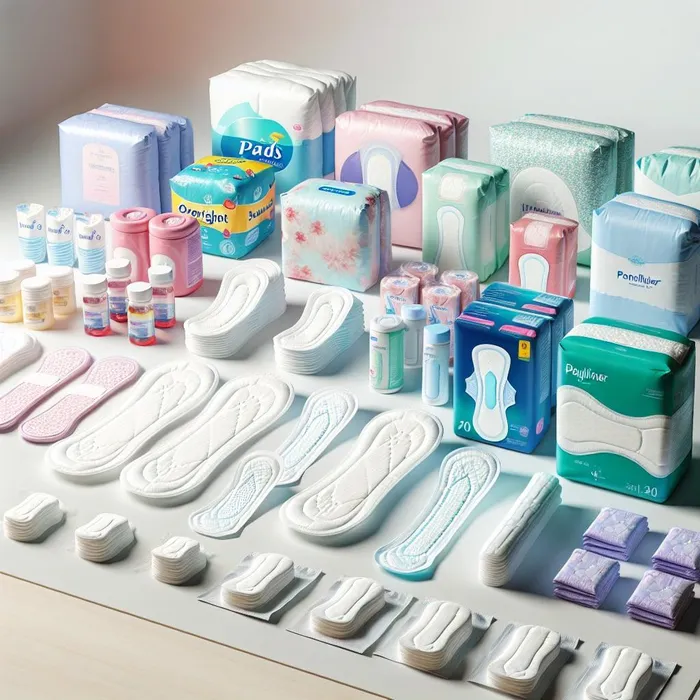
Sanitary pads and pantyliners: Health authorities confirm their safety despite recent study findings.
Image: IOL/ RON AI
Motsoaledi explained that EDCs are chemicals, either natural or human-made, that disrupt the endocrine system. EDCs are everywhere, found in low concentrations in food, household, personal care, and beauty products (cosmetics, toothpaste, shampoo, lotions, etc.), clothing, and electronics. They are also widely used as pesticides in agriculture to kill pests.
“Concentrations of EDCs in menstrual products are very low. The findings of EDCs in sanitary pads do not automatically translate into harm in the human body,” Motsoaledi said.
He said the study established no link to clinical harm. Given the absence of reliable data, a small sample size, and the non-involvement of clinicians, endocrinologists, or chemical pathologists, the experts who would be the first to detect harm, no proven public harm can be confirmed.
SASOG President Professor Ismail Bhorat said the EDCs only have “the potential to interfere with the actions of hormones, and there has been no established risk for the presence of these EDCs”.
He said the widespread incidental presence of these chemicals, found in almost all exposures, is not unique to sanitary products and does not signify a health risk.
Bhorat also said that the low EDC exposure from sanitary products is due to small, sub-permissible concentrations and the study’s small, less generalisable sample size.
“It is safe to use the menstrual products as they are at the moment, and we have reached the conclusion that we should not have a change in the usual practice of what we are doing now,” Bhorat said.
SAMRC President and CEO Professor Ntobeko Ntusi emphasised that the findings of small EDC quantities in sanitary pads, in soil, food, and many agricultural products to date have not been causally linked with any adverse clinical events.
“We also know that sanitary pads, pantyliners, and many hygiene products have been used for many, many years by women all over the world, and there’s been no signal of harm from their use following many decades,” Ntusi said.

Experts gather to discuss the findings of the UFS study on EDCs in sanitary products. From left, Acting Commissioner Hardin Ratshisusu of the National Consumer Commission, World Health Organization (country representative) Shenaaz El-Halabi, Deputy Minister in the Presidency for Women, Youth and Persons with Disabilities Mmapaseka Letsike, Health Minister Dr Aaron Motsoaledi, and Deputy Health Minister Dr Joe Phaahla.
Image: GCIS
WHO Headquarters Technical Officer for chemical safety projects, Dr Richard Brown, said this is an extensively studied global issue in many countries.
“From a public health perspective, the health benefits which are derived from these products should not be withdrawn without a good reason to do so. Those health benefits have to be balanced, and there is no clear evidence of harm from these products identified to date,” Brown said.
He added that they consistently follow the latest global scientific research, shared via reports like those from the WHO. Expert committees use these findings to set permissible levels for products, ensuring a safety margin, with information shared worldwide.
Acting Commissioner Hardin Ratshisusu of the National Consumer Commission stated there is no immediate quality concern with market products from their perspective, and they “will not be instituting any product recalls on this basis”.
“We have initiated an investigation, and based on this information, we should be wrapping up that work quite soon,” Ratshisusu said.
Cape Times