

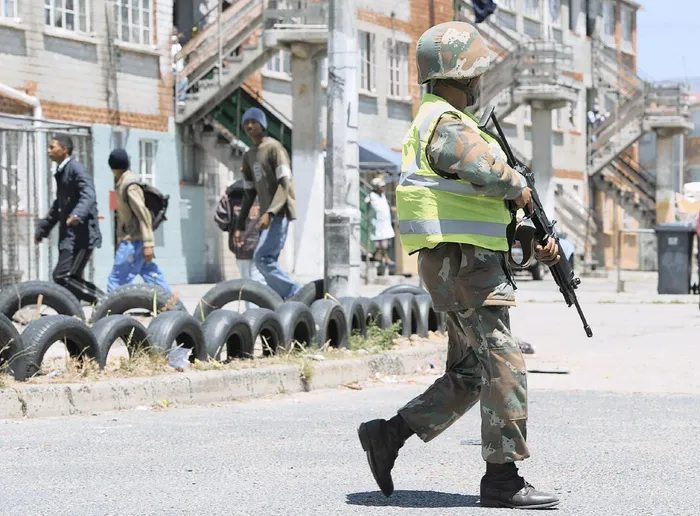
During the State of the Nation Address (SONA), President Cyril Ramaphosa said he had directed the police and the SANDF to tackle gang violence and illegal mining in the Western Cape, Gauteng and Eastern Cape.
Image: Henk Kruger/Independent Newspapers
The deployment of the South African National Defence Force (SANDF) in the Western Cape, Eastern Cape and Gauteng has been described as an admission that crime intelligence and police services have collapsed.
Experts say the deployment of the defence force would most likely offer only tactical relief, rather than strategic and sustainable solutions to the problem, adding that this cannot substitute for the necessary, long-term overhaul of the SAPS, which must focus on intelligence-led operations, detective work, and dismantling criminal networks.
President Cyril Ramaphosa announced the deployment of the SANDF in Gauteng and the Western Cape during his 2026 State of the Nation Address (SONA) on February 12.
Acting Police Minister Firoz Cachalia later confirmed the deployment would also include the Eastern Cape.
He said this is a targeted response to the most immediate threat to South Africa’s democracy, which includes organised crime, gang violence and illegal mining.
The Western Cape recorded 1,157 murders between October and December 2025 and remains the epicentre of gang-related violence in South Africa.
According to the latest police statistics, one in four murders and attempted murders in the province are gang-related, with the Cape Flats, Delft and Mfuleni at the centre of the bloodshed. Firearms remain the weapon of choice.
"The SANDF is coming. Although the exact date is not yet known. Plans are in place — all that remains is to see boots on the ground. It is soon. We are eagerly waiting too. We did the plans. We know what we will be getting and how many," Provincial police commissioner Lieutenant-General Thembisile Patekile said during a media briefing on Tuesday.
This is not the first time the SANDF has been deployed to deal with crime. In October 2017, following a significant surge in crime and gang-related violence on the Cape Flats, the then Police Minister, Fikile Mbalula, requested SANDF assistance for the SAPS to combat gangs in the Western Cape and Gauteng. The deployment was specifically aimed at "crime-stubborn" areas like Elsies River and other parts of the Cape Flats, where police were struggling to contain military-style gang groupings.
Security expert, Willem Els, said that the government cannot act pre-emptively without crime intelligence, adding that the country should learn from the previous deployment in the Western Cape, where the murder rate went up after their withdrawal after eight months, which indicated that it did not have the desired effect at all.
Else said that bringing the same old model shows that crime intelligence and the police as a whole have been infested, adding that criminal syndicates and organised crime have taken over the criminal justice system.
“If you don’t have crime intelligence, you cannot act pre-emptively, and that is why most police operations are reactive in nature,” he said, adding that the SAPS should re-establish credible crime intelligence and policing systems.
Spokesperson for the Police Minister, Kamo Mogotsi, said the ministry issued a statement advising of the engagements it would have with a range of stakeholders to discuss measures underway to curb gang violence in the Western Cape and their effectiveness
“The ministry further advised that the stabilisation plan was being revised to ensure a strong emphasis on the enhanced deployment of specialised units, in addition to the existing Anti-Gang Unit, to areas most affected by gang-related violence,” she said, adding that the revised plan also aims to improve operational capability and strengthen intelligence-driven policing in hotspots across the province.
Another security expert, Andy Mashaile, believes that the SANDF has been deployed due to the collapse of SAPS, saying this cannot be branded as a solution.
In March last year, the Portfolio Committee on police convened to address growing concerns over instability, corruption, and operational failures within the SAPS Crime Intelligence division. The hearing revealed incidents of internal leaks, leadership turmoil, and resource mismanagement that have plagued the division for years.
Although the SAPS officials assured the committee that intelligence operations were functioning effectively, lawmakers raised serious concerns regarding persistent leadership instability, politically motivated misuse of intelligence, and the failure to prevent violent crime and unrest. The hearing underscored the urgent need for stronger oversight, accountability, and structural reforms to restore confidence in the country’s crime intelligence capabilities.
Additional reporting by Lilita Gcwabe
Cape Times