

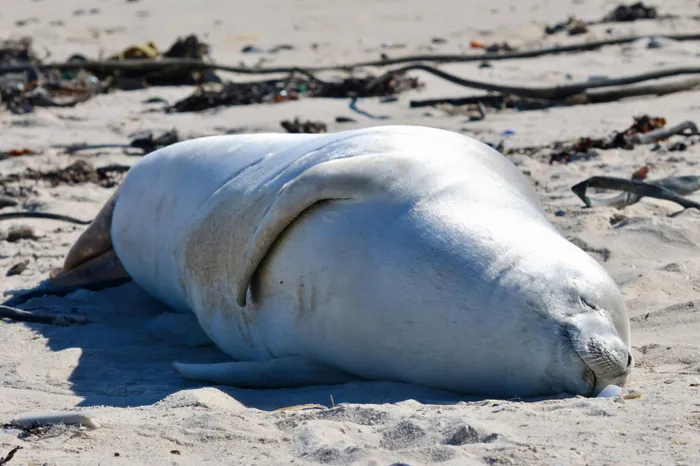
An unusual visitor from Antarctica, a young female crabeater seal, has been spotted along the Cape’s coastline this week. The Two Oceans Aquarium urges all members of the public to keep a respectful distance to give her space to rest.
Image: Two Oceans Aquarium
An unusual visitor from Antarctica was spotted along the Cape’s coastline this week.
A female crabeater seal, a species seldom seen in South African waters, was initially sighted at Baden Powell Drive and later in the Strand area.
The Two Oceans Aquarium Wildlife Team was among many organisations to launch a collaborative response to ensure the safety of both seal and humans alike.
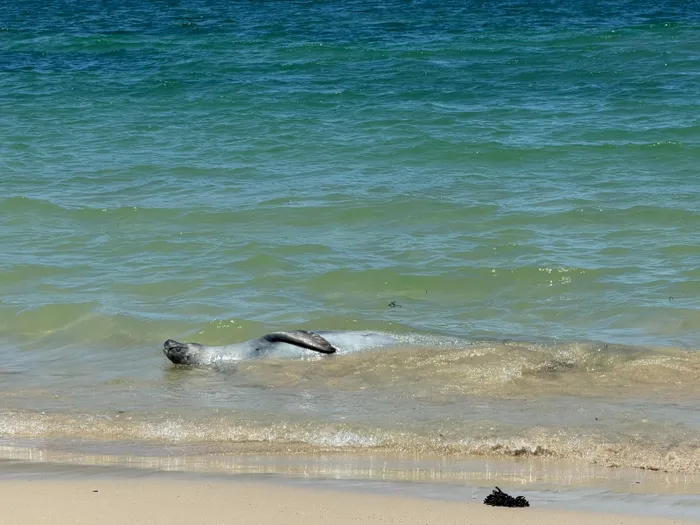
An unusual visitor from Antarctica, a young female crabeater seal, has been spotted along the Cape’s coastline this week. The Two Oceans Aquarium urges all members of the public to keep a respectful distance to give her space to rest.
Image: Two Oceans Aquarium
This remarkable animal travelled an estimated 4 500 kilometres from her Antarctic home, journeying even further than the southern elephant seals that have visited local shores in recent years.
“We are so lucky to have these amazing animals visit our shoreline. We appeal to all members of the public to please leave them alone, respect their space, and view them from a distance. They don’t need help, food, or water – the best we can do for them is give them peace and space,” says Gregg Oelofse, Coastal and Environmental Manager for the City.
Following a reported sighting of a crabeater seal along the coastline, Helderberg Ocean Awareness and City officials were prompt to respond. The area was cordoned off to protect both the seal and members of the public, ensuring the animal had adequate space to rest undisturbed.
Subsequently, a coordinated marine wildlife response team comprising Marine Wildlife Manager at the Two Oceans Aquarium Foundation Martine Viljoen, top predator coordinator Yinhla Shihlomule, and Marion Island sealer Zafar Monier, responded to flipper tag and vaccinate the seal.
“With Crabeater seals, there is always heightened concern when they are observed ingesting sand. As a species not naturally adapted to South African coastal conditions, such behaviour may reflect stress or disorientation. Tragically, sand ingestion can lead to serious gastrointestinal complications and has been recognised as a cause of mortality in individual vagrant seal species.
“There is no immediate concern for this individual seal, however experts will continue to monitor her for any change in behaviour or condition,” the aquarium said.
As a precautionary measure, the team administered a rabies vaccination to the seal. This forms part of a broader seal vaccination study currently being implemented for Cape fur seals and other vagrant seal species, including elephant seals.
Viljoen added that flipper tagging provides a unique visual identification, allowing individual seals to be recognised over time.
“This helps confirm whether repeated sightings involve the same seal rather than different animals, particularly when a seal hauls out at multiple locations along the coastline,” said Viljoen.
Members of the public are urged to follow these important safety rules when encountering seals or other marine wildlife:
Cape Times