

President Cyril Ramaphosa has pledged R156bn for water and sanitation infrastructure and announced a National Water Crisis Committee to coordinate the response.
Image: File/ Timothy Bernard/ Independent Newspapers
THE South African Local Government Association (SALGA) has pushed back against “forcing” municipalities to deliver water to communities under the threat of criminal prosecution.
It warned that taking the municipality to court is short-sighted and could be construed as a waste of their meagre resources.
SALGA president, Bheke Stofile, spoke to this publication’s sister paper, The Mercury, following President Cyril Ramaphosa’s announcement that the government had set its sights on municipalities that fail to deliver water to communities, including possible criminal prosecution.
In his State of the Nation address last week, Ramaphosa said the government has already lodged criminal complaints against 56 municipalities that have failed to meet their obligations. They will now move to municipal managers in their personal capacity for violating the National Water Act.
This has drawn mixed reactions, with councillors living in areas impacted by water shortages stating that taking criminal action against the municipality is the first step to ensuring that the problem is taken seriously by the council.
Stofile said resolving the challenges municipalities were facing requires an intergovernmental process, not through legal instruments.
"Taking the municipality to court is short-sighted, and it is a waste of the meagre resources that they need to deliver services. Let me tell you, you can take the municipality to court, but if they don’t have the money, then what? What needs to change is the funding models of the municipality," he said.

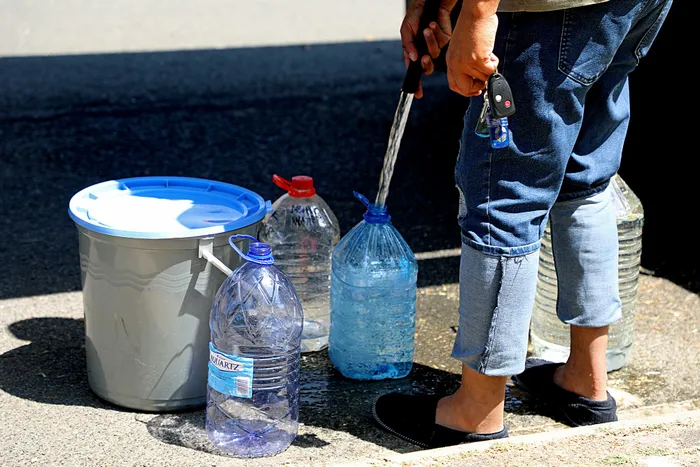
water shortage
Image: Picture: Timothy Bernard / Independent Newspapers
He noted that municipalities have been given almost half of the work (service) to deliver for communities but have not been given a budget to do so.
In KwaZulu-Natal, several municipalities have failed to deliver water, leading to complaints by residents. Among these municipalities are Ugu and Umgungundlovu.
An IFP councillor in the Impendle Local Municipality said: "The announcement by the president was a very positive step. Now we all know that not having water can be considered a criminal offence. We have about less than 50 percent of the homes in the area that have tap water; the rest of the population has to rely on water tankers and standpipes.
"The fact that you have a tap in your yard is not a guarantee that you are going to have water; even those people can go for weeks without water coming out. Water in this area is a serious challenge. We hope that with the president's pronouncement on the matter, we will soon see a change because the municipality should quickly reevaluate their performance to determine their shortcomings and address them before they have to face criminal charges. Water is an essential service; we cannot live without it."
The Knysna municipality has been among the Garden Route towns experiencing severe water shortages including the prospect of Day Zero.
In its latest water update, the municipality said as a water-saving measure, showers and external taps at ablution facilities and in public spaces remain closed.
Knysna, along with many parts of the Garden Route and Western Cape, is a waterstressed destination, a reality shared by communities across South Africa.
Knysna Municipality Economic Development Manager Lungiswa Goya, said: “Our accommodation providers, restaurants and tourism operators are open, with extensive measures in place to ensure water is used efficiently, responsibly and thoughtfully.
"Across the destination, tourism businesses have implemented water-saving systems and operational practices, including low-flow fittings, greywater reuse, rainwater harvesting and staff training, ensuring that no drop goes unused or wasted, with visitor comfort remaining a priority.”
Elamy Bouwer from the Greater Knysna Business Chamber (GKBC) said: “We are managing water resources responsibly and safeguarding the natural assets that define the destination. Across the sector, sustainable operational practices and alternative water sources are being used to reduce pressure on municipal supply, ensuring guests feel welcomed, comfortable and cared for while acting responsibly in the current climate. At the same time, keeping the local tourism economy active is vital for jobs and livelihoods, particularly during periods of water stress.”
Cape Times