Criminal charges await errant municipal managers over water crisis
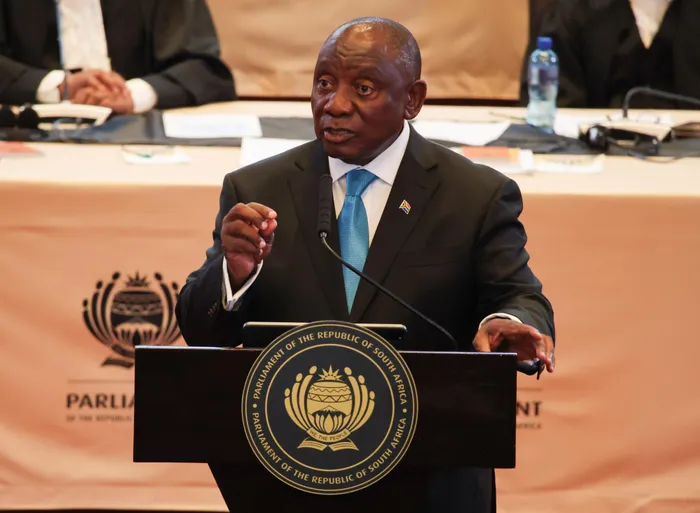
President Cyril Ramaphosa delivers his State of the Nation Address (SoNA).
Image: Jairus Mmutle/GCIS
MUNICIPAL managers implicated in violating the National Water Act are next to have criminal complaints lodged against them, as President Cyril Ramaphosa announced the National Water Crisis Committee, which he will chair.
The structure will deploy technical experts and resources from the national government to municipalities facing water challenges.
He said it will ensure that action is taken swiftly and effectively to address the problem. Ramaphosa disclosed in his State of the Nation Address Thursday night that the government has already lodged criminal charges against 56 municipalities that have failed to meet their obligations.
“To address the challenges effectively we will not hesitate to use the powers enshrined in the Constitution and in the Water Services Act to intervene in municipalities where necessary. We will hold to account those who neglect their responsibility to supply water to our people.”
Ramaphosa has directed Water and Sanitation Minister Pemmy Majodina, her deputy David Mahlobo and Cooperative Governance and Traditional Affairs Minister Velenkosini Hlabisa to attend to the water crisis in Gauteng.
“Water is now the single most important issue for many people in South Africa, from large cities like Johannesburg to smaller towns like Knysna and rural areas like Giyani. We have all seen the pain that our people have been expressing through demonstrations in various parts of Gauteng. These protests have been fueled by frustrations over inadequate and unreliable access to basic services such as water.”
Ramaphosa blamed the country’s water woes on poor planning and inadequate maintenance of water systems.
“There is no silver bullet to address this challenge, which has its roots in systemic failures and many years of neglecting infrastructure. To ensure water security in the long term, we are building new dams and upgrading existing infrastructure. We have committed more than R156 billion in public funding for water and sanitation infrastructure alone over the next three years.”
Cape Times