

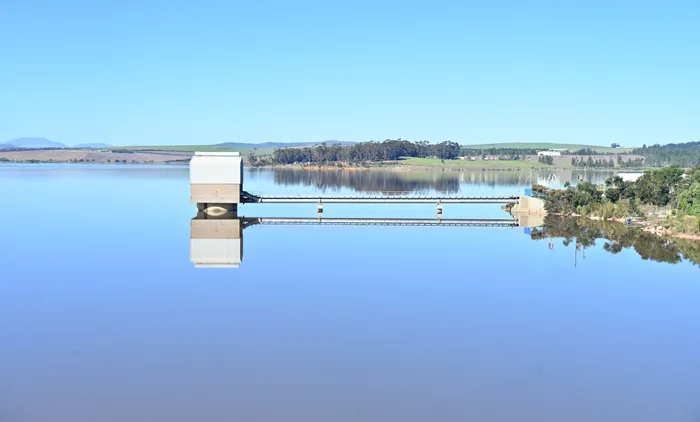
A view of Theewaterskloof Dam near Villiersdorp, the largest reservoir in the Western Cape Water Supply System, which has declined from 58.79 to 56.81.
Image: FILE/ Ayanda Ndamane /African News Agency (ANA)
THE City of Cape Town has not ruled out imposing water restrictions in the event that continued high water use is not brought down.
“Water usage this past week has unfortunately peaked, so we are 87 million litres a day over our target. Team Cape Town, we need all hands on deck to help bring our collective use down. All of us use water, so let's do what we can to protect our supply. Early proactive measures are far more effective than emergency restriction,” said water and sanitation mayco member Zahid Badroodien.
The city’s dam storage levels currently stand at 62.2%, which is 20% lower compared to this time last year.
“We must reduce the unnecessary litres of water used in our homes, in industrial and agricultural processes and at work. We can’t afford to be complacent. We must closely keep track of consumption indicators on a weekly basis,” said Badroodien.
He said lower annual rainfall last year resulted in reduced inflows to dams, placing increased pressure on the City’s water supply system.
“‘The City is busy with various actions, including consistently resolving reported pipe bursts and water leaks reported through official channels. Since the drought, the City has and continues to invest in upgrading aged water pipes, improving pressure management, fixing leaks faster and strengthening metering along the water supply network. The City is also actively progressing with strategic plans for Cape Town’s new water supply to build our water secure future. In the long term, to reduce dependency on rain-fed dams, the City is scheduled to proactively add new water sources, such as desalination and water reuse to our supply from 2031,” he said.
The Department of Water and Sanitation (DWS) said it is closely monitoring the situation in the Western Cape as catchments and supply systems show further decreases compared to the previous week.
Dam levels across the province have continued to drop over the past week, according to the latest hydrological report.
The Gouritz and Olifants-Doorn catchments are of particular concern, now sitting below 50%. The Cape Town Water Supply System has fallen to 61.53% from 63.66% last week, while the overall Western Cape State of Dams has slipped to 53.68% from 55.97%. Theewaterskloof Dam, which provides more than half of Cape Town’s water, has also declined by 2% from 58.79 to 56.81, the department said.
DWS Western Cape Head Ntombizanele Bila-Mupariwa said government and local partners are acting swiftly.
“We are implementing short- to medium-term interventions through our weekly Joint Operations Committee (JOC), which brings together the Provincial Government, Knysna Municipality, and the Breede-Olifants Catchment Management Agency,” she said.
This week, the DWS and its partners, including the Department of Environmental Affairs and Development Planning and South African National Parks are in Knysna to enforce compliance and strengthen interventions.
“We call on industries and individuals to step up and save water. Every drop counts,” Bila-Mupariwa said.
To report a leak or a pipe burst in Cape Town:
Call 086 010 3089 (select option 2), SMS 31373, WhatsApp 060 018 1505 or email water@capetown.gov.za. Provide an exact location or address and always insist on a reference number.
Visit www.capetown.gov.za/savewater for water saving tips.
Cape Times