

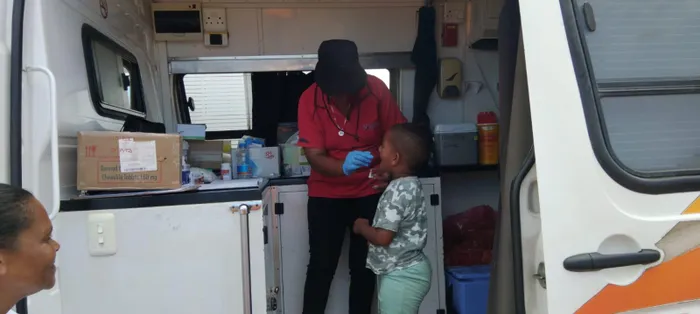
NICD situational report on diphtheria outbreak stresses that protection depends on early childhood vaccination and on booster doses later in life.
Image: Supplied
While the Western Cape accounts for the majority of toxigenic respiratory diphtheria, a concern has arisen over the declining uptake of Tdap (tetanus, diphtheria, and whooping cough) booster doses among older children.
This came to light after the latest situational report from the National Institute for Communicable Diseases (NICD) revealed that nationally, 91 laboratory-confirmed cases of toxigenic respiratory diphtheria were recorded between January 2024 and January 18, 2026. The Western Cape accounted for most cases, reporting 67.
The NICD said that a public health response was initiated for every case, which involves swabbing, isolating, providing prophylaxis, and vaccinating close contacts. These actions apply to contacts in all settings, including households, workplaces, healthcare facilities, and emergency medical services.
In the Western Cape and Limpopo, additional vaccination campaigns were conducted in schools and communities.
“Of the 91 respiratory diphtheria cases, 21 (23%) occurred among children aged 12 years and under. Vaccine history was available for seven of these cases. One case (aged 8 years) had received four infant doses but no booster, two cases (aged 9 and 10 years) had received three infant doses and no booster, two cases were reported as unvaccinated, and two cases (aged 6 and 12 years) were reported to be up to date with their vaccinations,” the NICD said.
The NICD explained that respiratory diphtheria is a highly contagious vaccine-preventable illness caused by the toxin-producing strains of C. diphtheriae and occasionally C. ulcerans and C. pseudotuberculosis.
“Primary prevention is through vaccination, including the infant vaccine course (6, 10 and 14 weeks) with boosters at 18 months, 6 years and 12 years of age,” the NICD said.
Western Cape Department of Health and Wellness spokesperson Shimoney Regter said diphtheria prevention forms part of the routine childhood immunisation programme, with Tdap booster doses provided at 6 and 12 years of age to maintain protection.
Free Tdap booster immunisations are available without an appointment at public health facilities across the Western Cape. Additionally, the department runs school-based outreach programmes, which require parental consent.
“A key challenge is the lower uptake of booster doses, particularly among older children, which reduces protection over time and increases their risk of diphtheria,” Regter said.
“Parents and caregivers are encouraged to check the Road to Health Booklet, return school consent forms, and visit their nearest clinic for any missed doses.”
National Department of Health spokesperson Foster Mohale said the Big Catch-Up Campaign, a continuing initiative, is being undertaken by the department in partnership with the provinces. It started in November 2025, targeting districts that experienced outbreaks not only for diphtheria but also for measles and rubella vaccination.
“The national department is supporting the Western Cape on a continuous basis, with weekly virtual meetings to get progress reports and recommendations,” Mohale said.
Mohale identified several challenges contributing to the difficulty in closing the vaccination gap. A key issue is the inconsistency of parents and caregivers in bringing children for booster doses once they are older than 24 months. This problem is compounded by vaccine hesitancy, along with mis- and disinformation about vaccines, which are factors leading to outbreaks of vaccine-preventable diseases.
“The department is collaborating with provinces to embark on strengthening the advocacy, communication and social mobilisation and demand creation activities to dispel the myths on vaccines,” Mohale said.
He said the side-by-side campaign and the departmental social media platforms are used for accurate childhood immunisation information. Healthcare workers and community health staff also conduct community awareness and door-to-door visits to promote immunisation and share health messages.
Cape Times