

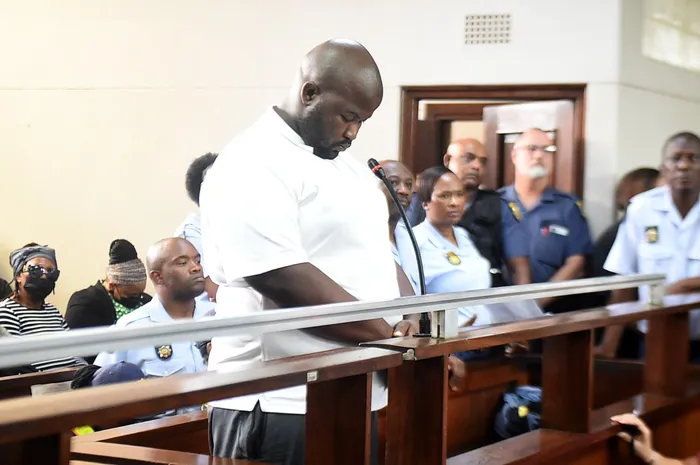
Ayanda Dludla (22) appears before the Vanderbijlpark Magistrate Court.
Image: Itumeleng English/ Independent Newspapers
UNEVEN enforcement has been identified as one of the factors contributing to scholar transport accidents.
This is according to the Greater Gauteng Learner Transport Organisation (GGLTO), which said many drivers operate without roadworthiness checks, while some are not adequately vetted and trained.
The association said stronger monitoring and consistent enforcement are urgently needed to protect learners.
“We were devastated when we heard the news. No parent should ever have to fear whether their child will return home safely from school. This tragedy has shaken our community and underscores the urgent need for stronger safeguards in learner transport,” said GGLTO secretary general Sibongile Maseko.
Maseko said that while the investigation will provide clarity, early indications suggest that a combination of vehicle condition, driver conduct, and possibly overcrowding may have contributed.
These were recurring risk factors that the association has long raised concerns about.
Maseko called for stricter enforcement of roadworthiness standards.
She also called for greater collaboration between schools, parents, and authorities to monitor compliance.
Her remarks came as scholar transport driver, Ayanda “Biggie” Dudla, appeared in the Vanderbijlpark Magistrate's Court on Thursday in connection with the horror crash that claimed the lives of 14 learners.
Preliminary investigations and truck dashcam footage indicate the 22-year-old minibus driver attempted to overtake multiple vehicles and failed to notice the oncoming truck.
Initially facing 12 counts of culpable homicide, Dudla’s charges were upgraded during his first appearance to 14 counts of murder and three counts of attempted murder. This after two more children died in hospital.
He is also charged with driving without a valid professional driving permit (PrDP) - which reportedly expired in November 2025 - and operating an unlicensed vehicle.
The case has been postponed until February 5, 2026.
In a damning report released on Monday, the South African Human Rights Commission (SAHRC) confirmed systemic failures in the delivery of the scholar transport programme in the North West Province.
The failures include overloaded transport, the use of unroadworthy vehicles, late deliveries and collections by service providers, multiple trips, the lack of supervision of learners during scholar transport, the exclusion of certain categories of needy learners from the scholar transport system, the lack of provision of scholar transport for extra classes and other extra-curricular activities, the non-vetting of transport drivers, and other forms of non-compliance by service providers.
The South Africa Scholar Transport Association (Sasta) said it has been engaging with the government to minimise the accidents involving scholar transport.
The association’s secretary general, Sihle Magubane, said their plea was ignored.
“We need the government to regulate the Sasta and be able to engage the scholar transporters. We have been neglected for a long time and Sasta is the umbrella of other associations across the country,” he said.
Magabune added that the regulation will set rules and provide directives on what is expected of them.
“Anyone who has money, just go and buy a vehicle and turn into a scholar transporter, and we cannot stop that because we are not regulated,” he said.
Asked how the situation has been dealt with, both the Gauteng Department of Transport and the National Department of Road and Transport did not respond.
Cape Times