

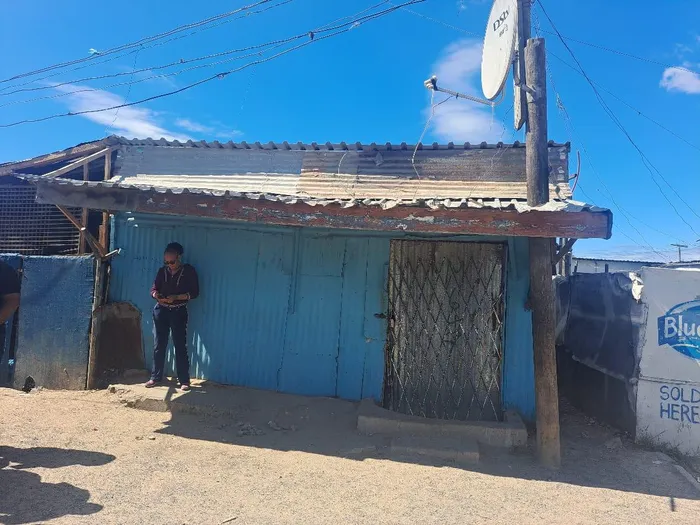
The shebeen where 10 people were shot is still closed.
Image: Phiri Cawe
“I AM willing to talk, but not here unless I want to die.”
So said a Marikana informal settlement resident in Philippi where eight people were killed when gunmen opened fire on patrons of an illegal tavern at the weekend.
Marikana is among the areas experiencing a surge in gun violence crime driven by the rise in extortion gangs who demand a ‘protection fee’ from local businesses.
Failure to pay leads to severe consequences including death. Police believe extortion could be behind the latest attack. Among the eight people killed in this incident is the owner of the tavern.
Fear has taken hold of the informal settlement as police continue the search of the three known suspects.
On Monday afternoon, just two days after the tragedy in which ten people were gunned down, Marikana appeared deceptively calm.
Residents went about their daily routines, vendors traded, and taxis moved in and out. On the surface, life seemed unchanged, yet beneath it lay fear, grief, and unresolved trauma.
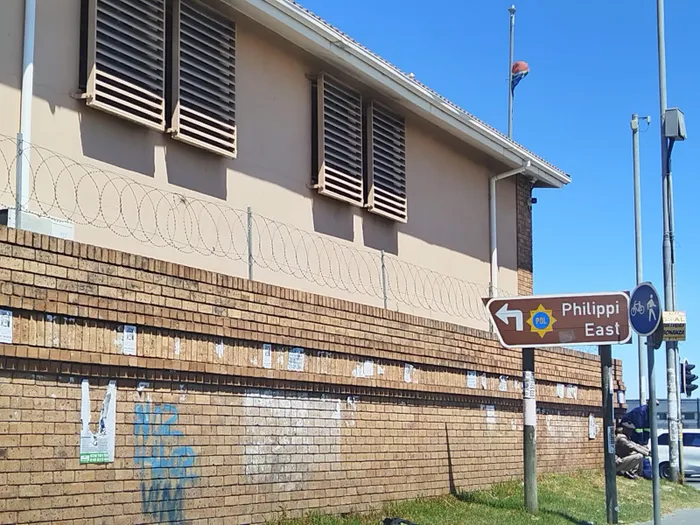
Philippi East Police Station is not far from the Marikana Informal Settlements, where crime is rife in the community.
Image: Phiri Cawe
A visit to the area was preceded by prior arrangements with local leaders, who agreed to meet but warned journalists to be vigilant.
Those who agreed to be interviewed did so on condition of anonymity, including community leaders, citing serious safety concerns.
One resident, who identified herself only as Nozibele (not her real name), insisted on speaking away from her home and out of sight of neighbours.
“I am willing to talk, but not here unless I want to die,” she said, pointing towards a local supermarket where the interview continued.
“Kukwanja zoth’umlilo apha,” she said - loosely translating to “this is a dangerous place where it’s every person for themselves.”
She described Marikana as an area devoid of peace. While others identified illegal taverns as fueling the violence, she did not support the outright closure of the establishments, saying: “The sad thing is that you can’t even regulate them.”
“But sometimes they help because criminals drink and go home after that.”
Nozibele believes that shootings cannot be blamed solely on illegal taverns.
“Unemployment, school dropouts, and drugs all play a role,” she said.
“Are we to blame, shebeen queens and kings? No. This place is lawless. People do as they like. Police are scared to come here, especially at night. Drug dealers and boys who hang around the corners are also a major cause of crime.”
Another resident, Themba (not his real name), was visibly shaken as he spoke. He strongly believes that illegal taverns operating around the clock should be shut down.
“They hide criminals,” he said, adding that fear has silenced the community.
“We don’t even attend meetings called by our own leaders,” he said. “It’s pointless because no one wants to speak out and face the wrath of criminals. Closing shebeens might help, but who will lead us? Who will protect us?”
A local leader, who asked that neither his name nor position be disclosed, said violent attacks at illegal taverns have become a disturbing norm. He recalled a previous massacre in which eleven people were killed, with no meaningful intervention following the incident.
“I’ve been harassed and threatened many times. Yes, I am a leader, but my safety comes first. The truth is, shebeens should be closed. But for many, they are the only source of income. Unless something directly affects an individual’s business, they won’t acknowledge the crime.”
He confirmed that the shooting last Saturday was not an isolated incident.
“People have been shot there before, but no one will tell you. This wasn’t the first time. Sadly, even the owner was killed. And in African culture, you cannot speak ill of the dead,” he said.
Cape Times