

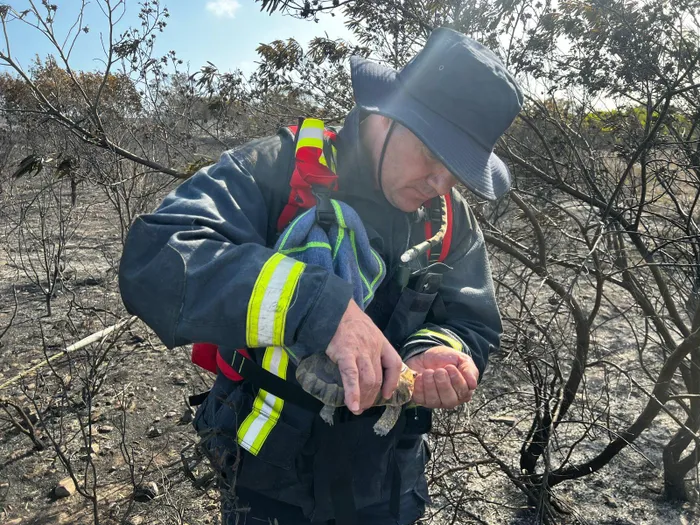
While more than 100 tortoises were found dead, 13 were rescued and released into safe areas in Mossel Bay.
Image: Mossel Bay municipality
THE Cape of Good Hope SPCA has detailed the harrowing ordeal animals experienced in the fires that ravaged Dunoon and Mossel Bay.
While more than 100 tortoises were found dead, 13 were rescued and released into safe areas in Mossel Bay. Three injured tortoises were receiving urgent care.
“A snake with a burn injury was rescued, and while several birds and rodents didn’t survive, we did find some birdlife and moved a few rodents to safety. Hundreds of cattle, sheep, and horses were checked on nearby farms and all were found safe and unharmed,” said the organisation.
SPCA search and rescue teams then responded in Dunoon where more than 5 500 people were left destitute after a fire destroyed more than 1000 shacks on Friday.
While most animals were unaccounted for, the team managed to rescue a badly injured cat found struggling on the perimeter of the fire. The cat was rushed to the SPCA's Animal Hospital.
“The cat, which has visible burn wounds, is currently receiving intensive emergency treatment at the SPCA Animal Hospital to stabilise shock, manage pain, and address dehydration. Once stable, he will be sedated so veterinarians can fully assess the extent of the damage to his paws,” said the SPCA.
The organisation has described the situation in Dunoon as “heartbreak layered upon heartbreak”.
“Families who fled with nothing but the clothes on their backs and their companion animals are facing impossible choices. With no shelter, no food, and no certainty of what comes next, they’re asking us to find their pets a future, knowing that their circumstances mean they can’t be part of it.”
The recent rescues add more strain to an organisation emerging from a festive season surge of animals in need.
“We’re receiving animals whose owners are saying very hard goodbyes. Not because they want to. But because rebuilding their lives will demand everything they have, and they cannot ask their animals to endure that uncertainty with them. Temporary safe custody has been offered but many are selflessly choosing surrender in the hope their pets will find stability, safety, and care. At the same time, injured animals are arriving. Burn wounds. Dehydration. Shock. It’s suffering that tells the story of the fire in ways words cannot.”
Meanwhile CapeNature said only trained and authorised individuals and/or facilities were permitted to handle, transport or rehabilitate wild animals.
“CapeNature reminds the public that wildlife displaced or affected by fire must not be touched, captured, fed or removed. Although animals may appear injured or disoriented, many can move away and recover without intervention. Unnecessary handling can cause severe stress, injury or death, and may place people and wildlife at risk.”
What to do if you encounter wildlife affected by fire:
If you encounter wildlife that is injured, trapped or in immediate danger because of a wildfire:
Cape Times