

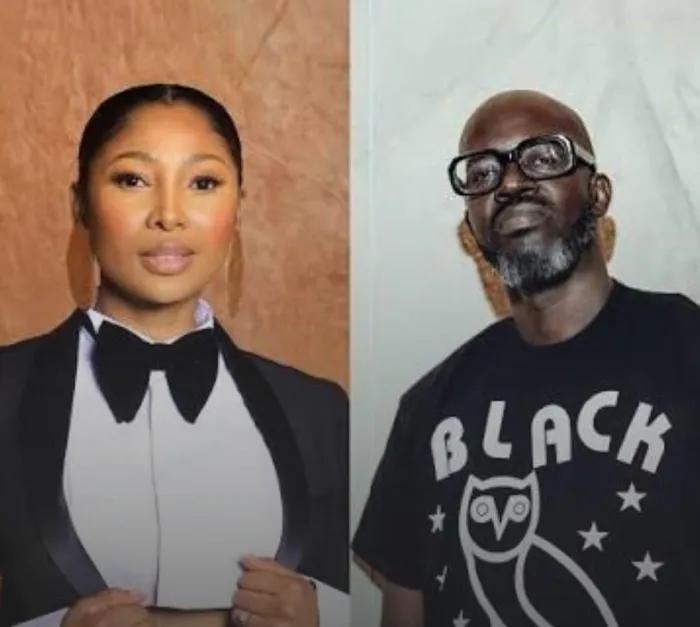
DJ Black Coffee obtained leave to appeal an earlier judgment against findings of a customary marriage between him and Enhle Mbali Mlotshwa.
Image: Instagram.
The divorce action between actress Enhle Mbali Mlotshwa and DJ Black Coffee is not yet over, as the Supreme Court of Appeal (SCA) will this year take another look at the matter.
After more than six years of legal struggles, the couple’s customary marriage and antenuptial contract dispute will once again come under the judicial spotlight after Black Coffee obtained leave to appeal the matter.
The Gauteng High Court, Johannesburg, said in light of the question of law of importance and general application, including the conflicting judgments on the subject matter, the SCA must now resolve the issues.
Black Coffee is set on appealing part of the ruling issued in October last year, in which it was found that he and his wife had entered into a valid customary marriage in May 2011.
It was found at the time that the marriage was in community of property and that their civil marriage concluded in January 2017 was legally void.
According to Black Coffee, Acting Judge M Ntanga erred in finding that he and his wife entered into a valid customary law marriage in May 2011 and that their subsequent civil marriage is invalid.
Another point of appeal is that the court earlier erred in awarding Mlotshwa spousal maintenance. He argued that the issues concluded in the main judgment are of considerable importance and that there is a reasonable prospect that the SCA will come to a different conclusion.
Regarding the order that he had to pay her maintenance, he argued that entitlement to maintenance must first be shown before a decision is made.
According to him, there was no factual basis for his wife’s claim as she failed to show need, quantum, and duration. He said that substantial amounts are paid regularly to her.
In opposing the leave to appeal application, Mlotshwa argued that Black Coffee raised new points that were not adduced as evidence during trial proceedings.
She said the evidence showed clear compliance with customary law requirements and that his participation in family processes and rituals demonstrated consent.
Mlotshwa added that the court was correct to state that customary law must reclaim its position among existing legal positions, and therefore, the matter has no prospects of success on appeal.
Regarding spousal maintenance, she argued that during trial proceedings, she went at great length to set out her needs and averred that her career was put on hold by Black Coffee. She said that she had explained her income, expenditure, health issues, household expenses, and amount coming in and out of her bank account.
She maintained that the court determined a reasonable amount for spousal maintenance. Given her current age, her prime time as an actress is gone, Mlotshwa said.
Judge Ntanga commented that the applicant, Black Coffee, persisted with his dispute of consent to be married in terms of customary marriage, and he substantiated this by referring to the engagement to which, in his view, was an indication that he intended to be married in terms of civil marriage.
He also referred to the fact that they later entered into an antenuptial contract, which culminated in a civil marriage.
The judge said the critical issue is whether there was consent by both parties to be married in terms of customary marriage.
“This goes to the heart of whether the applicant has prospects of success should another court find that there was no intention of being married in terms of customary law,” the judge said in granting leave to appeal.