

MSF mental health counsellor and social worker supervisor on their way to assess the needs of a family that was attacked by settlers in Shi’b al-Butum, south of the West Bank, Palestine.
Image: Oday Alshobaki
BANNED from the Gaza Strip with 36 aid bodies, medical charity Doctors Without Borders said it will have to end its operations there in March if Israel does not reverse its decision.
UN secretary general Antonio Guterres called on Friday for Israel to end a ban on humanitarian agencies that provided aid in Gaza, saying he was "deeply concerned" at the development.
Israel confirmed on Thursday it is barring 37 major international humanitarian organisations from entering the Gaza Strip, accusing them of failing to provide the list of their employees’ names, which is now officially required for "security" reasons.
MSF called this demand a "scandalous intrusion" but Israel says it is needed to stop jihadists from infiltrating into humanitarian structures.
"To work in Palestine, in the occupied Palestinian territories, we have to be registered... That registration expired on December 31, 2025,” said Isabelle Defourny, a physician and president of MSF France, on France Inter.
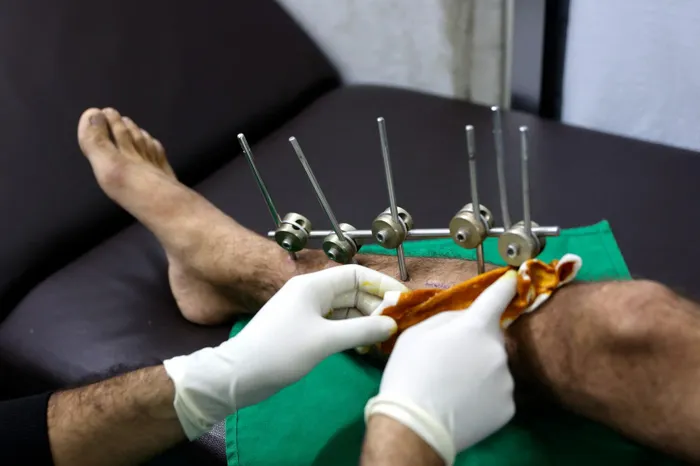
A Palestinian patient has his wound cleaned at the Doctors Without Borders or Medecins Sans Frontieres (MSF) clinic, in the al-Rimal neighborhood of Gaza City. Israel has said 37 aid organisations will be banned from operating in Gaza from January 1, 2026, unless they comply with guidelines requiring detailed information on Palestinian staff, drawing criticism from the United Nations and the European Union.
Image: AFP
"Since July 2025, we have been involved in a re-registration process and to date, we have not received a response. We still have 60 days during which we could work without being re-registered, and so we would have to end our activities in March" if Israel maintains its decision, she said.
MSF has around 40 international staff in the Gaza Strip and works with 800 Palestinian staff across eight hospitals.
In 2025 alone, with a budget of more than €100 million, MSF teams handled over 100,000 trauma cases; managing the care for over 400 beds; performed 22,700 surgical operations on nearly 10,000 patients; carried out almost 800,000 outpatient consultations; administered 45,000 vaccinations; assisted in more than 10,000 deliveries; provided more than 40,000 individual mental health sessions and group sessions for over 60,000 people; distributed more than 700 million litres of water and produced nearly 100 million litres of clean water.
For 2026, the organisation committed an estimated 100-120 million euros for its humanitarian response in Gaza.
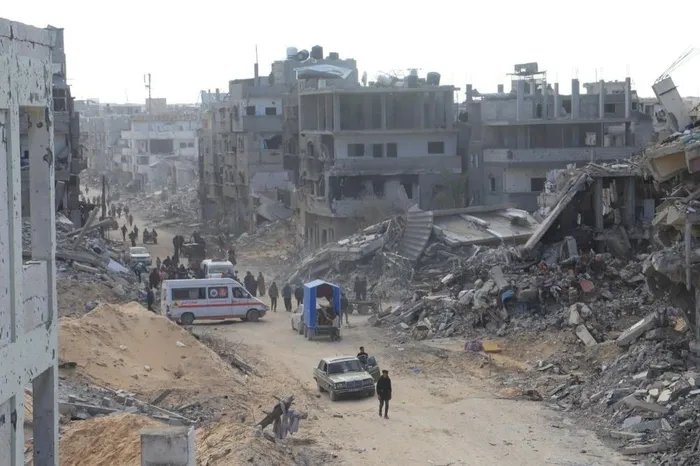
Ambulance parked in Rafah city, southern Gaza, Palestine.
Image: Mariam Abu Dagga
The organisation said many of the services it provided are largely unavailable elsewhere in Gaza due to the destruction of the health system.
"We are the second-largest distributor of water (in the Gaza Strip). Last year, in 2025, we treated just over 100,000 people who were wounded, burned, or victims of various traumas. We are second in terms of the number of deliveries performed," the president of MSF France said.
According to her, the Israeli decision is explained by the fact that NGOs "bear witness to the violence committed by the Israeli army" in Gaza.
“If MSF loses its access to Gaza in 2026, due to the Israeli authorities, a large portion of people in Gaza will lose access to critical medical care, water, and lifesaving support. MSF’s activities serve nearly half a million people in Gaza through our vital support to the destroyed health system. MSF continues to seek constructive engagement with Israeli authorities to continue its activities.
"In Gaza, MSF is currently supporting six public hospitals and runs two field hospitals. MSF also supports four general healthcare centres and runs an inpatient feeding centre for people with malnutrition. MSF has recently opened six new medical points providing wound care and other general health care services. MSF has been working in the Occupied Palestinian Territory since 1989,” said the organisation.
Additional reporting by Staff Writer