

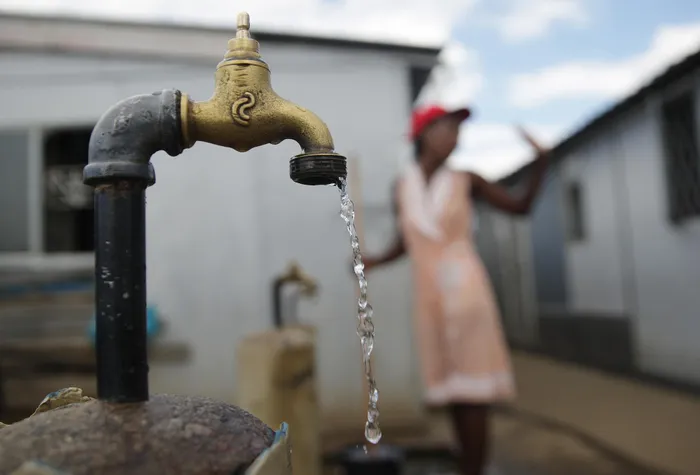
Level 4 water restrictions have been implemented in Knysna.
Image: Independent Newspapers Archives
AS THOUSANDS of local and international tourists are expected to flock to the Garden Route during this festive season, the Knysna municipality, which recently introduced heightened water restrictions, has warned of increased non-compliance and sustained high consumption levels despite ongoing awareness campaigns.
With Knysna’s water supply hovering at just 27% capacity, Level 4 water restrictions were implemented from December 3, introducing stricter limits on non-essential water use.
Level 4 water restrictions include that municipal water must only be used for human consumption, that municipal water is not used for gardening (not even with a basket) or washing of vehicles and, or boats. Under level 4, the construction industry, car washes and nurseries are to use alternative sources of water.
“Heavy fines will be issued to transgressors. Domestic consumption to be limited to 6kl/household per month. Business consumption must be reduced by 50%. Punitive tariff will be added for usage above the threshold,” according to a note on the municipality’s social media page.
The municipality said public cooperation remained critical to reducing pressure on the system.
Knysna Mayor, Thando Matika said: “Water underpins the health of our communities, sustains our local economy, and protects our natural heritage. In partnership with the national and provincial government, and with the cooperation of our residents, we remain committed to working relentlessly to stabilise water supply and to strengthen long-term resilience.”
Local Government, Environmental Affairs and Development Planning MEC Anton Bredell said immediate interventions to be implemented include the purchase of a new pump for installation at the Akkerkloof Dam, which is currently at approximately 27% capacity, and the appointment of five plumbing teams to fast-track the repair of leaks across the water distribution network.
In addition, repairs to a leak at the water purification plant are expected to save at least one megalitre of water per day, while the refurbishment of existing boreholes with damaged pumps will help supplement Knysna’s water supply.
He also confirmed that they would co-chair a Joint Operations Committee (JOC) together with Knysna Municipality to support the town through the December holiday period.
“The Mayor, together with his Mayoral Committee members, agreed that Knysna is facing a water crisis during the immediate holiday season and that all stakeholders must work together to stabilise and fix the town’s water supply challenges. Once the immediate crisis has been stabilised, attention can then shift to resolving the underlying infrastructure and management issues that contributed to the current situation,” Bredell said.
Knysna is among several towns currently posing the highest risk in terms of water security, according to the provincial department.
Others include Calitzdorp, Van Wyksdorp, Ladismith, Zoar Witsand, Dysselsdorp and De Rust. Level 4 restrictions are also in place in Plettenberg Bay, Kurland Village, Natures Valley, Witsand, Calitzdorp, Van Wyksdorp, Ladismith and Zoar.
“We cannot control the weather, but we can control how we manage the water resources available to us. It is the responsibility of all municipalities to manage their water supply and ensure that their water infrastructure is maintained to ensure sufficient storage capacity, safe quality water, and to avoid leaks throughout the distribution system. To fund this, municipalities need to ensure all water supplied to residents is correctly billed and paid for,” Bredell said.
The Department of Water and Sanitation recently catagorised the Western Cape Water Supply System (WCWSS) as highly sensitive to climate variability, including prolonged dry spells, altered rainfall seasonality, intensified storm events, system losses, and patterns of inefficient or irresponsible water use.
Beaufort West Local Municipality has also been identified as another area at risk , which relies heavily on groundwater, the DWS said.
The Gamka Dam, which forms part of the municipality's water mix, is currently below 25%.
"We are satisfied that the municipalities facing water challenges were proactive in implementing or ramping up water restrictions to curb high water usage. DWS continues to make a call to all water users, in particular the high-end water users to use water in a responsible manner. Our Western Cape Provincial office, together with the provincial government and other water bodies will continue to monitor the water security of the province and take appropriate steps to safeguard water security."
Cape Times